
What balance between city and river at La Jonction?
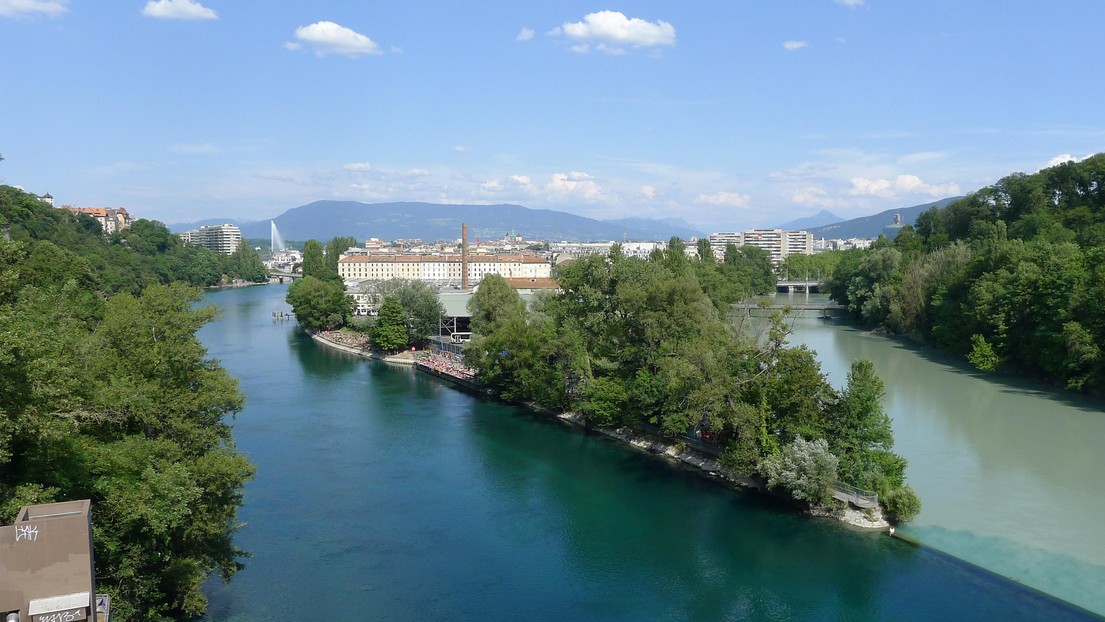
Rhodanie urbaine / Site de la Jonction, Genève © EPFL / LAST
For its issue dedicated to the theme of water, the magazine Interface published by the Fédération des associations d’architectes et d’ingénieurs de Genève (FAI) invited Sara Formery, doctoral student at the Laboratory of Architecture and Sustainable Technologies (LAST), to write an article. Entitled "Quel équilibre ville-fleuve à la Jonction?" and co-written with Prof. Emmanuel. Rey and Dr. Martine Laprise, the article explores, through this emblematic site in the city of Geneva, the issues involved in the transition of neighborhoods near the Rhône. The article reflects some of the results of the Rhodanie urbaine research project.
For centuries, the relationship between city and water has been marked by varying degrees of imbrication, passing through cycles of appropriation and abandonment of urban shores. The current climate changes, some of which are accentuated in urban environments, are leading us to rethink the place of water in the city, particularly in its public spaces. Urban dynamics of requalification – often on a neighborhood scale – are being triggered between urbanized areas and the watercourses that run through them, leading to unprecedented changes in the city-water relationship. A new balance needs to be found to reinvent certain interactions.
Based on a number of complementary investigations, the Rhodanie urbaine research project presented in this article proposes an analysis framework designed to explore – from the specific angle of the city-river relationship – the project-based visions imagined for new rhodanian neighborhoods. Developed within a theoretical context, but with operational aims, the application of this analysis framework to the Jonction site in Geneva is insightful in more ways than one. By bringing to light new, flourishing interactions between urban and river entities, it shows a site in full mutation towards a renewed city-river relationship, which needs to be supported by appropriate tools to affirm these new links between the neighborhood and the Rhône.