
Two ENAC Professors granted ERC Consolidators
© 2025 EPFL
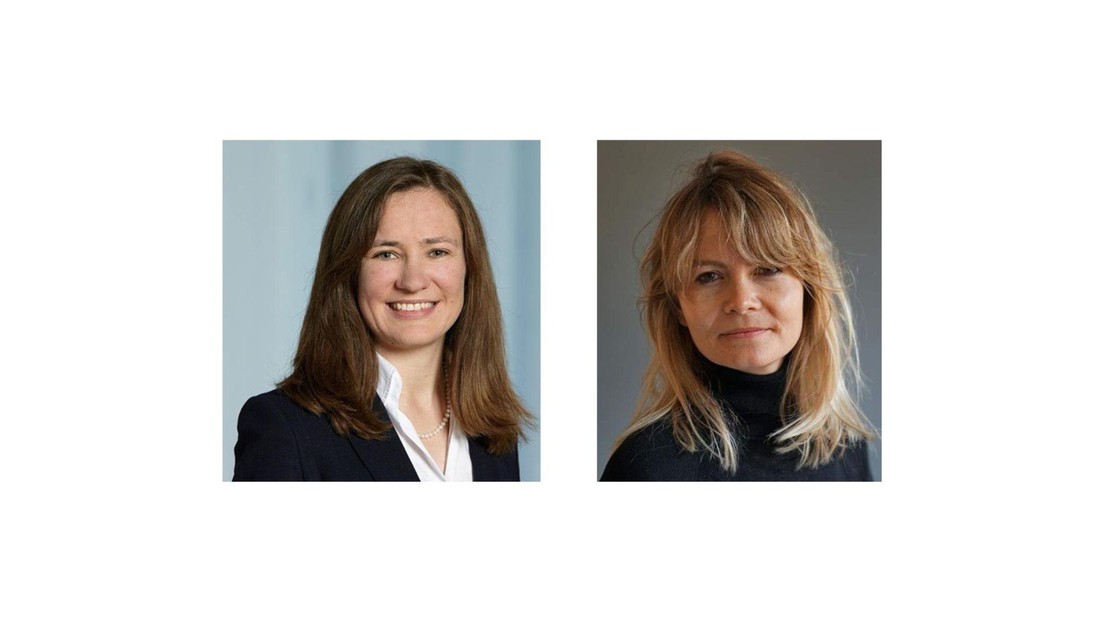
Two EPFL School of Architecture, Civil and Environmental Engineering professors Olga Fink and Charlotte Grossiord have been awarded prestigious European Research Council (ERC) Consolidator Grants.
Two professors from ENAC have been announced as grantees for the ERC Consolidator grant. Olga Fink, head of the Intelligent Maintenance and Operations Systems Lab (IMOS) was selected with her project HEROES (Longevity-focused HEalth management foR cOmplex engineEred Systems) and Charlotte Grossiord, head of the Plant Ecology Research Laboratory (PERL) with her project, COOL - Trouble in the air: How European forests keep their cool under atmospheric drought.
Sophia Haussener, Maryam Kamgarpour and Li Tang from the School of Engineering are also amongst the grantees.
The ERC received 3,121 applications for this call, a 35 percent increase compared with the previous round, and selected 349 mid-career researchers for a total of €728 million in Consolidator Grants. These ERC Consolidator Grants will enable researchers to pursue their own ideas in a broad range of disciplines. The selected researchers plan to conduct their research at universities and research centres in 25 countries, including 25 projects in Switzerland.
Longevity-focused HEalth management foR cOmplex engineEred Systems (HEROES)
The HEROES project will develop novel physics-informed machine learning methods to enhance the longevity and reliability of complex systems and systems of systems. Rather than focusing solely on short-term fault detection, HEROES will model long-term degradation processes and the interdependencies that shape asset health over extended time horizons. Building on these developments, the project will introduce interpretable decision support tools, including multi-agent reinforcement learning for health-aware control that aims to extend asset lifetimes, counterfactual reasoning to explore long-term “what-if” scenarios, and data-driven approaches to improve the design for maintenance and operations based on operational feedback. Wind turbines, ranging from individual components to entire fleets, will serve as a demonstration case study to validate the approach. Ultimately, HEROES will support improved sustainability, reliability, and long-term performance across large-scale interdependent systems.
COOL - Trouble in the air: How European forests keep their cool under atmospheric drought
The 21st century has seen a rapid rise in the number and severity of heatwaves, creating pressures on ecosystems that are without precedent. Europe has been hit especially hard: its most extreme heatwaves have all occurred in the past two decades. These heat events are now often accompanied by very dry air, which acts like a powerful “thirst” from the atmosphere, pulling water out of plants. When hot and dry air combine, they create atmospheric drought, a new kind of stress where plants lose water faster than they can take it up. Unlike the familiar soil droughts caused by a lack of rainfall, atmospheric drought originates in the air itself. As temperatures continue to rise, these atmospheric droughts are expected to intensify and become more frequent, posing serious risks for Europe’s forests.
The COOL project aims to understand how forests cope with this challenge. By generating high-resolution data on how trees regulate energy fluxes, COOL addresses a major gap in our understanding of forest resilience. The project will deliver new insights into how climate change affects trees and what enables some species to withstand hotter, drier air. These findings will support climate-smart forest management, guide environmental policy, and provide practical tools for those working to protect Europe’s forests. Ultimately, we will help build a new understanding of how warming and atmospheric drought shape the future of forest ecosystems, and what we can do to safeguard them.