
The COST-LEAF project: at the ACM in the footsteps of Leonardo
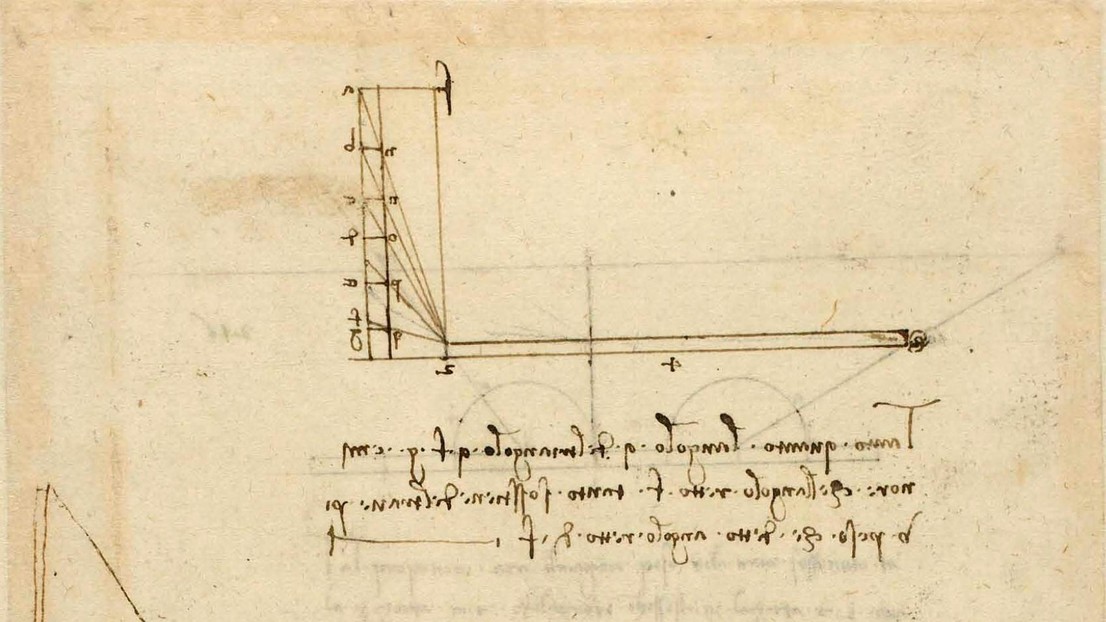
Leonardo da Vinci, Codex Atlanticus (coll. Veneranda Biblioteca Ambrosiana)
At the beginning of February, the Archives de la construction moderne (ACM) welcomed researchers from the European COST-LEAF project, dedicated to the digital reconstruction and the study of the circulation of Leonardo da Vinci’s manuscripts.
The Archives de la construction moderne (ACM) of EPFL welcomed, at the beginning of February, a team of researchers from the European project “COST – CA24143 – LEonardo’s Codex Atlanticus and other miscellaneous Folios: A Digital Reconstruction (LEAF)”.
The team is coordinated by Professor Emanuela Ferretti, Associate Professor of Architectural History in the Department of Architecture at the University of Florence, and by Ms Matilde Martellini, a PhD candidate in Heritage Science at Sapienza University of Rome.
Professor Ferretti is Working Group 3 Leader (Digital Preservation and Accessibility) of the COST-LEAF project. Her research focuses in particular on the historiography of architecture and on the reputation of Leonardo da Vinci in the modern and contemporary periods. Ms Martellini also participates in the Working Group 3 – Digital Preservation and Accessibility within the same project.
During their stay at EPFL, the researchers consulted the Alberto Sartoris fonds, in particular the documents related to the book Léonard architecte by Alberto Sartoris (Tallone, Paris, 1952). This research forms part of a broader reflection on the reception and dissemination of the figure of Leonardo da Vinci in the 20th century, as well as on contemporary issues surrounding the digital preservation and accessibility of heritage sources.

The COST-LEAF project aims at the digital reconstruction of Leonardo da Vinci’s original folios, which are now dispersed across several major European collections, including the Codex Atlanticus preserved at the Veneranda Biblioteca Ambrosiana in Milan, the Windsor Codices of the Royal Library at Windsor Castle, and the Codex Arundel of the British Museum. Building on the pioneering work of Carlo Pedretti, the project develops innovative methodologies to virtually reconstitute the material and intellectual integrity of Leonardo’s manuscripts, thus opening up new perspectives for research and scholarly dissemination.
The ACM regularly host researchers from European universities for the consultation of their collections. The Alberto Sartoris fonds, one of the most consulted internationally, is among the most significant holdings due to the scope and diversity of the documents it contains. It covers the entirety of Alberto Sartoris’s activity—as an architect, theorist, teacher, and a major figure in the dissemination of architectural avant-gardes—and includes correspondence, photographs, writings, plans, drawings, printed materials (including an extensive library), and documentary collections. Thanks to the richness of its contents and the chronological breadth it encompasses, this collection constitutes a primary resource for the study of the history of modern architecture and its European intellectual networks, as well as for the analysis of their modes of reception and dissemination.
