
Statistical physics explains the growth of urban skylines
© 2026 EPFL
What if the same mathematical framework could describe the growth of bacterial colonies, crystal surfaces, and… urban skylines?
This seemingly surprising question lies at the heart of our new study on city growth.
In a recent study published in Nature Communications, we show that the three-dimensional evolution of urban skylines can be captured by a single equation from statistical physics: the Kardar–Parisi–Zhang (KPZ) equation. Originally developed to describe the growth of fluctuating interfaces, the KPZ framework reveals striking similarities between urban growth and natural growing surfaces, with economic productivity emerging as a key driving force.
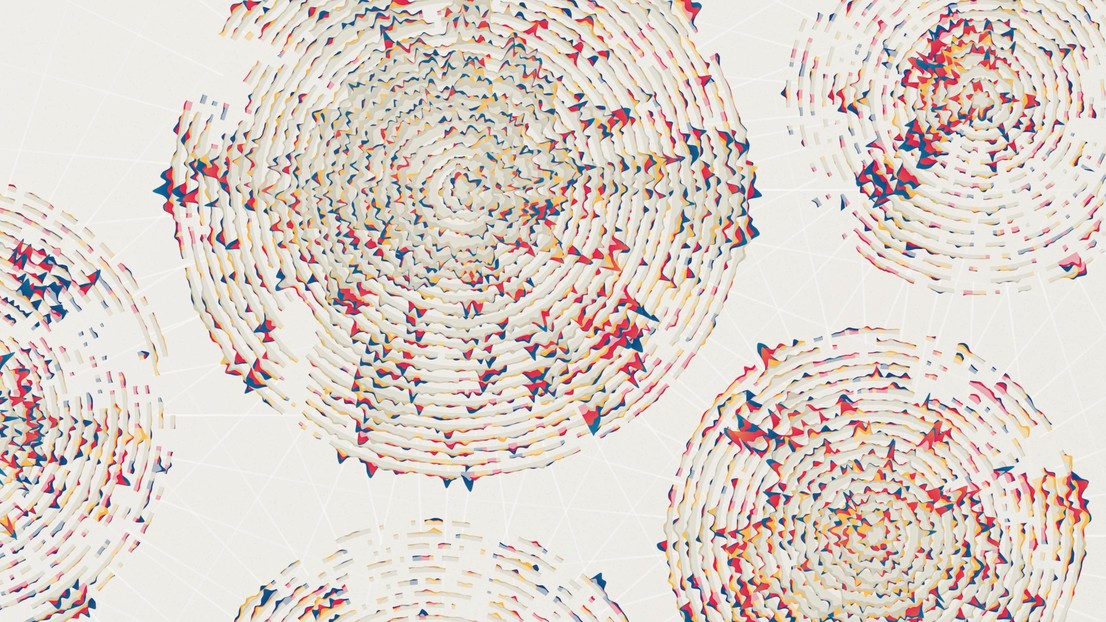
In collaboration with data artist Nadieh Bremer, we also developed compelling visualizations that bring these hidden dynamics to life, tracing the evolution of Chinese cities in time and space.
Beyond advancing our understanding of how cities grow, this work highlights the power of interdisciplinary research. The same mathematical framework can help describe systems as diverse as materials, living organisms, and urban environments - offering fresh perspectives on one of the defining challenges of our century: understanding how cities evolve.
Hendrick, M., Manoli, G. Dynamic roughening of cities driven by multiplicative noise. Nat Commun 17, 7974 (2026). https://doi.org/10.1038/s41467-026-74456-4