SENSE joins a Greenland expedition to study glacier methane emission
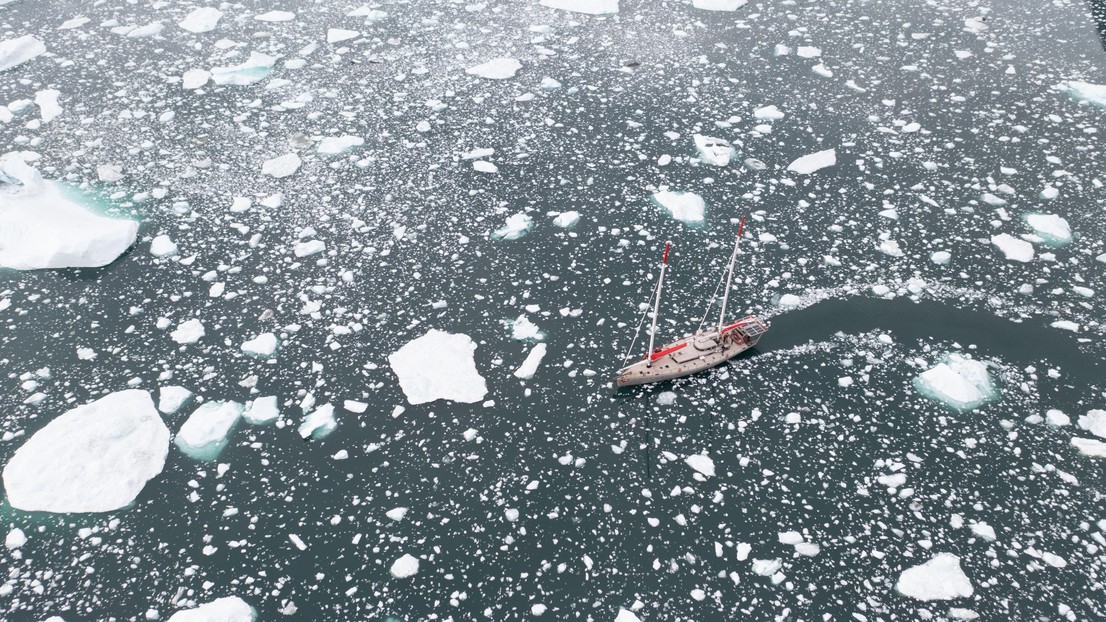
Forel in Greenland © 2025 Forel/ Richard Mardens
Greenland's glaciers are retreating faster than ever before. As they melt, they may be releasing massive amounts of methane —a greenhouse gas 25 times more potent than CO2—directly into Arctic fjords. EPFL SENSE unit R&D engineer Sébastien Lavanchy has joined an expedition in the Greenland aboard the Forel vessel, to investigate whether subglacial meltwater represents a significant source of methane.
The methane mystery beneath Greenland's ice
Recent studies have suggested that methane may travel through subglacial waters and be released directly into Arctic fjords. This phenomenon represents a potentially significant but poorly understood source of greenhouse gas emissions from the world's second-largest ice sheet.
Our hypothesis is that if we can measure this methane upstream, close to the glacier, and then along the fjord, it would allow us to verify whether this is actually happening,
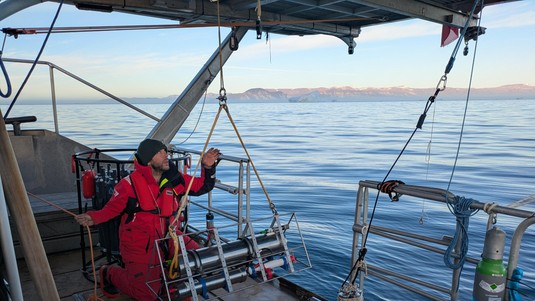
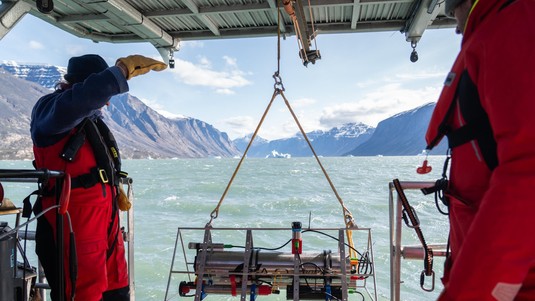
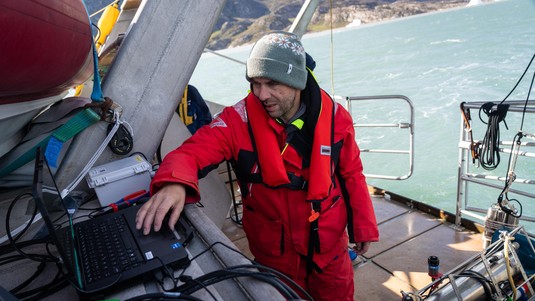
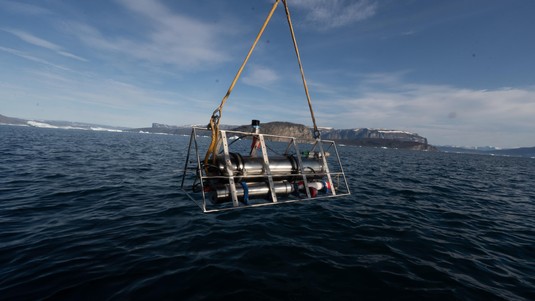
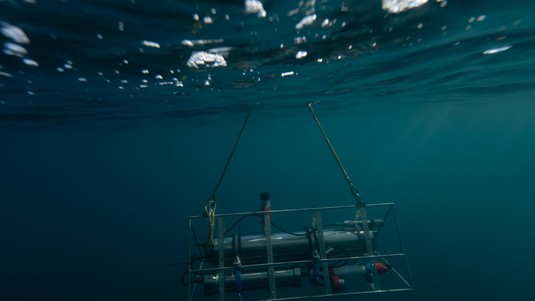
The research team is using the SubOcean instrument to detect dissolved methane concentrations with unprecedented precision and speed in the challenging Arctic environment.
Marine-terminating glacier as natural methane filters
Marine-terminating glaciers may function as natural filters for methane emissions. When subglacial meltwater carries methane into fjords, the gas can be biologically oxidized, converting it into carbon dioxide and water before it reaches the atmosphere.
The fjords function as a natural filter for methane. The water flows directly into the fjords. Through bio-oxidation, the methane transforms into CO2 and water,
While carbon dioxide is still a greenhouse gas, methane is approximately 25 times more potent in terms of its warming potential, making this natural conversion process critically important for climate regulation.
Climate implications of glacier retreat
The research has urgent implications for understanding future climate scenarios. As global warming accelerates glacier retreat across Greenland, this natural filtering system could be compromised.
If unfortunately, in the future, glaciers melt, there will no longer be this natural filter and methane would go directly into the atmosphere and significantly increase the greenhouse effect,
Mission progress and preliminary results
The Greenland expedition is now two-thirds complete, with excellent results so far.
The SubOcean is performing wonderfully and we have been able to collect very beautiful data,
The team has successfully completed measurements in the fjords of Uummannaq and Disko Bay, conducting 13 profiles across 5 different fjords.
The expedition will conclude with measurements in the Kangerlussuaq Fjord, one of Greenland's most significant outlet glacier systems. However, challenging ice conditions have sometimes prevented the team from getting as close to the glacier fronts as planned, highlighting the logistical complexities of Arctic research.