
Reza Daneshazarian joined HOBEL as a new PostDoc
© 2026 EPFL
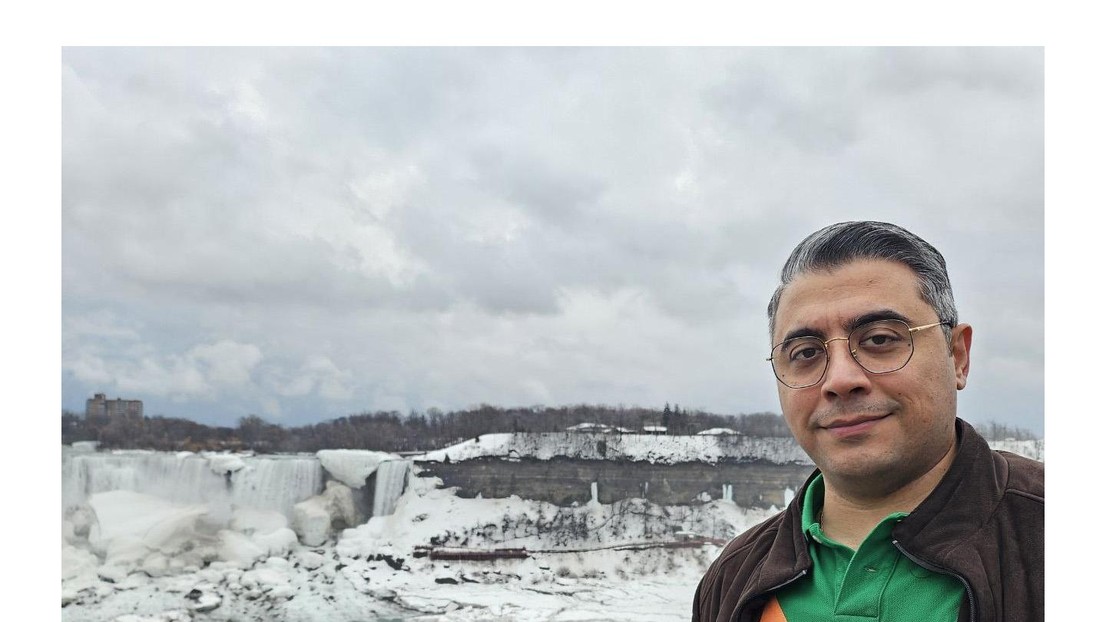
Dr. Reza Daneshazarian joined the HOBEL lab as a postdoc in May 2026. Welcome, Reza!
Reza shares his experiences, impressions, and plans as he joins the Human-Oriented Built Environment Lab at EPFL. Let's see what he shares.
- You just arrived at EPFL Fribourg – what are your first impressions?
My first impression is how strongly EPFL Fribourg integrates scientific rigor with a very human‑centered culture. The environment feels collaborative and purpose‑driven, and it’s immediately clear that the campus is deeply connected to real‑world challenges in buildings and sustainability. Joining a place where interdisciplinary work is the norm—especially in indoor environmental quality and renovation research—feels like a natural continuation of my previous work.
- Can you tell us more about your career in academia?
My academic path has consistently focused on how buildings perform and how people experience them. I completed my PhD in Mechanical and Industrial Engineering, where I worked on ground heat transfer and thermal energy storage using phase change materials and nanoparticles. Since then, I’ve held NSERC and Mitacs Accelerate postdoctoral roles at the University of Toronto, working on topics ranging from operating room ventilation and airborne infection control to Wi‑Fi–enabled occupant sensing and indoor environmental quality interventions. These projects allowed me to combine field experiments, simulation, and human‑centered evaluation—an approach I continue to build on at EPFL.
- What are you most excited about your appointment at the Human-Oriented Built Environment Lab?
I’m most excited about contributing to a lab that places people at the center of building innovation. HOBEL’s mission aligns perfectly with my experience in ventilation, IEQ monitoring, and occupant‑centric evaluation. I’m particularly energized by the opportunity to work on large‑scale European renovation projects and to help harmonize protocols across international partners. The combination of fieldwork, modelling, and human feedback is exactly where I feel I can make the strongest impact.
- What will your research focus on over the coming year?
Over the coming year, my work will center on advancing indoor environmental quality within renovation projects by conducting detailed pre‑ and post‑renovation monitoring, integrating occupant feedback, and evaluating scalable ventilation and filtration solutions. A second major focus will be strengthening cross‑site comparability and data harmonization within the INPERSO project to ensure that IEQ outcomes from diverse building types and climates can be meaningfully compared. Given the extensive experimental datasets available across multiple environments, I also plan to develop and validate detailed CFD models that complement field measurements and deepen our understanding of ventilation and comfort dynamics. Together, these efforts will allow me to bridge engineering, human factors, and policy‑relevant outcomes in a way that supports more adaptive, evidence‑based building renovation strategies.
- What inspires you about the built environment of the future and its research schemes?
I’m inspired by how rapidly the field is evolving toward buildings that are not only energy‑efficient but also deeply responsive to human needs. My work has spanned everything from thermal energy storage and renewable systems to Wi‑Fi–based occupancy sensing and hospital ventilation. Seeing these domains converge—data, comfort, health, and sustainability—gives me optimism about the future. The next generation of buildings will be adaptive, evidence‑based, and designed with human well‑being as a core metric, not an afterthought.
- Whenever you are not doing research, what are you interested in?
Outside of research, I’ve always been drawn to sports and anything that brings a bit of adrenaline into life. I grew up loving both football and football (soccer), and I even raced on the national karting team—though these days I keep my competitive driving strictly off public roads. Since moving to Switzerland, I’ve become curious about ice hockey as well; arriving on the exact day Fribourg Gottéron won the championship felt like a sign, and thanks to jetlag, I was awake enough to watch the game and join the celebrations. Beyond sports, I often joke that if I weren’t a researcher, I’d be a chef, because I love cooking and exploring new foods. I’m also hoping to find good places to play golf again and continue to learn French, so I can feel more at home in the community.