Researchers design a motor that looks like a thread

FiberMotor. 2026 EPFL LMTS CC BY SA 4.0
EPFL engineers have developed a flexible motor just a few millimeters thick. Made of two nested fibers wrapped with electrodes, the device produces enough force to drive soft robotic systems.
In 2023, researchers in the Soft Transducers Laboratory in EPFL’s School of Engineering presented the world’s first pump in the form of a fiber. The pump’s flexible tubing can generate its own fluid pressure and flow rate, and be sewn into smart textiles to circulate fluids for thermoregulation and haptic feedback, or to power wearable assistive devices.
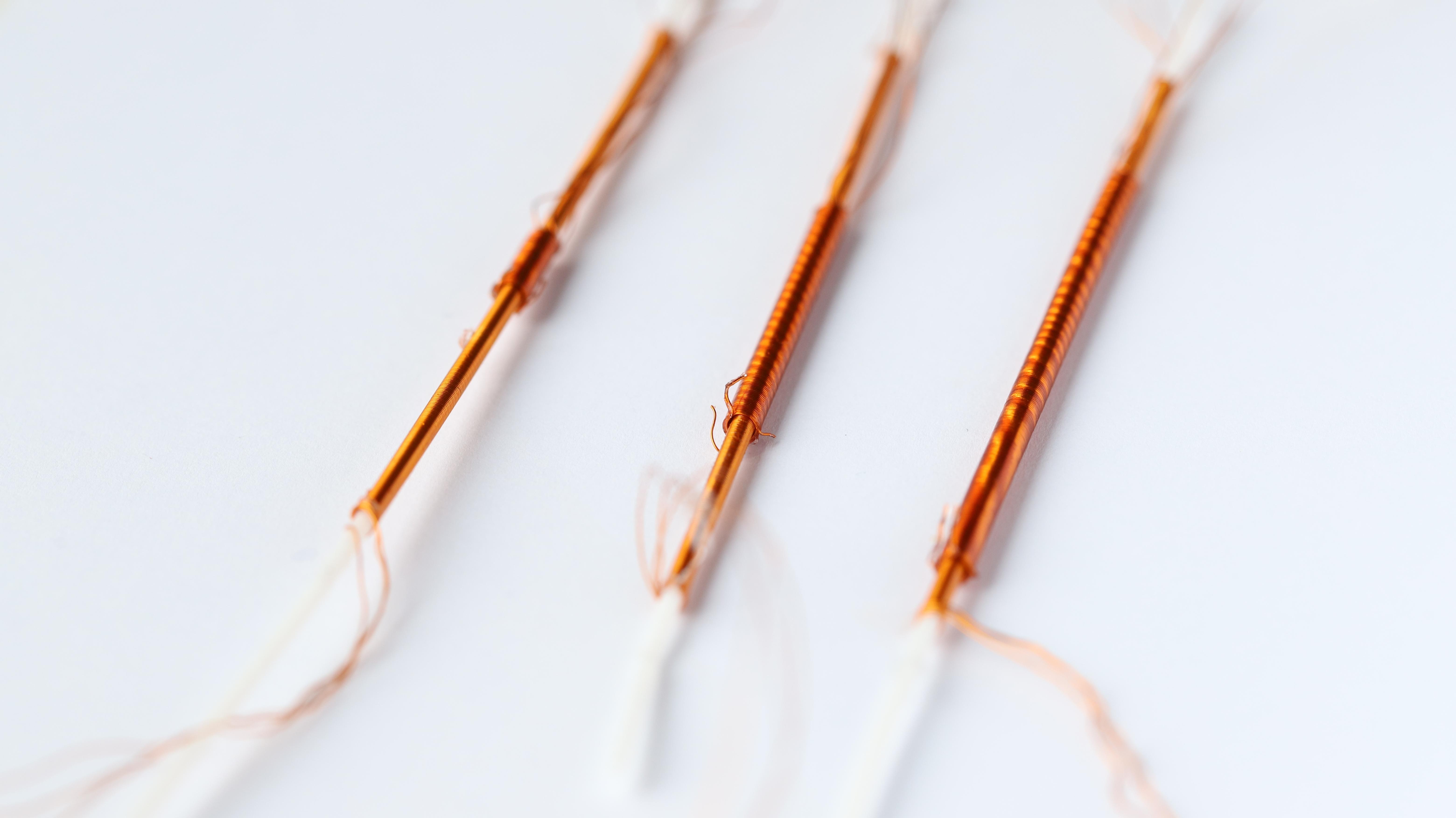
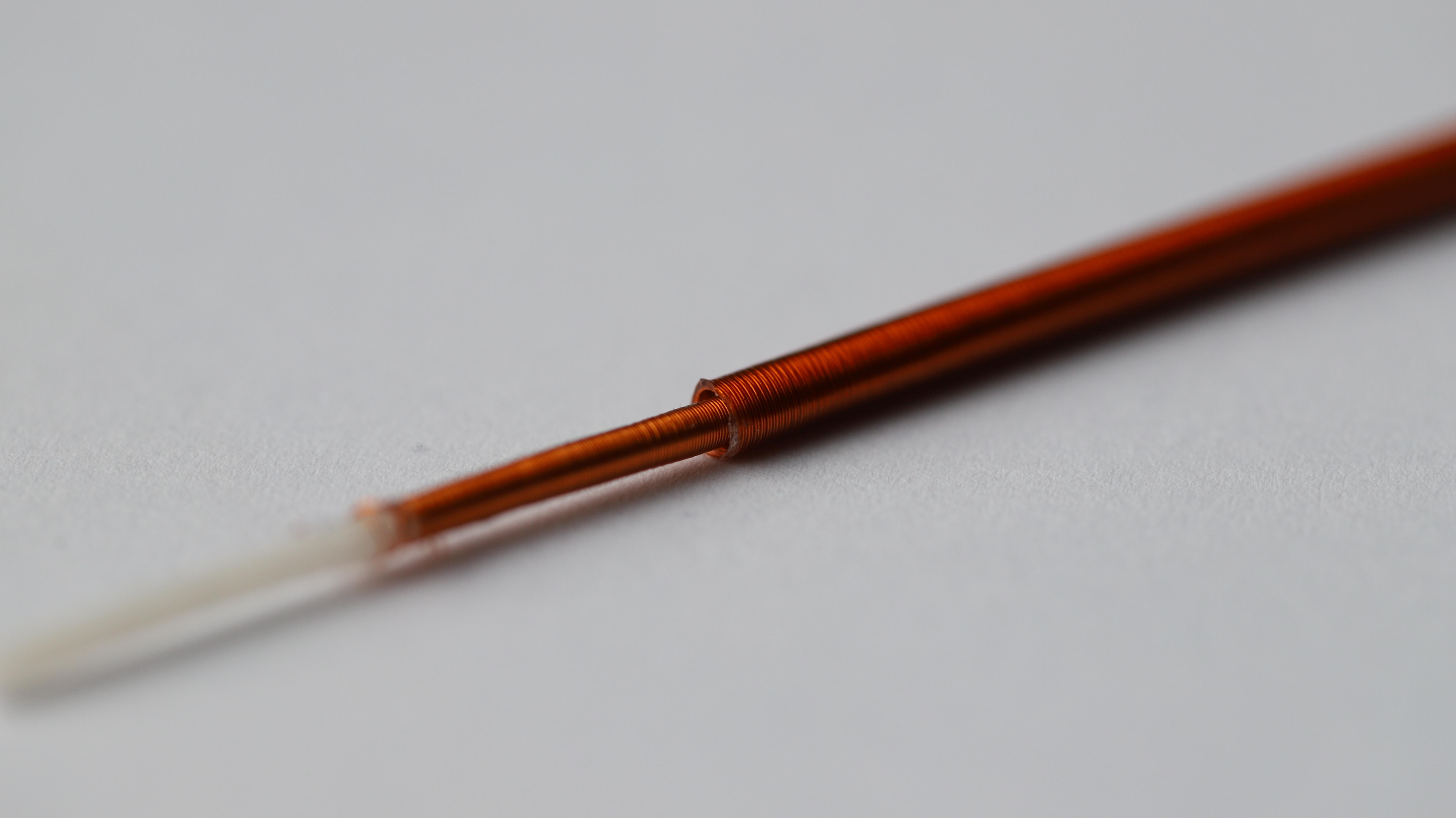
The team has taken their textile-compatible engineering a step further with FiberMotor: a thread-like motor that converts electrical energy directly into motion. Ranging from 1-3 mm in diameter, FiberMotor is composed of two concentric hollow fibers. Tightly coiled around each fiber are insulated copper-wire electrodes only slightly thicker than a human hair. When a voltage is applied to these electrodes, electrostatic forces repeatedly pull the fibers into alignment, causing the inner fiber to slide within the outer one, much like a telescope.
“Our FiberMotor is the first fiber-format, sliding motor,” says Soft Transducers Lab head Herbert Shea. “It produces enough force to actuate devices for soft robotic applications, while remaining silent, flexible, and bidirectional.” The work has been published in Advanced Materials.

Robust, natural movement
Many everyday movements like lifting, pushing, and pulling rely on linear (as opposed to rotational) motion. Reproducing this kind of motion has been a longstanding challenge in wearable robotics, because motors powerful enough to drive linear movements often require rigid gears, transmissions, and other bulky components. So-called ‘artificial muscles’ have been developed, but their range of motion is limited by the degree to which their materials can stretch, contract, or bend. Unlike artificial muscles, FiberMotor’s movement range is limited only by the length of the fibers themselves.
The absence of gears and transmissions also makes the device backdriveable, meaning it can be safely moved by an opposing force, allowing it to function more naturally with human movements than conventional motors. For example, if a wearer moves unexpectedly or opposite the direction in which the FiberMotor is driven, the device’s fibers simply slide past each other rather than locking up.
Strength in numbers
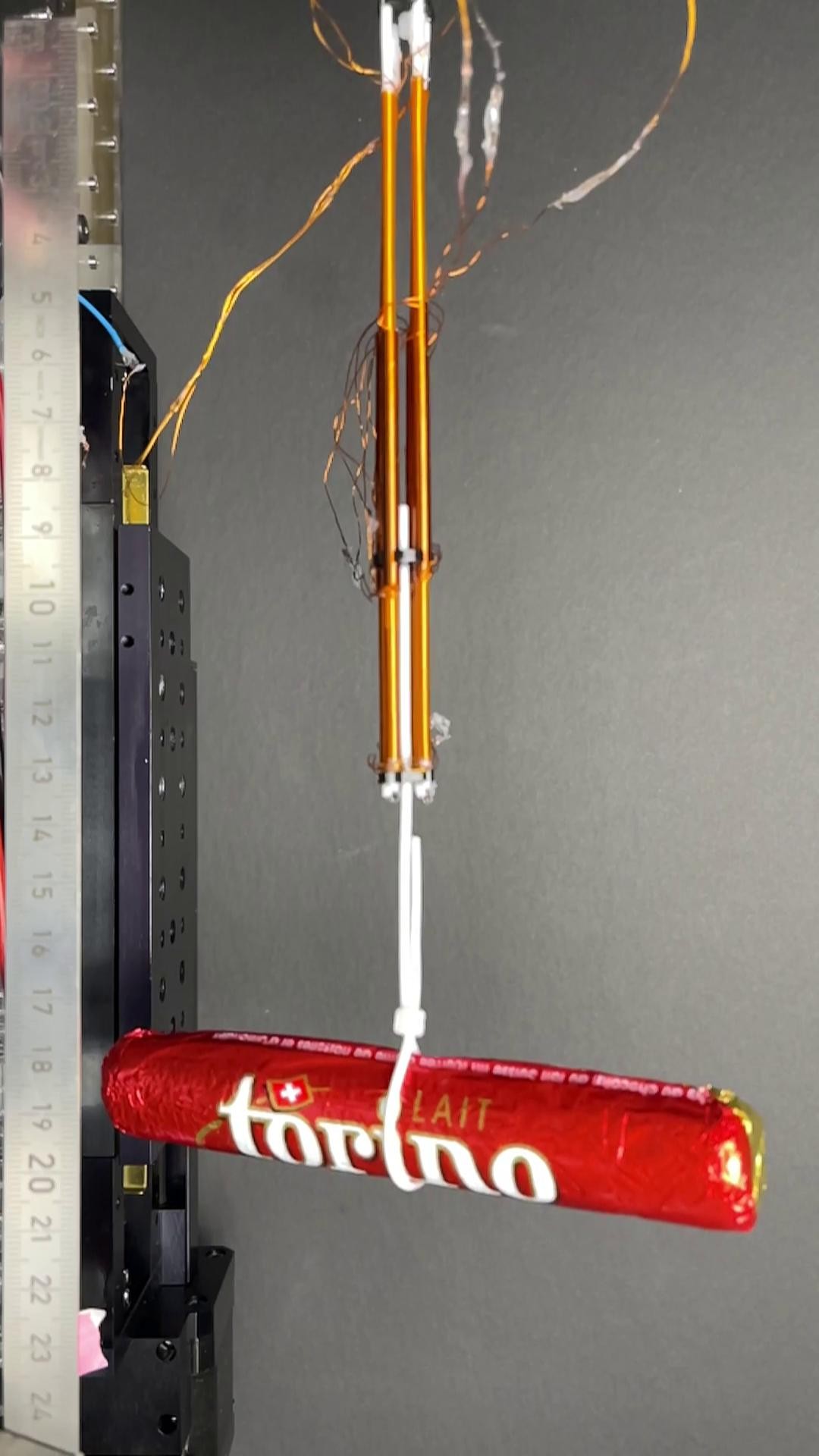
In laboratory demonstrations, individual FiberMotors could support stationary loads equivalent to roughly 75 grams. When bundled together, four motors generated enough force to lift a 46-gram chocolate bar, and flex a tendon-driven robotic finger.

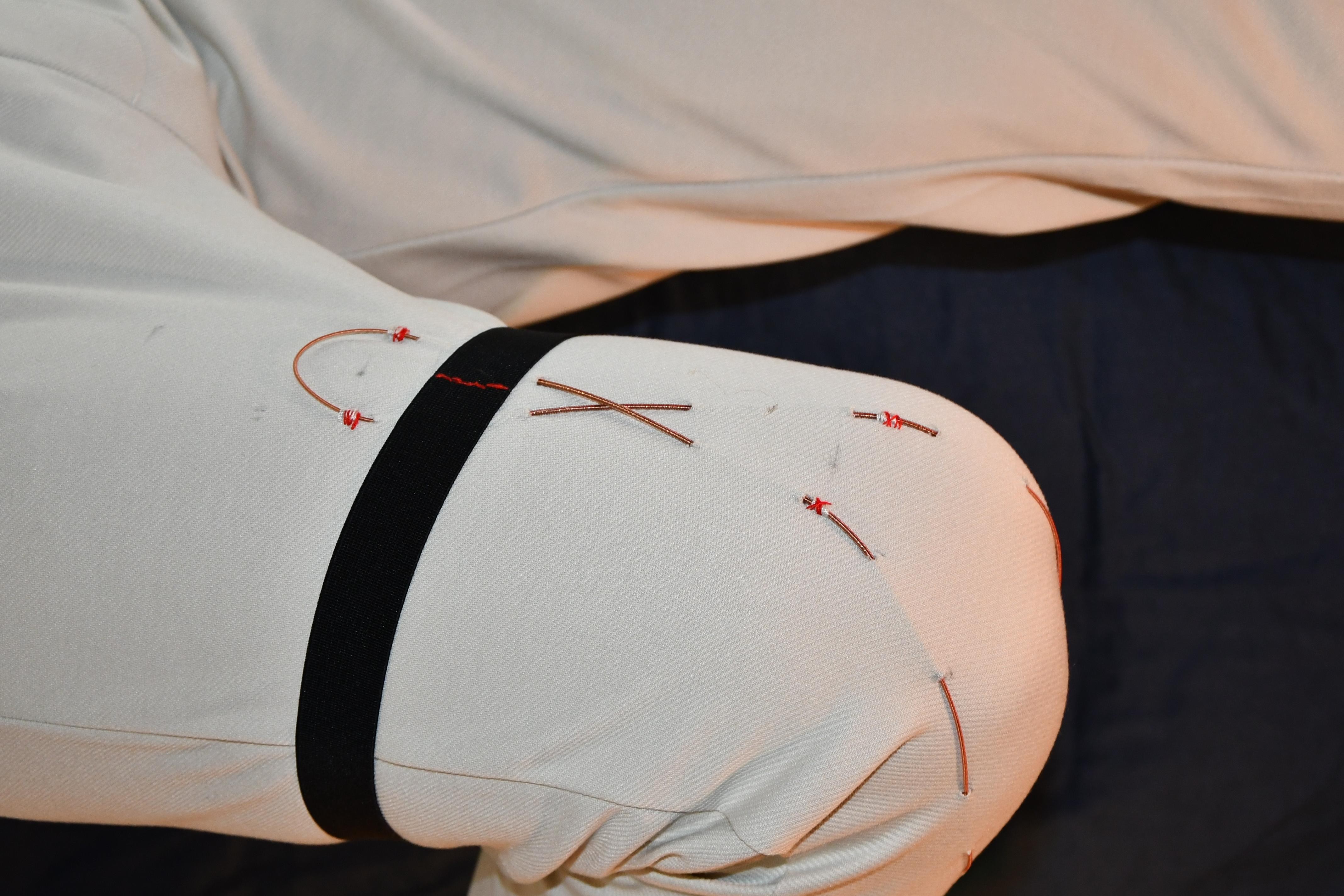
The team also integrated the FiberMotor into a prototype garment to fit the shape of a knee. Because the motors are thin and lightweight, the researchers envision distributing them throughout a smart textile, rather than concentrating force in a single rigid motor unit.

As a next step, the researchers are increasing the FiberMotor’s performance and durability through even thinner electrodes made mostly of insulators, and optimized materials. Ultimately, they plan to exploit the FiberMotor’s unique combination of force and flexibility to enable wearable assistive devices such as soft exosuits to aid with mobility, wearable haptic systems for virtual reality, and for lightweight prosthetics. First author Sylvain Schaller has already founded a start-up, Elecsyor, to commercialize the technology.
Research directions include integrating feedback data about a wearer’s position and movements, so the motor quickly adapt its function to its wearer’s intention.
Swiss National Science Foundation (SNSF)
Novo Nordisk Foundation
Schaller, Sylvain, Shea, Herbert. Fiber-Format Flexible Linear Electrostatic Motors. Advanced Materials. DOI doi.org/10.1002/adma.75156
Images to download