Record efficiency for perovskite-silicon triple-junction solar cells
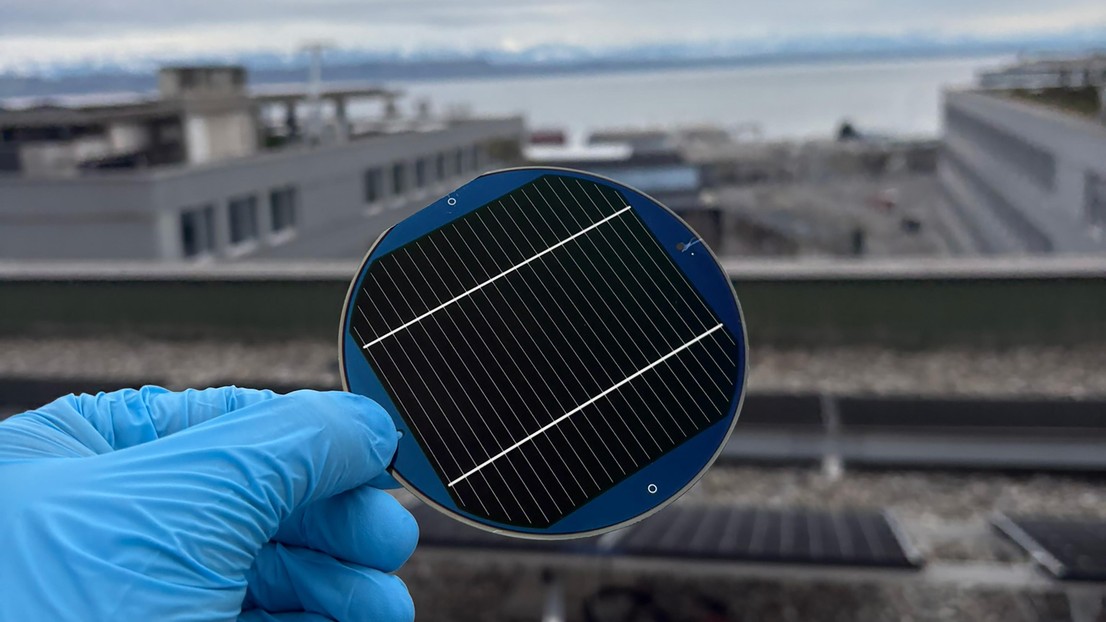
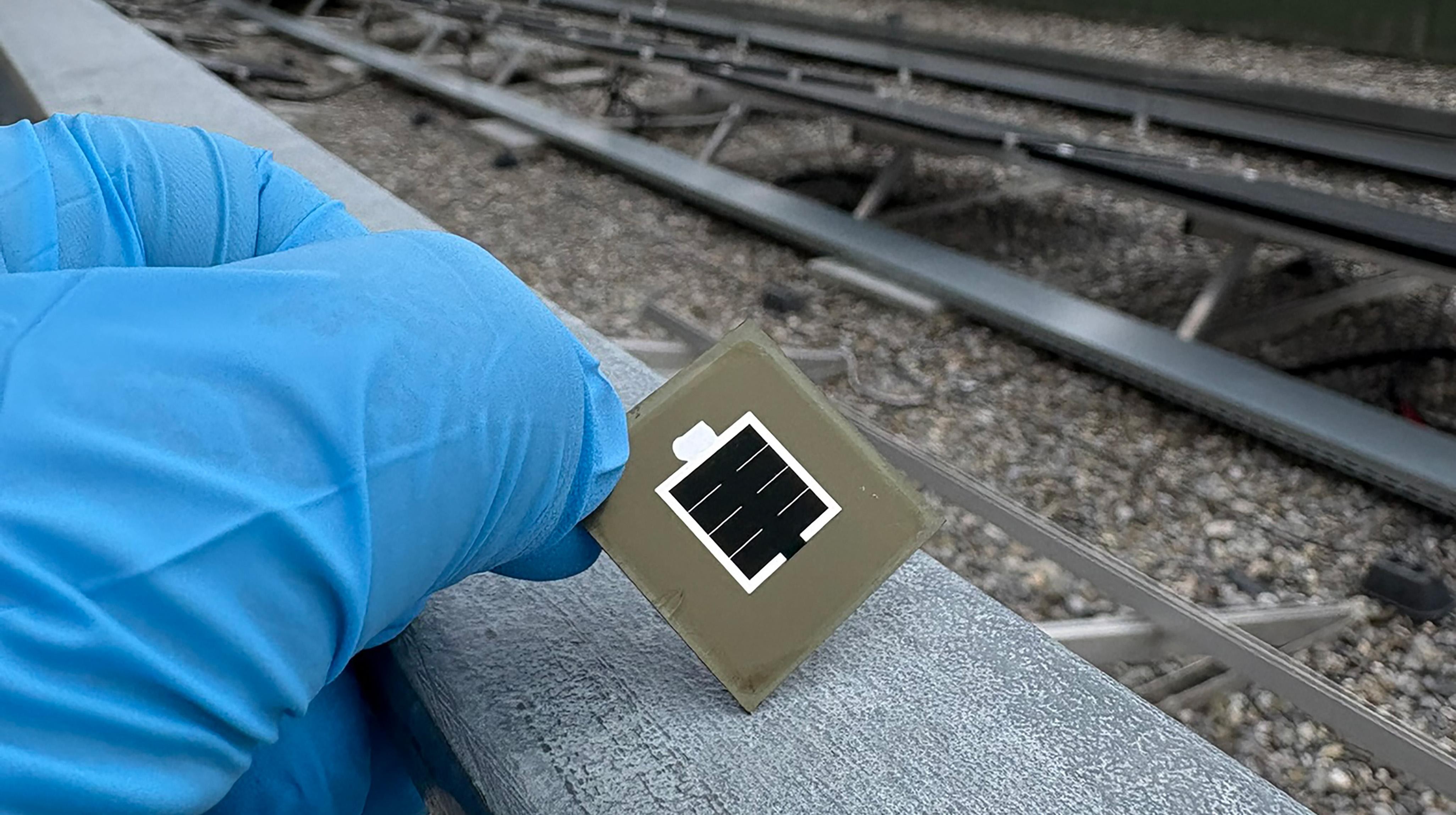
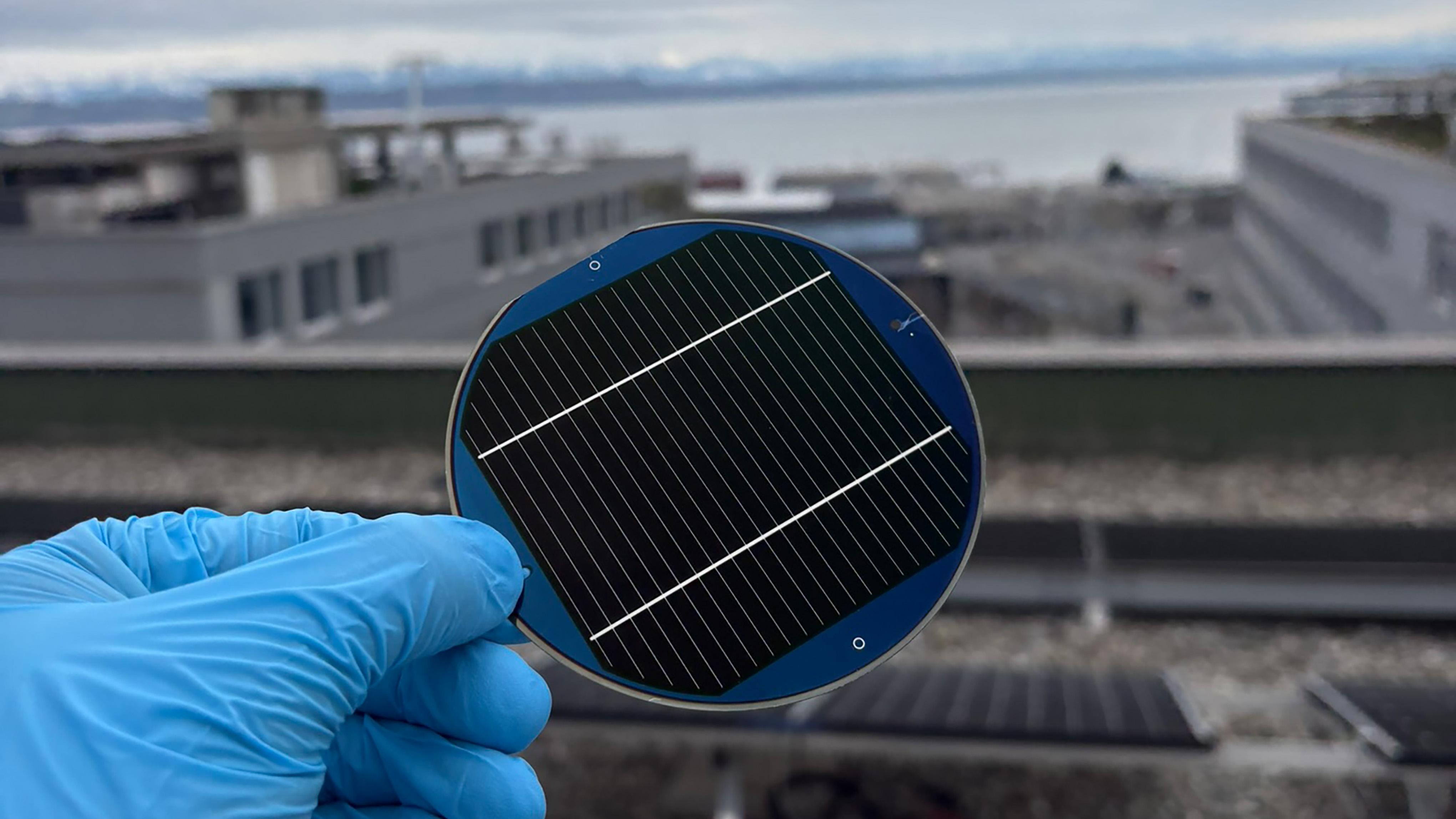
The triple-junction solar cell (54 cm2). © Kerem Artuk
EPFL and CSEM researchers have achieved a record 30% efficiency for triple-junction solar cells, which combine two thin-film perovskite cells and one silicon cell on a single device. The milestone could advance affordable next-generation solar technologies for space and terrestrial applications.
Researchers from the Photovoltaics and Thin-Film Electronics Laboratory (PV-Lab) in EPFL’s School of Engineering and CSEM have developed a new solar cell that combines exceptional voltage, high efficiency, and scalable manufacturing. The triple-junction device is composed of a silicon bottom cell, onto which middle and top cells made of semiconductors called perovskites are deposited as thin films. The new device, according to the paper published in Nature, achieves an independently certified efficiency of 30.02%, surpassing the previous certified record of 27.1%.
First author Kerem Artuk, an EPFL PhD graduate now working at CSEM, says the achievement demonstrates how advanced materials and optical engineering can yield efficiencies and voltages on a par with the solar cells used in space applications – but potentially at a fraction of their cost.
“We show that with clever design and processing, we can approach performance levels traditionally reserved for the most expensive III–V multi-junction solar cells used in space, which are composed of multiple semiconductor layers. These can reach up to 37% efficiency, and cost around 1,000 times more than terrestrial cells per watt. Our approach opens the door to a new generation of industrially viable, high-efficiency multi-junction photovoltaics.”
“Our first demonstration in 2018 had only 13% efficiency, so reaching over 30% efficiency today in a triple-junction device is a remarkable achievement,” adds PV-Lab head Christophe Ballif. “Triple-junction solar cells have an even higher efficiency potential compared to single junction and tandem – well above 40%.”

A barrier-breaking architecture
The team addressed two limitations of triple-junction solar cells: low voltage in the top perovskite cell and low current generation in the middle cell. They solved these challenges with three novel tweaks to their device’s material and optical design. First, they added a molecule that guides perovskite crystal formation and eliminates defects, enabling the top cell to create a higher voltage (1.4V) under sunlight. Second, they developed a new three-step method to fabricate a middle cell that improves light absorption in the near-infrared part of the solar spectrum. Finally, they added nanoparticles between the bottom silicon cell and the middle perovskite cell that reflect additional sunlight back into the middle cell, further boosting its current.

Toward affordable high-efficiency solar energy
Both perovskite and silicon are cheaper to manufacture than the most efficient III-V semiconductor solar cells available today, which are based on expensive materials and are mostly used to power satellites. Developing solar cells that can reach this level of efficiency at a much lower cost could enable the development of next-generation solar technologies for use at the utility and residential scale, or for space applications.
EPFL team leader Christian Wolff says that they’ll continue to explore scale-up strategies for manufacturing with partner CSEM, as well as durability testing and integration into future commercial products. “This project illustrates the power of combining fundamental science with Swiss engineering know-how,” he says. “By demonstrating that low-cost perovskite materials can approach the performance of the most advanced space-grade photovoltaics, this research sets a new benchmark for multi-junction photovoltaics.”
The research involved contributions from:
Fraunhofer ISE (Germany), University of Freiburg (Germany), Empa (Switzerland), Northwestern University (USA), Helmholtz-Zentrum Berlin (Germany), University of Queensland (Australia), University of Potsdam (Germany), Arizona State University (USA), ALBA Synchrotron (Spain), University of Groningen (Netherlands), EPFL Valais-Wallis (Switzerland).
The work was made possible through major support from:
European Union (Horizon projects TRIUMPH and VIPERLAB), Fonds Électricité Vitale Vert (Services Industriels de Genève), Swiss State Secretariat for Education, Research and Innovation (SERI), Swiss Federal Office of Energy, Swiss National Science Foundation.
Artuk et al, Nature (2026). Triple-junction solar cells with improved carrier and photon management. https://www.nature.com/articles/s41586-026-10385-y
Images to download