
Recent results on remote fear extinction
© 2014 EPFL
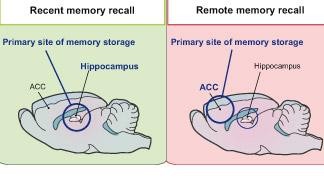
In a recent metaanalysis, Johannes Gräff from the BMI and Li-Huei Tsai from the MIT review the existing literature about long-term traumatic memories. They find that these memories are extremely resistent to attenuation and conclude that the most likely explanation for this phenomenon is a lack of neuroplasticity in the hippocampus, the site of memory formation.
How to attenuate traumatic memories has long been the focus of intensive research efforts, as traumatic memories are extremely persistent and heavily impinge on the quality of life. Despite the fact that traumatic memories are often not readily amenable to immediate intervention, surprisingly few studies have investigated treatment options for remote traumata in animal models. The few that have unanimously concluded that exposure therapy-based approaches, the most successful behavioral intervention for the attenuation of recent forms of traumata in humans, fail to effectively reduce remote fear memories. Here, we provide an overview of these animal studies with an emphasis on why remote traumatic memories might be refractory to behavioral interventions: A lack of neuroplasticity in brain areas relevant for learning and memory emerges as a common denominator of such resilience. We then outline the findings of a recent study in mice showing that by combining exposure therapy-like approaches with small molecule inhibitors of histone deacetylases (HDACis), even remote memories can be persistently attenuated. This pharmacological intervention reinstated neuroplasticity to levels comparable to those found upon successful attenuation of recent memories. Thus, HDACis-or any other agent capable of heightening neuroplasticity-in conjunction with exposure therapy-based treatments might constitute a promising approach to overcome remote traumata.
Embo Reports, online July 16, 2014 : "On the resilience of remote traumatic memories against exposure therapy-mediated attenuation" Li-Huei Tsai (MIT) and Johannes Gräff (EPFL-SV-BMI)