
Rare amnesic patient reveals body's role in autobiographical memory
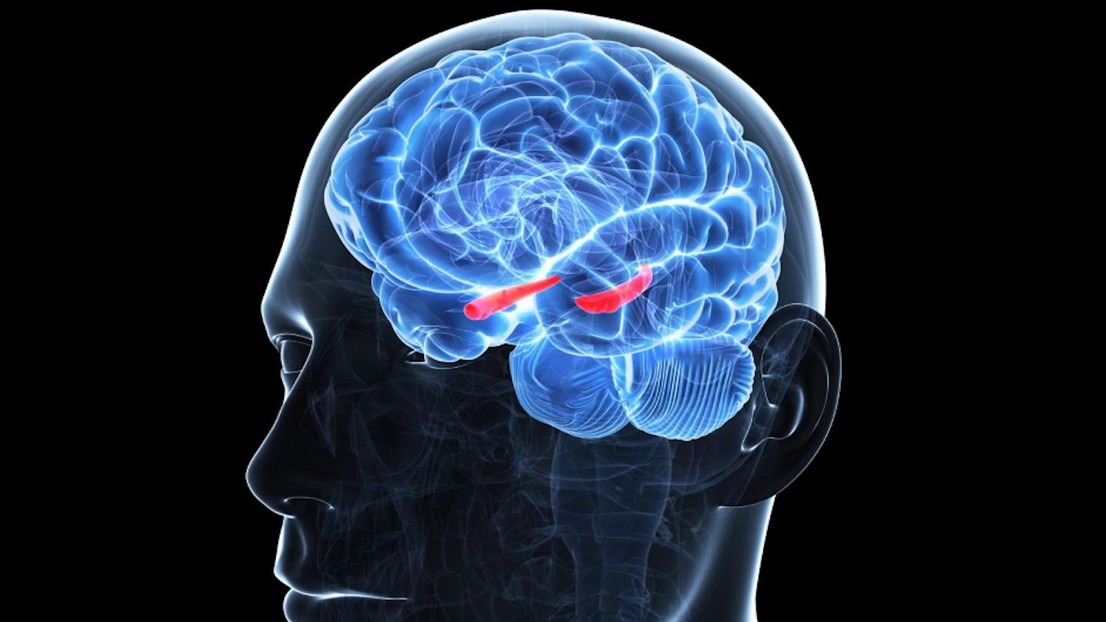
© 2025 EPFL Amnesic patient showed bilateral atrophy of hippocampus caused by infection
A study in a rare amnesic patient caused by bilateral hippocampal damage revealed how bodily self-consciousness shapes autobiographical memory, highlighting the hippocampus and its connectivity.
We are happy to announce the acceptance of a new article in Cortex by our alumni Nathalie Meyer (now at Sungkyunkwan University, South Korea) and Mariana Babo Rebelo (now at IDIBAPS, Barcelona, Spain) as co-first authors.
The study investigates how bodily self-consciousness (BSC) influences episodic autobiographical memory (EAM) - the ability to recollect personal past experiences. While previous research in healthy individuals suggested that “embodied encoding” (i.e., encoding life events from one’s own body perspective) benefits memory (Meyer & Gauthier, et al., 2024), the neural mechanisms underlying this link are still unclear.
In this work, the authors studied a rare patient with severe amnesia due to rare bilateral hippocampal damage, and combined immersive virtual reality with behavioral memory experiments. Strikingly, unlike healthy controls, the patient showed worse recollection when encoding events in an embodied versus disembodied state, particularly when retrieving the perspective of past events.
MRI analyses in a group of healthy participants revealed that hippocampal–parietal connectivity supports the coupling between BSC and EAM. These findings provide further evidence that the hippocampus is not only critical for autobiographical memory, but also for how the embodied context during encoding and related aspects of BSC shape memory and later subjective re-experiencing and reliving.
This study advances our understanding of the neural basis of embodied memory and highlights the importance of the hippocampus and its network connectivity in linking subjective aspects of the bodily self with subjective aspects of personal past experiences.
This work was supported by the EMPIRIS foundation, by two donors advised by CARIGEST SA (Fondazione Teofilo Rossi di Montelera e di Premuda and a second one wishing to remain anonymous), and the "Personalized Health and Related Technologies" (PHRT-205) of the ETH Domain to Olaf Blanke, and by a Ramon y Cajal grant (RYC2023-042702-1), funded by ICIU/AEI/10.13039/501100011033 and the FSE+ to Mariana Babo-Rebelo.
Meyer & Gauthier, N. H. & B., Stampacchia, S., Boscheron, J., Babo-Rebelo, M., Potheegadoo, J., Herbelin, B., Lance, F., Alvarez, V., Franc, E., Esposito, F., Morais Lacerda, M., & Blanke, O. (2024). Embodiment in episodic memory through premotor-hippocampal coupling. Communications Biology, 7(1), 1111. https://doi.org/10.1038/s42003-024-06757-7