
Promotion at ENAC
© 2026 EPFL
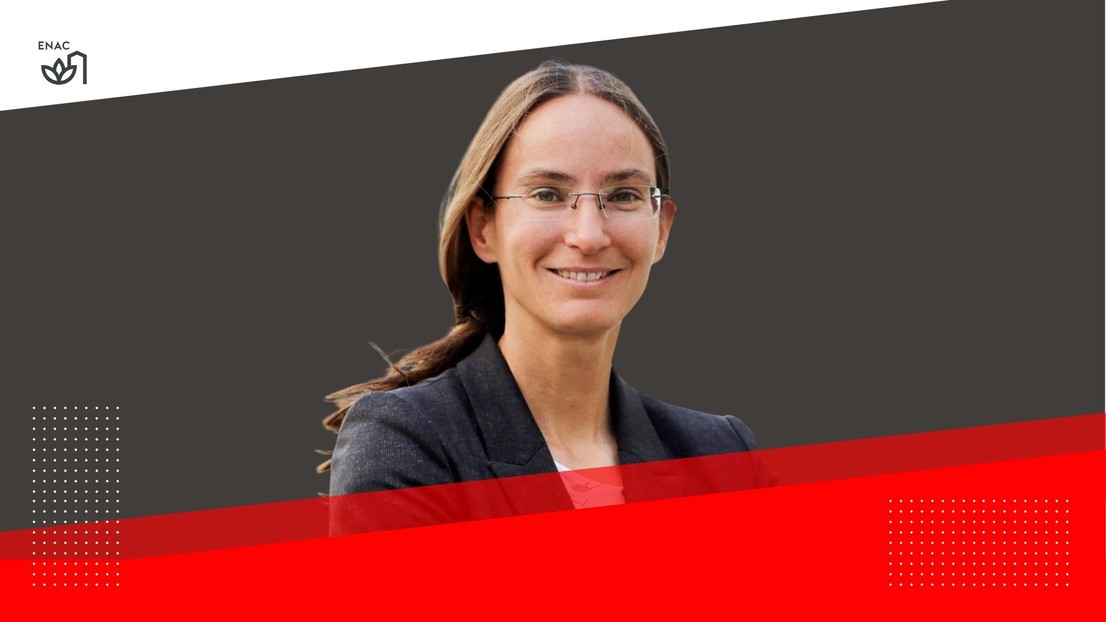
The ETH Board has announced new faculty appointments and promotions at EPFL, including one promotion within the ENAC School: Professor Julia Schmale. We would like to extend our sincere congratulations to her.

Professor Julia Schmale, currently Tenure Track Assistant Professor at EPFL, as Associate Professor of Extreme Environments in the School of Architecture, Civil and Environmental Engineering (ENAC)
Julia Schmale’s research investigates the composition of the atmosphere, the influence of natural and anthropogenic aerosols on cloud formation, and their effects on the warming of the polar regions. Her work provides important insights for climate models and for understanding climate change. She has taken part in numerous field campaigns in the polar regions and driven forward the development of measuring instruments. As an acknowledged expert in atmospheric sciences, she has participated in significant missions such as Tara Polar Station and Antarctica InSync. Her promotion enables EPFL to strengthen its research and teaching in the area of climate and extreme environments.
Working in locations where humans have nearly no presence provides a different perspective on the busy life we live here. What really matters, what does not, and what we would like to preserve for the future.
- What does this promotion mean to you personally?
The promotion is a great honor. I personally feel that our profession comes with an important responsibility of providing high level education and pertinent information for the public while being ‘human and approachable’ in times of AI.
- What direction would you like to give your research over the coming years?
The coming years are critical in polar research with several upcoming big international efforts such as Antarctica InSync and the 5th International Polar Year. With the Extreme Environments Research Laboratory, we will focus on constraining the large uncertainties that result from aerosol-cloud interactions for polar climate change quantification. Specifically, we will perform vertical observations with our tethered balloons and investigate the sources – natural and anthropogenic – of aerosol particles based on their chemical composition.