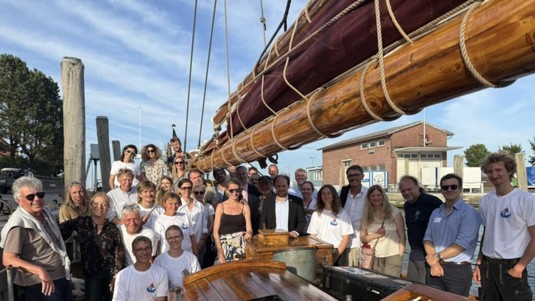
Prof. Chappellaz at the "Sailing for Science" Workshop

© 2025 Kristina Dolezych / Waalem GmbH & Co. KG
From July 19-20, Professor Jérôme Chappellaz participated in a workshop on "Floating Platforms / Sailing for Science" in Waalem (Föhr, Germany), representing the Forel Heritage Association as Chairman of its Scientific Committee. This workshop brought together scientists, engineers, and sailing vessel operators to explore how sailing and drifting platforms can advance polar science.
A Strategic Vision for Polar Research
Co-organized by the Swiss Polar Institute (Daniele Rod) and the Monterey Bay Aquarium Research Institute / Alfred Wegener Institute (Antje Boetius), the workshop examined how sailing vessels could enhance research capabilities in Antarctica and the Southern Ocean—supporting the goals of the Antarctica InSync initiative.
The timing couldn't be more relevant for SENSE research activities. As our team continues to push the boundaries of polar oceanography and climate science, the FOREL sailboat represents exactly the kind of innovative, sustainable research platform that this workshop championed.
The FOREL Advantage in Context
Workshop discussions highlighted how sailing vessels offer unique advantages for polar research through their operational efficiency and ability to access challenging locations. The FOREL polar research platform demonstrates these capabilities:
- Sustainable research approach: Low environmental impact
- Access to remote locations: Capability to reach under-studied coastal and fjord systems
- Extended deployment flexibility: Ability to adapt research programs based on real-time conditions
- Cost-effective operations: Reduced operational costs enabling longer field campaigns
Technological Integration and Citizen Science
A key focus of the workshop was on advances in miniaturized sensors, plug-and-play systems, and citizen science integration—areas where FOREL operations are already pioneering innovative approaches. The workshop identified these technological developments as key enablers for increasing the scientific value of sailing platforms.
Our experiences with SubOcean instruments and other advanced sensor systems aboard FOREL align perfectly with this vision of integrating cutting-edge technology with traditional sailing platforms.
Shaping Future Collaboration
The workshop concluded with discussions on enhancing collaboration across the polar community, covering logistics, education, permitting, and communication. As a key outcome, participants committed to producing a white paper outlining the scientific themes, technologies, and collaborative frameworks needed to fully integrate sailing platforms into future Antarctica InSync activities.
Representing the Forel Heritage Association in these discussions positioned SENSE and EPFL research at the forefront of this evolving field.
Looking Ahead
This initiative marks an important step forward in aligning powerful sailing platforms with major international polar research initiatives. By broadening observational capacities and connecting communities across disciplines and latitudes, these efforts will help shape the future of polar science.
The workshop reinforced that sailing platforms are not just alternative research tools; they represent a fundamental shift toward more sustainable, flexible, and accessible polar science.
SENSE is proud to be pioneering this approach through our FOREL operations and continued innovation in polar research methodologies.