
Predicting Flood-Driven Displacement at the FloodTraces Hackathon
© 2026 EPFL
At the FloodTraces workshop in London, Martin Hendrick and a global team of partners have built a machine-learning model using mobility and rainfall data to detect early signals of population displacement, enabling faster and more informed humanitarian response.
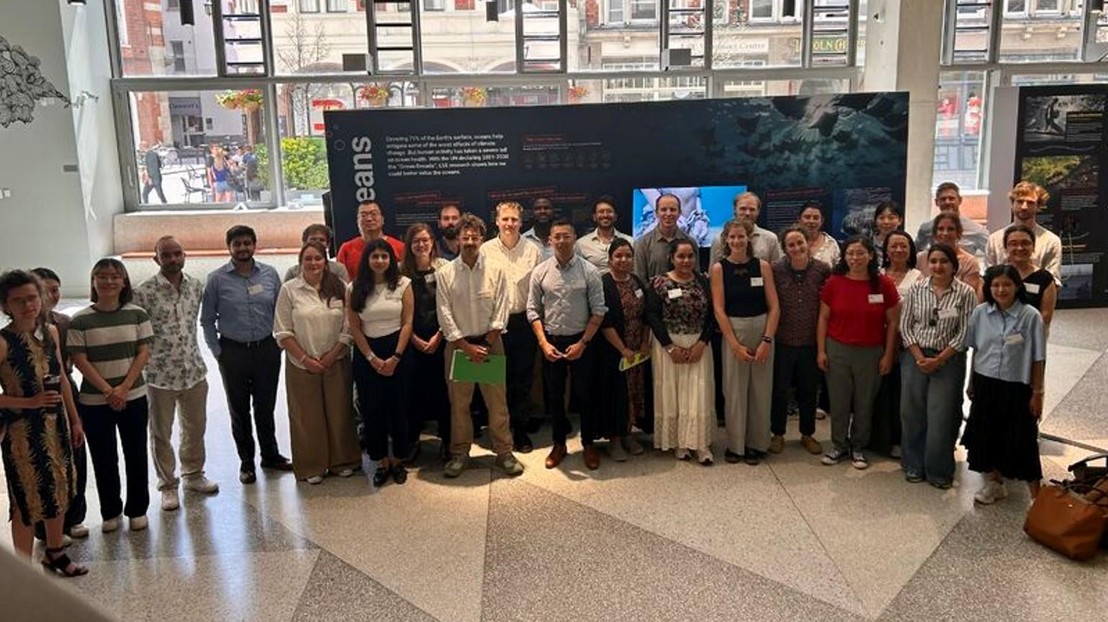
URBES was pleased to participate in the FloodTraces policy workshop and hackathon, organized by researchers from the Geographic Data Science Lab at the University of Liverpool. The event was hosted at the London School of Economics in London and brought together a diverse group of partners, including the Humanitarian and Stabilisation Operations Team, the Displacement Tracking Matrix, and the LSE International Inequalities Institute, with support from Imago – SDR UK Imagery Data Service.
The hackathon addressed a critical challenge in flood response: the lack of timely and spatially detailed data on flood-induced displacement. Collaborating with experts from the University of Liverpool, IOM–UN, and Banca d’Italia, Martin Hendrick (URBES) contributed its expertise in mobility data analysis and machine learning to develop an innovative forecasting approach.
The team built a model designed to detect early signals of displacement by identifying anomalies in population movement patterns. Using origin–destination mobility data from the 2022 and 2025 flood events in Pakistan, combined with rainfall and contextual variables, the model predicts next-day anomalies in human mobility. Rather than estimating confirmed numbers of displaced individuals, it highlights “displacement-pressure” signals - movements that significantly exceed normal baseline patterns.
These insights can be translated into daily maps that reveal areas experiencing unusually high outward movement, as well as locations receiving increased inflows. Such outputs have the potential to enhance early situational awareness and support more timely, data-driven decision-making in humanitarian operations.
For more information, you can read this article.
