
“Not being connected all the time is super important”
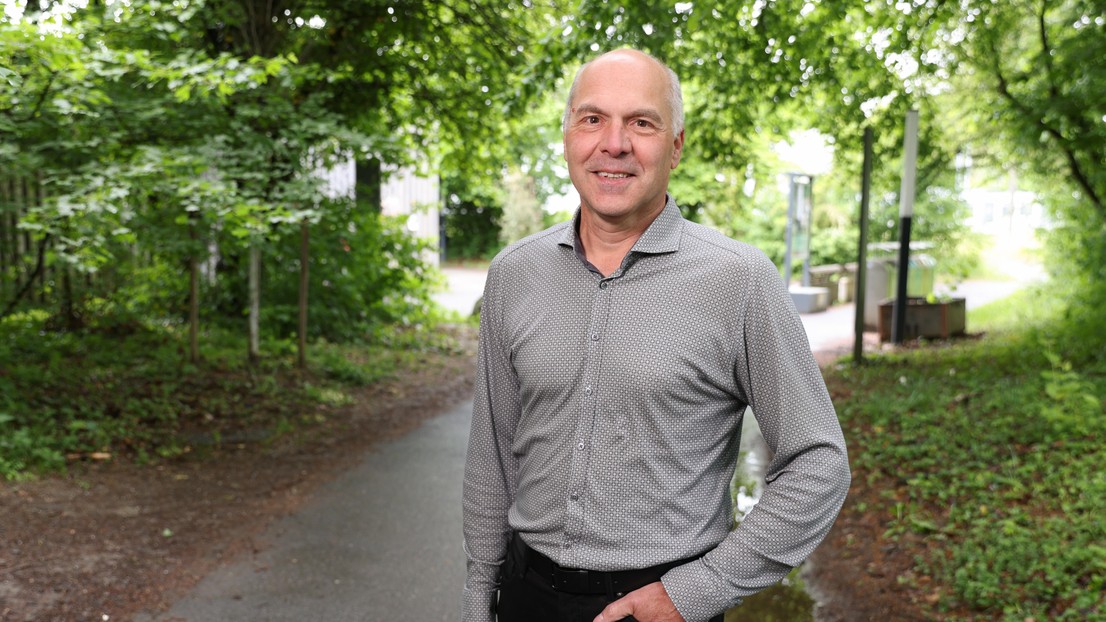
Jeroen van Hunen - 2026 EPFL/Alain Herzog - CC-BY-SA 4.0
Head of the Research Office, Jeroen van Hunen has a little secret to stay mentally healthy: short walks a few times per day, alone and without his phone. He also has other recipes, like listening loudly to Rachmaninov while building and fixing all sorts of things.
For this new episode of the Mind to Mind series, we turned to a member of the administrative and technical staff. After a postdoc in Physics at EPFL more than 20 years ago, Jeroen van Hunen worked for six years as a data analyst for a bank in Zurich. Back at EPFL, he has been Director of the Doctoral School, Deputy of the ENAC Dean, and since 2023 he has been leading the Research Office.
What are your major sources of stress in your daily work?
Stress comes from the number and variety of questions and issues, from very pragmatic ones to relatively complicated ones. I like this, but it’s a mental effort to move from one subject to another all the time.
For example, I have to follow up on requests related to office equipment for new colleagues, as well as on more complex issues concerning the funding conditions of research projects. In some cases, the conditions set by funders are not acceptable for EPFL, while at the same time it is crucial for the scientist to secure the funding. We therefore need to find a balance between the interests of the Principal Investigator (PI), the funder’s requirements, and EPFL’s institutional interests. This requires close exchange with professors and PI, especially early‑career ones, because our goal is to facilitate their research. At the same time, there are constraints we must respect. Managing this dual role can be challenging.
Then there is simply the number of e-mails coming in: more than you can handle. Sometimes you feel like you are losing control; later you catch up, but you never know that in advance.
Do you feel people have too much on their plate at EPFL?
Those who come to work at EPFL are highly motivated and set high standards for themselves. When things don’t go as planned, we tend to put pressure on ourselves. Having high standards is important, but it also comes with challenges.
Everything goes so fast, and there are so many communication channels. There are e‑mails, then Teams, Jabber, WhatsApp, etc. So many tools that you have to look at and are dependent on. That is a source of stress too. For instance, I broke my phone twice in the past months, and without it it was impossible to sign some documents, since we have to go through the authentication process.
How do you relax? What do you do to stay mentally healthy?
I really like to take my little sandwich alone outside, taking a small walk for ten or fifteen minutes. For me, that really works. I go out, I don’t bring my phone, and I spend this time alone, because during the rest of the day I exchange with people all the time. I don’t even listen to music. It’s very important for me not to be connected all the time and to do nothing. Sometimes I just go outside for five minutes, not for any specific problem, just to relax my brain, to let it run. I also do my little personal “bike to work,” which helps me a lot.
Fifteen minutes for lunch is very short!
I go for my sandwich for ten to fifteen minutes, and I go out again for five minutes, more than once a day. And then I have my bike ride. Altogether, I’m outside for close to one hour per day.
It’s really important for me to be alone and not connected during those moments, listening to the birds and watching the flowers. Then there is my garden, which is super important for me. And I love fixing and making things. It can be significant electrical installations or physical materials. For instance, I made all my furniture at home. That is very relaxing for me. I don’t like to buy new things. I like to keep things in good condition, so maintaining things is also related to being careful. And then I listen to music very loudly. When I’m tired, after half an hour of loud music, I feel like I’ve had several espressos.
What kind of music?
What I like most is Rachmaninov. I bought a box with 30 CDs, that’s everything he ever made. His music may seem chaotic, but there is always a structure, which I don’t even try to analyse; I prefer to keep the magic. I also like jazz, and rock from the sixties and seventies, like Creedence Clearwater Revival and those kinds of bands. I played a bit of piano as well, and I started to play the violin during COVID, but with fingers of my age… Nevertheless, I still plan to improve when I retire.
What advice would you give to newcomers at EPFL?
I see that everybody is always busy doing something, either watching videos on their phone or reading. I also read a lot every day, but I think it’s important to have moments when you just do nothing, without any purpose. Not being connected all the time is, I think, super, super important.
Another piece of advice would be to trust people. People here are really motivated and knowledgeable. It’s important to be open, making sure that people are not afraid of making mistakes. That relation of trust helps me get through the week. Trust is very important to empower people, and I personally try to avoid micromanagement. People should trust themselves. Self‑confidence is super important.
How do you build that confidence?
By not letting yourself be too much influenced by other people. If you don’t know, you should listen, but you should filter what people say. If you have analysed something, don’t let people quickly decide that they know better.
That said, it also helps to put oneself in the other person’s position. Often people don’t do that. They think from their own point of view, but you should really try to say: If I were in this position, with all these concerns, how would I do? That helps too.
What do you appreciate most in the EPFL environment?
I think the campus is getting nicer and nicer. The fact that we have more trees, more green spaces. I don’t need much more from EPFL.
What is missing, I think, are places to go for a beer or for dinner. After 5 pm, almost everything on campus is closed. Yes, there is the Quartier Nord, but there too, if you go at 7 o’clock, many places are already closed. Apart from Satellite, there are not many cozy places for staff members — or people of my age — to go to, you know, with maybe some jazz music in the corner.
I think this is also important because scientists don’t always have the opportunity to talk with scientists from outside their research field. So, I think we need some kind of faculty club. The name may sound somewhat too exclusive, but in some other universities that have it, nobody takes this name so seriously. It could be called something else, but a nice place.
And what do you enjoy most in the EPFL atmosphere?
I like the students, their independence, their originality. They do funny things, with music festivals and events. The other day, some were dancing in the architecture building. I like all that, when they do their own things.
In terms of mental health, what kind of support should EPFL provide?
I find that the atmosphere at EPFL is very good, people seem to be happy and in a good mental health, but of course we can always do better.
Often issues are due to pressure people put on themselves, but also because people are not always trained for managing teams. At EPFL, there is not much obligatory on these aspects. Maybe some dedicated trainings, not just two hours here and there, but a couple of days really immersive would be good.
Also, it would be great to have more places to sit outside on campus, with more tables, more green, more shade. And hopefully more people who take the time not to be connected. For me, that is really the key point: not being connected. Just letting your thoughts go.