
New course on "Systems Approaches for Urban Transitions"
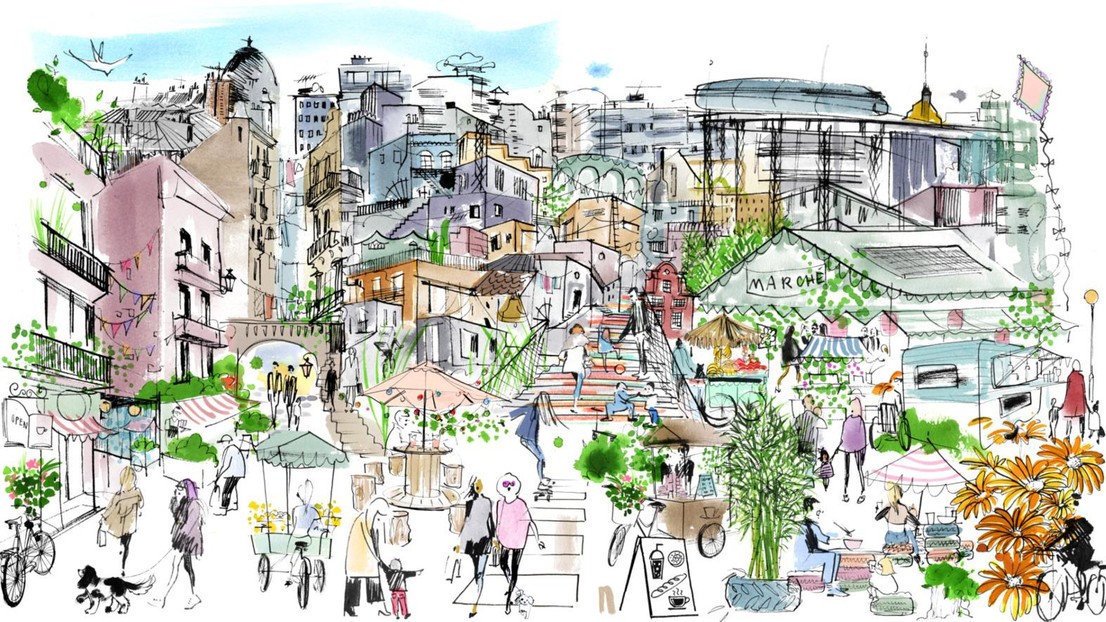
© Courtesy of UN-Habitat and Global Utmaning
The new Urban Systems master's program at EPFL has officially launched with a new course on sustainable urban development: Systems Approaches for Urban Transitions.
The Laboratory of Human-Environment Relations in Urban Systems (HERUS) at EPFL is delighted to announce a new course, Systems Approaches for Urban Transitions, which is a core part of the new Urban Systems master's program. This course provides a qualitative systems thinking framework for analyzing urban transitions. Students will develop an understanding of urban environments as complex social-technical-ecological systems, exploring the interactions among the built environment, ecological systems, and social dynamics. By focusing on these connections, the course aims to equip students with the skills to tackle urban challenges and develop effective strategies for sustainable city transitions.
The course features a diverse teaching team that blends expertise from various fields, reflecting the interdisciplinary nature of the subject. The teaching team for this course comprises Prof. Claudia Binder, head of the HERUS laboratory, Dr. Maria Anna Hecher, an environmental system scientist specializing in social science research in energy transitions, Dr. Simon Montfort, a political scientist, and Prof. Beate Jessel, who heads the Laboratory of Landscape Development (LAND).
Setting the stage for the course's unique approach, the inaugural guest lecture featured our special guest speaker, Darius Karácsony, who offered a truly interdisciplinary perspective. He explored how buildings and urban environments can shape perception and emotional states, and connected design strategies from historical examples to current discussions of anthropic systems and urban transformation. Integrating findings from collaborations with neuroscientists and archaeologists, the lecture illustrated how a shift in design practice might support cognitively resonant urban landscapes that sparked and rewarded human curiosity and encouraged cultural connectivity.