Neural Concept's AI Engineering Redefining Modern Industry
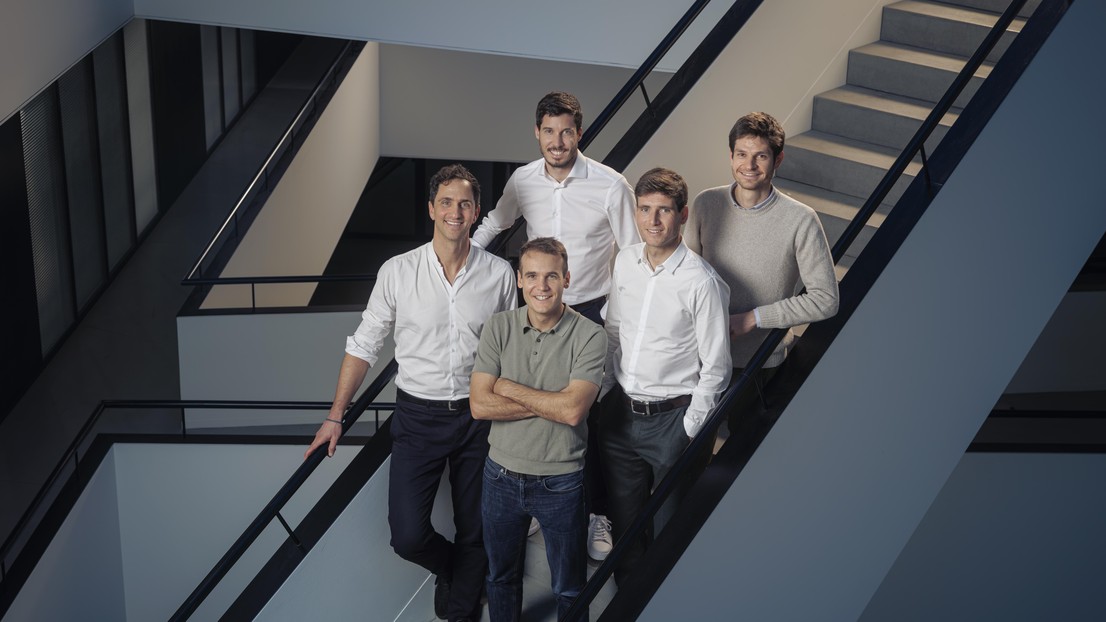
Neural Concept Lead Team
An Interview with Pierre Baqué on building Neural Concept and shaping the future of AI-Powered Engineering Design.
Artificial intelligence is often described through the lens of chatbots, image generation, or digital assistants. Yet some of its most consequential applications are unfolding far from consumer interfaces: inside engineering teams working on cars, aircraft, and highly complex industrial systems where every design decision has physical consequences.
It is in this environment that we find Neural Concept. Founded by EPFL researcher and entrepreneur Pierre Baqué, the company develops AI tools that aim to accelerate how engineers design and iterate on complex physical products.
At its core, the idea is simple, but ambitious: engineering should move faster, and AI can help make that possible.
“We are developing an AI platform for engineers to help them accelerate the design of complex products” Baqué says “The goal is to help engineering teams make better decisions faster.”
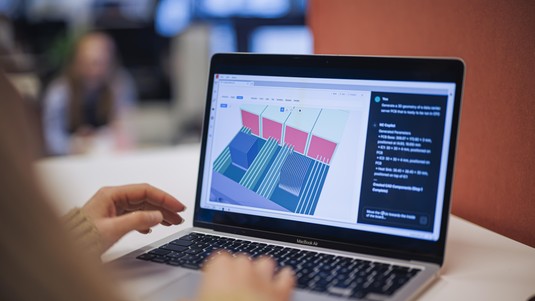
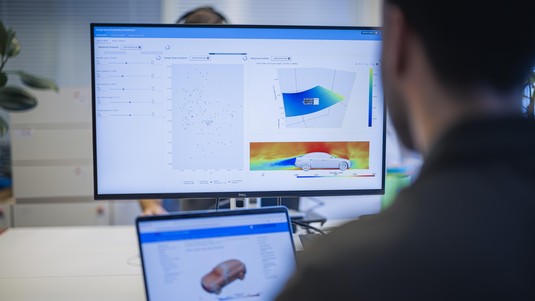
To understand Neural Concept, it helps to understand how modern engineering works. Most industrial design today does not start with physical prototypes, but with digital environments. Engineers build virtual models using CAD software and test them using simulation tools that can reproduce real-world physics such as aerodynamics, heat transfer, structural resistance, fluid dynamics.
These tools are powerful, but they also create a bottleneck: each simulation can take a significant amount of time and computing power, and exploring many design variations becomes difficult. In practice, engineers often end up testing only a limited number of configurations, guided heavily by experience and intuition.
Neural Concept builds a layer on top of this ecosystem. Rather than replacing existing simulation tools, the company connects to them and adds what Baqué calls “a layer of intelligence” that helps engineers navigate complexity. The platform learns from geometric and simulation data, identifies patterns, and helps generate insights that guide design decisions.
“We use the data generated by this digital layer to provide better insights to designers and engineers” he explains “The idea is to help them take better decisions faster.”
In practice, this means engineers can explore more design options, understand trade-offs earlier in the process, and reduce the time between an idea and a validated solution. Instead of manually iterating through a small number of possibilities, teams can expand the design space significantly while still grounding decisions in physics-based simulation. A more recent evolution of this approach is what the company calls an AI Design Copilot. The system is designed to intervene earlier in the engineering process, not just analyzing existing simulations but helping generate initial design candidates from scratch. This shift, from analyzing engineering data to actively generating design possibilities, reflects a broader transformation in how AI is being integrated into industrial workflows. For Neural Concept, it is also a continuation of a journey that began in research.
Before founding the company, Baqué was completing a PhD at EPFL’s Computer Vision Laboratory, where he worked on early deep learning models capable of understanding 3D geometries rather than only images. At the time, this was still a relatively unexplored direction in machine learning.
But alongside technical progress in AI, he became increasingly aware of a gap in industrial engineering: while simulation tools had become extremely advanced, the process of using them to make decisions was still largely manual and slow. Engineers had data, but not always the tools to fully exploit it. The idea for Neural Concept emerged at the intersection of these two worlds: AI capable of understanding geometry, and engineering teams needing faster, more scalable decision-making tools.
What followed was a transition from academic research into company building. And for Baqué, the difference between the two environments is not only technical, but also deeply cultural.
Research, he explains, is defined by depth and time. It allows for long exploration cycles and detailed investigation of ideas. Building a company, on the other hand, compresses everything into execution. That fact of having a clear goal, the need to build something real, used, and measurable, is also what made the transition captivating.
This mindset carries into how he describes entrepreneurship itself. Rather than a linear journey with defined milestones, he sees it as a continuous process of adaptation, one where the company must constantly evolve alongside technology.
In his view, this constant reinvention is not a burden, but part of the nature of the work. Especially in AI, where the pace of change has accelerated dramatically in recent years, stability is less relevant than responsiveness.
“You cannot afford to be slow or conservative,” he says. “You always have to move forward, bring more energy, and be more ambitious.”
That sense of motion is something he clearly embraces. The intensity of startup life, the fast feedback loops, and the need to constantly adapt are, for him, not just challenges but sources of momentum.
The environment around Neural Concept also played a significant role in shaping its trajectory. The company originated from EPFL, where Baqué conceived the initial ideas for the technology during his Ph.D. program and recruited collaborators who would later join him in establishing the company.
During that period, he developed one of the first software systems capable of performing AI-driven shape simulations. An algorithm was patented and licensed to Neural Concept, providing an important foundation for the company in its early days. This intellectual property helped demonstrate the technology's novelty, attract initial investors, and lend credibility to a young company entering a highly technical market.
“EPFL gave me the time during my Ph.D. program to develop the initial concepts for the technology,” says Baqué. "It also gave me the opportunity to meet the people who became part of the founding team."
As the company has grown, it has moved beyond its origins as a university spinout into a broader industrial AI company with international reach. But the mindset of continuous development, shaped in part by its research roots, remains central.
Today, Neural Concept is expanding its platform, strengthening its technology, and scaling internationally, with teams and customers across multiple regions.
Still, Baqué’s perspective on entrepreneurship remains grounded less in scale itself than in intent. What matters, he suggests, is not simply building a company, but building something meaningful in a space that is constantly evolving.
For those considering a similar path, his reflection is straightforward: it is less about certainty and more about conviction.
“You have to understand not only the AI of today, but the AI of tomorrow,” he says.
And beyond that, the motivation has to go deeper than opportunity alone.
“You really need to want to bring something to the world that you deeply care about,” he says. “That’s what allows you to sustain the journey in the long run.”