
Matteo Favero joined HOBEL as a new PostDoc
© 2026 EPFL
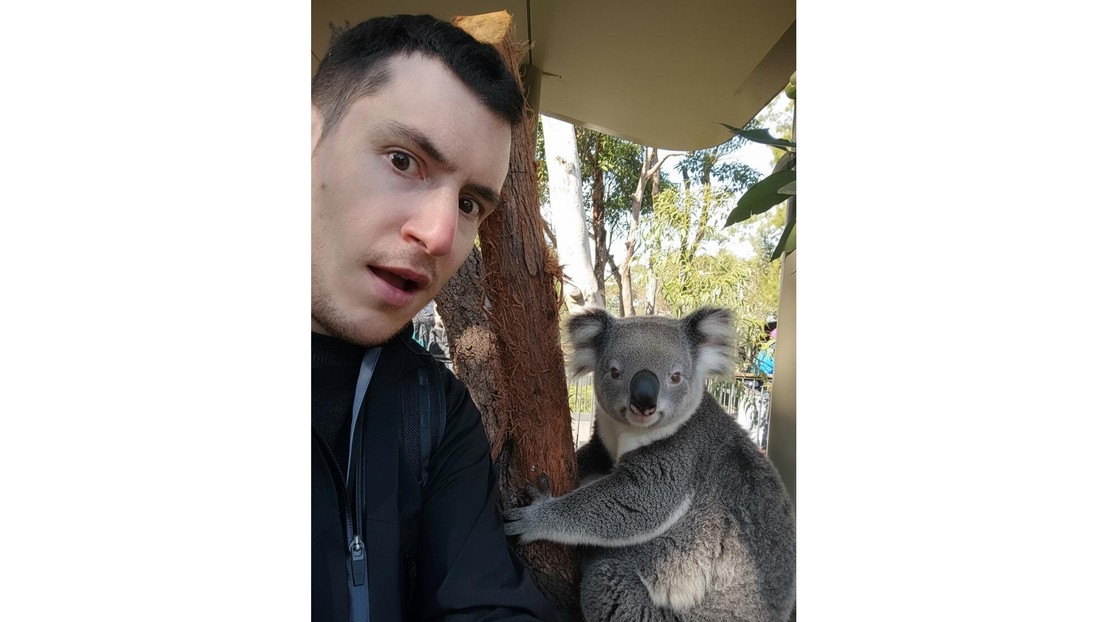
Dr. Matteo Favero joined the HOBEL lab as a postdoc in January 2026. Welcome, Matteo!
Matteo shares his experiences, impressions, and plans as he joins the Human-Oriented Built Environment Lab from the Engineering and Technology for Human-Oriented Sustainability Lab at EPFL. Let's see what he shares.
You have been here at the EPFL Fribourg for several years - what are your impressions?
I arrived in Fribourg at the beginning of 2023 and was immediately struck by the city’s distinctive character and human scale. The historic old town, the surrounding landscape, and the strong sense of local identity all contribute to an enjoyable place to live. At EPFL, I am delighted to join the HOBEL team and contribute to both research and teaching.
Can you tell us more about your career in academia?
My academic path began with a BSc and MSc in Building Engineering at Politecnico di Milano, Italy, where I gained solid foundations in analysis, design, and management across the disciplines of building engineering. After a few years working as a building engineer, I decided to pursue a PhD in Civil and Environmental Engineering at the Norwegian University of Science and Technology (NTNU). My research there focused on understanding and modelling human responses to indoor thermal environments. After completing my doctorate in 2022, I joined EPFL as a postdoctoral researcher, where I continue to explore topics at the intersection of human comfort, building performance, and data-driven modelling.
What are you most excited about your appointment at the Human-Oriented Built Environment Lab?
I am especially excited to be part of the Human-Oriented Built Environment Lab because of its strong people-centred vision and interdisciplinary nature. The lab offers an excellent environment to study the interaction between occupants and buildings through rigorous scientific approaches, while staying closely connected to real-world applications. Working with researchers from diverse backgrounds is one of the most rewarding aspects of being at HOBEL.
What will your research focus on over the coming year?
Over the next year, my research will mainly focus on developing a monitoring campaign for European buildings undergoing prefabricated energy-efficiency retrofits to assess their impact on indoor environmental quality and occupant behaviour. I also plan to design experiments and apply causal inference methods further to deepen our understanding of human–building interaction.
What inspires you about the built environment of the future and its research schemes?
I am inspired by the growing move towards human-centric and adaptive buildings. The built environment of the future will need to strike a careful balance between energy performance and occupant well-being, acknowledging that people actively interact with and shape their surroundings. Research schemes that combine building physics, behavioural science, and advanced modelling open up exciting possibilities for rethinking how buildings are designed and operated.
Whenever you are not doing research, what are you interested in?
Outside of research, I enjoy spending time outdoors and exploring the regions around Fribourg and Lausanne. I also value cultural activities and social moments that help me switch off and gain fresh perspectives, which often feed back into my work in unexpected ways. I have always been keen to learn new languages, and I hope to find time to improve my (still lacking) French.