
Low-tech innovation at SENSE EPFL
© 2025 EPFL
In 2024, EPFL students were embarking on a new Sailowtech scientific expedition along the coasts of Brittany and the United Kingdom. On board: robust, accessible “low-tech” oceanographic instruments developed in collaboration with EPFL’s SENSE laboratory.
As research institutions worldwide increasingly acknowledge the need to reduce the environmental impact of field science, a group of EPFL students is taking concrete action. Members of the student association Sailowtech, founded in 2022, aim to promote frugal engineering and sustainable scientific practices by relying on sailing boats as platforms for oceanographic data collection.
Last year, the team launched the expedition, Arvor, during which they tested several low-tech instruments designed and built within the association. Among them was a continuousdissolved CO₂ measurement system, developed at EPFL by Alexandre Tellier as part of his Master’s project in robotics under the supervision of Jérôme Chappellaz and Sébastien Lavanchy at the SENSE laboratory.
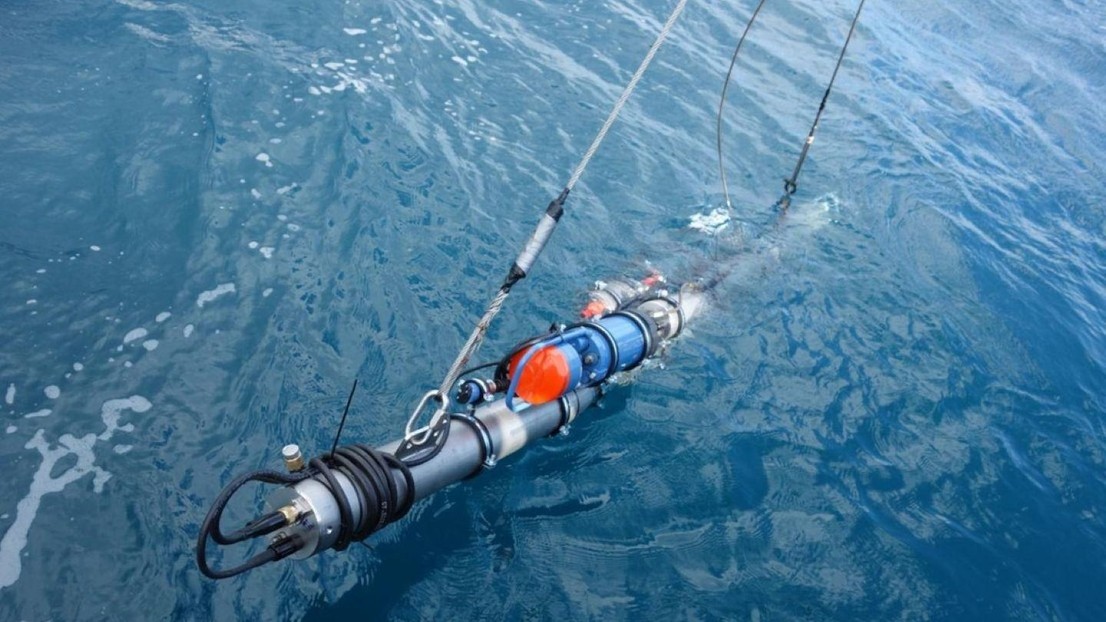
This device follows a first project completed by Tellier during the 2022/2023 academic year: the construction of a low-tech CTD probe—a core oceanographic instrument measuring conductivity, temperature, and depth—also designed at SENSE with an approach focused on simplicity, repairability and minimal environmental footprint.
The new CO₂ analyser will undergo its first real-world tests during the Sailowtech navigation in the English Channel. The expedition will take place over several weeks, following the coasts of Brittany and Great Britain. The objective: collect essential oceanographic data while demonstrating that meaningful scientific measurements can be performed with low-impact technologies.
For Jérôme Chappellaz, head of the SENSE lab, the initiative illustrates how sustainable engineering can reshape marine research:
By relying on sailing vessels and low-tech instruments, we can drastically reduce the environmental footprint of oceanographic campaigns, especially in sensitive environments such as polar regions. The work of Alexandre and the Sailowtech team shows how ingenuity and frugality can open new pathways for marine science.
The association hopes that these tools—accessible, durable, and designed for easy replication—will help democratize ocean observation and inspire similar frugal-science initiatives.