Lauréat de la distinction EDAR 2023: Giuseppe Galbiati
© 2023 Giuseppe Galbiati
Distinction EPFL programme doctoral EDAR 2023 pour l'excellente thèse: 'Preserving suspended structures with light façades (1960-1980). Architectural study and retrofitting proposals.' par Giuseppe Galbiati.
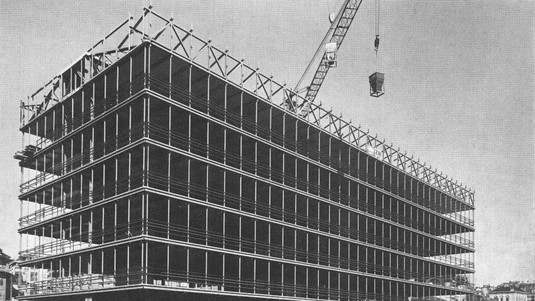
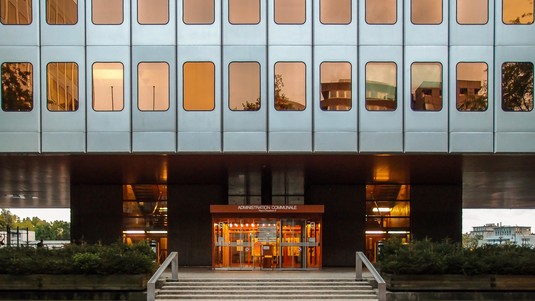
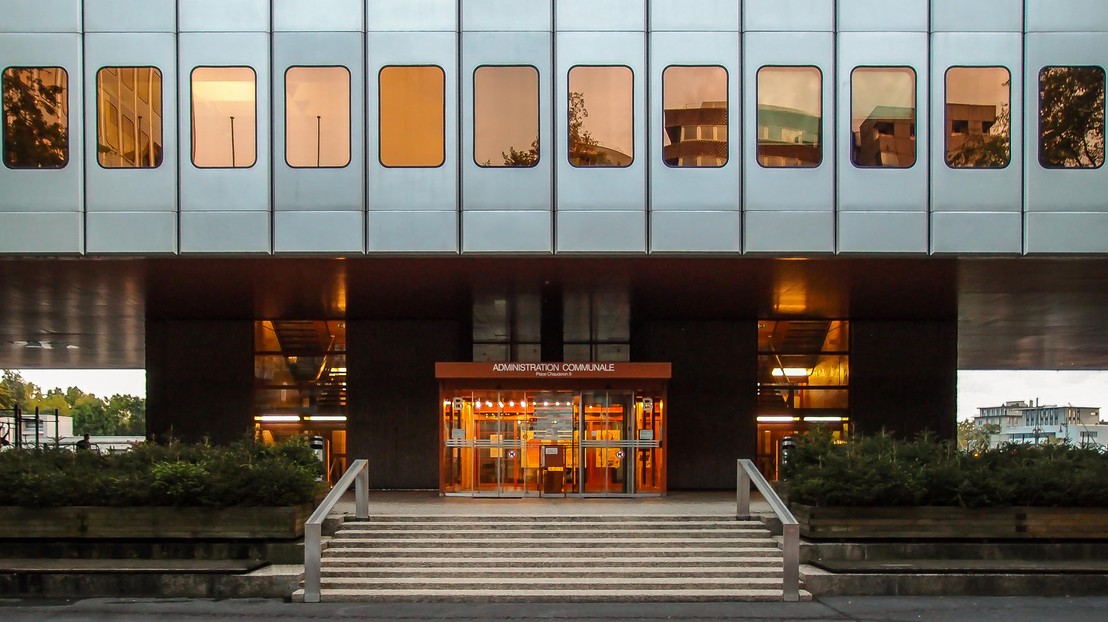
Pour son édition 2023, le programme doctoral EDAR, Architecture et sciences de la ville, a récompensé le travail de Giuseppe Galbiati sur les bâtiments des années 1960-1980. Il y étudie des édifices à structures suspendues et façades légères, tels que le bâtiment administratif de Chauderon à Lausanne, et propose des pistes de rénovation énergétique.
La thèse a été développée dans le cadre d'une codirection entre l'EPFL et l'UCLouvain avec le prof. Franz Graf, EPFL - TSAM et la prof. Giulia Marino, UCLouvain - LAB - Superpositions.
Résumé de la thèse en anglais:
Nowadays, the energy efficiency of the existing building stock is internationally accepted as an absolutely topical issue. Building retrofitting is strongly encouraged by European and Swiss polices, but how to cope with the energy improvement of the modern architectural heritage? The answer lies in rethinking common retrofitting practices, reconciling energy efficiency and architectural preservation, often perceived as two clashing issues. Starting from the pilot research for the Citè du Lignon restoration, Giuseppe Galbiati’s work is devoted to defining a cohesive step-by-step method for the thermal retrofitting of modern heritage. This multidisciplinary approach includes historical and architectural studies, technological analysis, thermal diagnosis, alternative scenarios’ proposal and multicriteria comparison. The proposed method has been tested on the challenging suspended building type, opening to encouraging results. Three selected case studies, including Chauderon administrative complex in Lausanne, demonstrated the concrete possibility to reduce by more than 60% the actual energy needs, while fully respecting the architectural qualities of the post-war construction. The final aim of the research is to enlarge the methodological applicability, covering by analogy a wider range of modern buildings, thus answering the complex needs of contemporary society.