
Invited Seminar by Prof. Enrique M del Castillo
© 2026 EPFL
Computational Modeling of Dynamic Failure: From Localization to Collapse
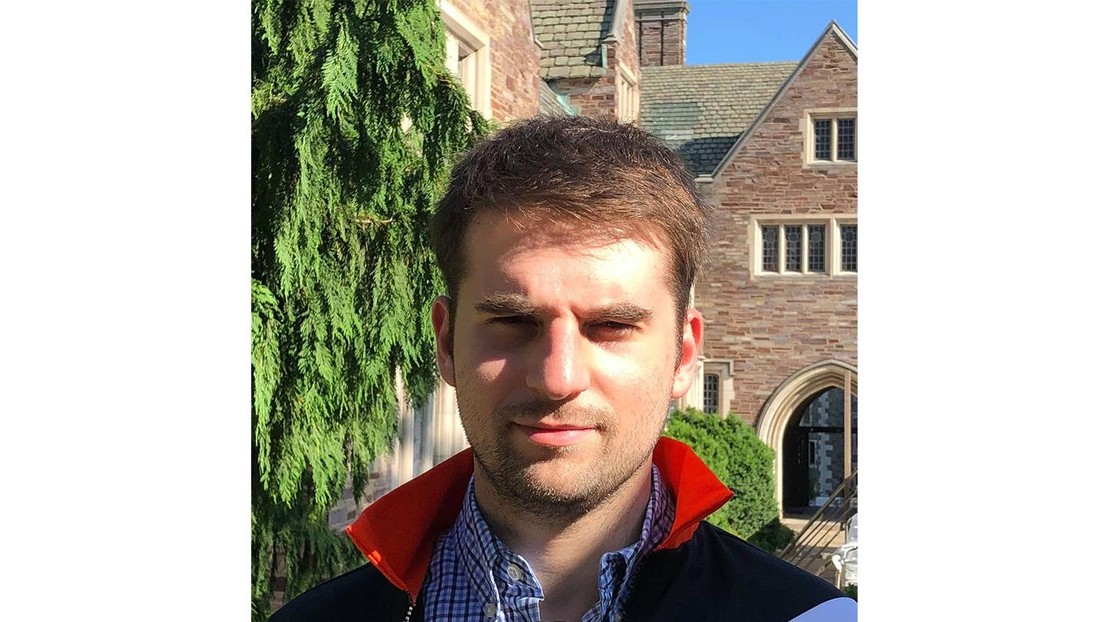
Speaker: Enrique del Castillo, Assistant Professor, Northeastern University, MA, USA.
Monday July 27 2026
Room GC B1 10
Time: 12h00 to 13h00
ABSTRACT: With climate change and increasing climate volatility, it is imperative to be able to model the transition from localized failure and fracture to the ensuing post-failure behavior of geomaterials or engineering materials to mitigate risks posed by natural hazards on our aging and increasingly overwhelmed infrastructure. At the same time, there is a mounting need to design "safe-to-fail" infrastructure to achieve resiliency goals. However, the standard finite element method commonly used in engineering analysis requires substantial modification to account for the discontinuities inherent to fracture or strain localization and struggles with the large deformation characteristic of the post-failure regime due to mesh distortion. In this talk I demonstrate that smoothed particle hydrodynamics (SPH), a meshfree continuum-based particle method together with diffuse nonlocal continuum representations of fracture, namely damage mechanics and the phase-field method, can help circumvent these limitations. Together they offer a computational toolbox for understanding and modeling failure as a dynamically evolving process, spanning the initiation of localized deformation, the propagation and possible control or delay of discrete fracture, and ultimately catastrophic collapse and large-deformation behavior. The examples considered range from brittle glass-like fracture to highly inelastic deformation in soils. Given the ubiquity of fluid-saturation in geomaterials, in this talk I also present hydromechanical frameworks for coupled solid-fluid deformation for SPH developed in my work and show how through high-resolution numerical simulations they are adept at modeling various geohazards including fault rupture, embankment collapse, and landslides. Some ongoing research and future work will also be presented and discussed.
Bio: Enrique M. del Castillo is an assistant professor at Northeastern University in the Civil and Environmental Engineering Department. Until recently, he was a postdoctoral research associate working with Prof. Liuchi Li in the Department of Civil and Environmental Engineering at Princeton University. Enrique obtained his MS and PhD in Civil Engineering (Geomechanics) at Stanford University, where he was advised by Prof. Ronaldo Borja and received the NSF Graduate Research Fellowship, the Stanford Graduate Fellowship, and the Siebel Scholars Fellowship. Prior to his time at Stanford, Enrique completed an AB in Geosciences with highest honors at Princeton University where he was the recipient of the Arthur F. Buddington Award in Geosciences and the PRISM Best Senior Thesis Award in Material Science and Engineering. Enrique’s research focuses on computational modeling of faults, fractures, and deformation bands, as well as on the post-failure behavior of geomaterials using meshfree methods, with implications for understanding earthquake-related hazards and improving critical infrastructure resilience.