
Interview Leonard Wilhelm – CYD Master Thesis Fellow
© 2026 EPFL
To promote research and education in cyber defence, EPFL and the Cyber-Defence (CYD) Campus launched a rolling call for Master Thesis Fellowships – A Talent Program for Cyber Defence Research.
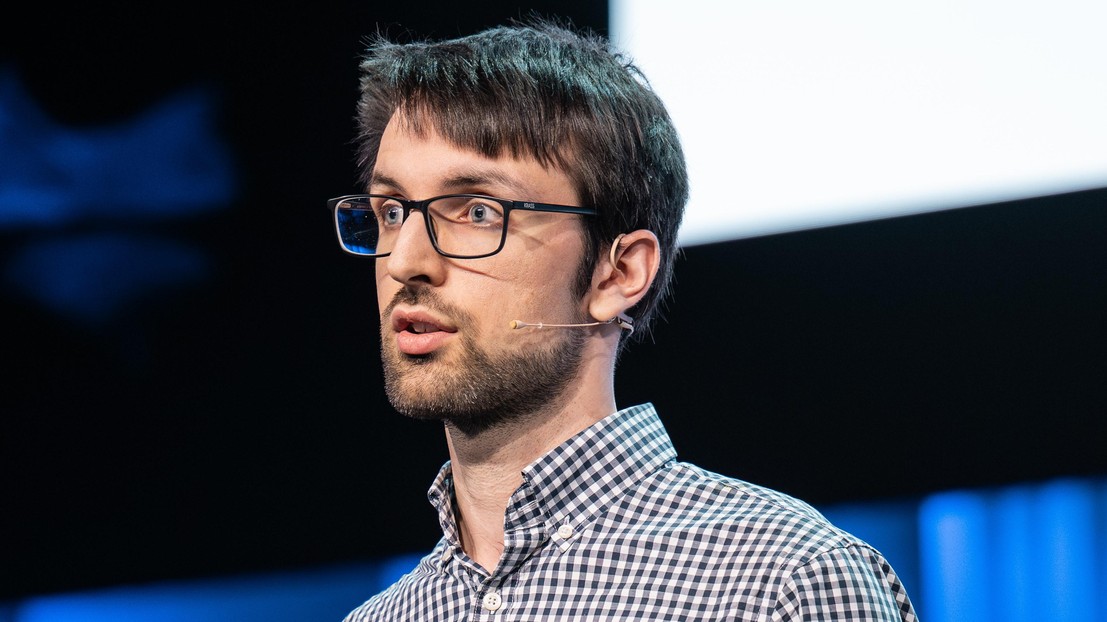
This month we introduce you to Leonard Wilhelm, a CYD Master Thesis Fellowship recipient, who is finishing up his Master Thesis in the Secure and Private AI Lab at ETH Zurich.
- How did you find out about the CYD Fellowships and what motivated you to apply?
I learned about the CYD Fellowship program through an email from the Master’s studies administration. But what really motivated me to apply was a friend of mine who was completing his master’s thesis at the CYD Campus and shared his positive experience with me.
I investigated a future challenge that large language models (LLMs) pose to malware detection systems for IoT devices. In particular, I explored using reinforcement learning to fine-tune an LLM for malware variant generation, and how those generated variants could in turn be reused to strengthen detection systems.
- What were the advantages of conducting your master thesis project at the CYD Campus?
I really enjoyed the working environment at the CYD Campus. The office is a great space for exchanging ideas with fellow students and CYD Campus’ employees. The events organized by the CYD Campus, such as the CYD Conference, were also a valuable opportunity to connect with cybersecurity experts.
- Did you as a child dream of working in cyber defence?
- What is driving you to pursue research in cyber defence?
I have a long-standing interest in cybersecurity. At first, I was intrigued by the challenge of breaking a system, and by the fact that doing so could actually help improve the security of a product or computer system. Over time, I also came to really enjoy thinking about more effective protection mechanisms, which is what I focus on in my thesis.
- What is the most important lesson you have learned in your scientific career so far?
For me, the most important lesson is that you have to believe in your work. There will always be times when you get stuck, but it is important not to get frustrated and to keep trying new approaches.
- What are you most proud of in your career to date?
- Outside the lab, what do you enjoy doing most?
When I am not working on my thesis, I enjoy doing parkour with the Academic Sports Association Zurich (ASVZ). It’s a lot of fun and helps me relax and unwind.
I had high expectations, since I had heard many positive things about the program beforehand, particularly about the great working environment, the resources available, and the people. These were fully met during my time at the CYD Campus.
- Could you share some tips with future applicants who are considering applying for the CYD Fellowships?
I would recommend looking early for interesting research topics on the CYD webpage, or reaching out with your own ideas. Also, talk to your potential supervisor about your interest in applying. They will be able to give you additional guidance.