ICE lab took part at CLIMA 2025 conference
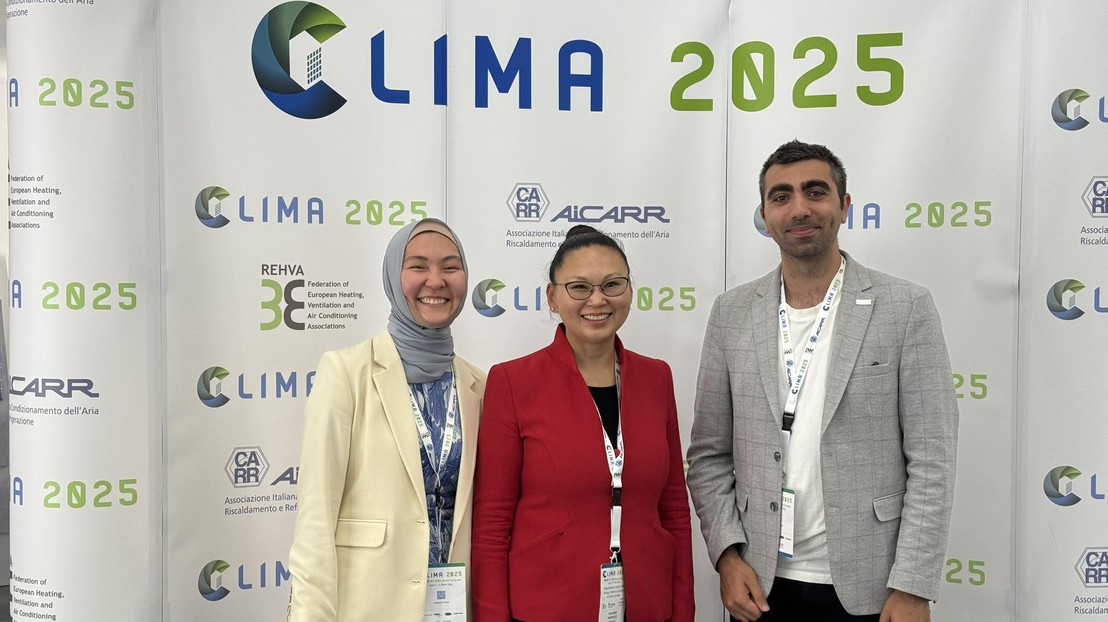
ICE lab at CLIMA 2025 © 2025 EPFL/Khovalyg
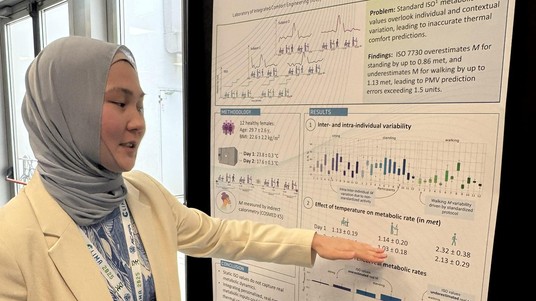
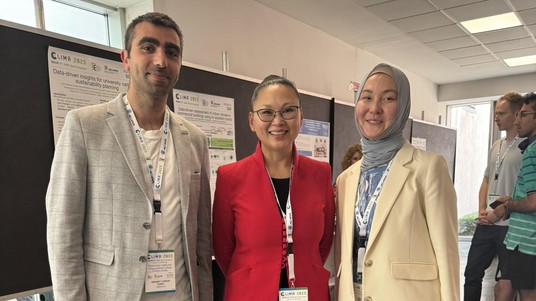
The CLIMA 2025 conference provided a great platform to showcase the ICE Lab’s research, connect with peers, and engage in stimulating discussions on cutting-edge trends and technological advancements. Fariza Sabit, a second-year PhD student, presented a poster on the variability of metabolic rate, while visiting researcher Mehmet Furkan Özbey shared his work on mean radiant temperature measurements. Both contributions sparked interest and highlighted the lab’s active role in advancing the field.
CLIMA 2025 in Milan was a genuinely engaging experience, not just for the range of topics covered, but for the quality of discussions it sparked.
Fariza Sabit, a second-year PhD student from the ICE lab, had the opportunity to present a poster comparing personalized metabolic rate data with standard ISO values, focusing on how tailoring these metrics could refine our understanding of thermal comfort. It led to some insightful conversations, not only about the concept itself, but also about the methodology, the interpretation of the results, and different ways to approach this kind of analysis in practice. It was refreshing to see such a high level of interest and critical feedback from both researchers and practitioners regarding the topic.
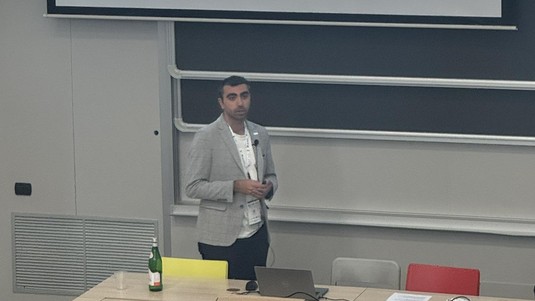
Mehmet Furkan Özbey, a visiting PhD student from Atılım University, presented his research on mean radiant temperature measurements in non-uniform radiant floor heating environments, which he conducted at the ICE lab. The study focused on comparing the conventional globe thermometer method with a novel mini.RES cube sensor, revealing that non-uniform heating significantly increases the uncertainty of mean radiant temperature measurements using the globe thermometer, by up to 2.31 °C. This highlights the limitations of traditional measurement tools in non-uniform radiant environments. The topic aligns closely with the focus of the CLIMA conference on indoor environmental quality and innovative HVAC solutions.
Presenting at the CLIMA 2025 was a valuable experience for both students, allowing them to engage with researchers working on thermal comfort and to build connections for potential future collaborations. Overall, the conference struck a good balance between rigor and open exchange, providing a welcome opportunity to connect with others working on similar challenges.