
“I am constantly amazed by my colleagues at EPFL”
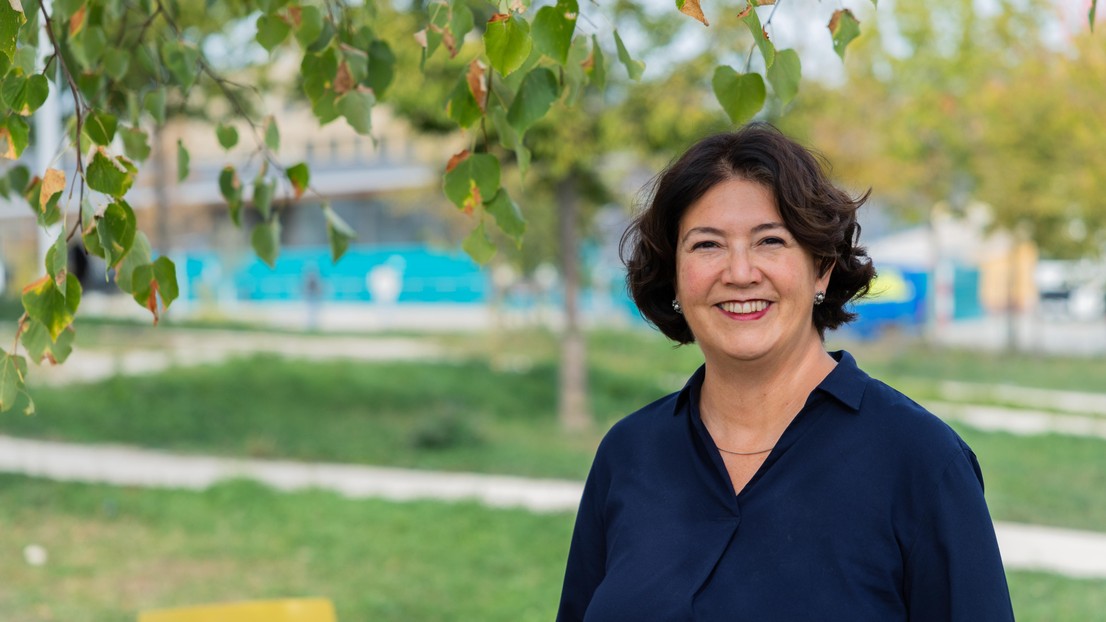
Ingrid Le Duc - 2026 EPFL/Lucien Wullyamoz - CC-BY-SA 4.0
In our "Mind to Mind" series, Ingrid Le Duc, president of EPFL’s new Staff Commission, explains that social ties are essential for her well-being.
Ingrid Le Duc will celebrate 20 years with EPFL in October and is committed to giving back to the School. Originally from Mexico, Le Duc obtained a PhD in social psychology from the London School of Economics before moving to her adoptive country, Switzerland. Now the president of EPFL’s Staff Commission, she is focused on helping others – an experience that gives her a real boost.
How do you manage stress at EPFL?
Whenever I start to feel overwhelmed, I take a break – I’ll chat with someone, grab a cup of coffee or go for a short walk. And I’ve set up various group activities that I enjoy doing in my free time: I joined a monthly book club with some of my girlfriends, and I swim three times a week with another group of friends.
So that often involves socializing!
Yes. I like to connect with people to recharge my batteries. I come from a Latin culture and a country where we socialize constantly. So I look for people to talk to. Of, course the reading and the swimming I do on my own, and I look forward to the moments afterwards when we laugh and discuss.. A bit of laughter a day is essential.
What has been your career path at EPFL?
I came to EPFL in 2006, after my son’s birth. He was seven weeks old when I was interviewed for the teaching advisor position at what is now the Teaching Support Center (CAPE). It’s not easy with young kids even when you share duties with your spouse. Kids often fall sick and you keep running back to daycare. You feel pressured to do everything right and be the perfect parent. When my daughter was born in 2009, I stressed about finding the right work-life balance. My group of friends really helped, and it was good to connect with other parents going through similar experiences. Some became sports and walking buddies.
What has changed for you between your job at CAPE and your current position?
I spent 17 years as a teaching advisor. It is great to interact with professors and sections through teaching. Two and a half years ago, I was offered a position split between ENAC and the Equal Opportunity Office to create and maintain efforts for a healthy and respectful workplace climate, mainly at EPFL Architecture. I enjoyed taking on this new role and applying my skills in social psychology – my PhD was on relationships in the workplace – something I had partially put on hold when I was focused on bringing-up a family.
And you recently joined the new Staff Commission (CoPe).
I applied to represent the administrative and technical staff out of a sense of loyalty to the School. I had spoken with colleagues who serve on the EPFL Assembly and other committees and realized that, after so many years, it was time to give something back. It’s a great experience – we learn things that help us better understand the School’s functioning and meet people we wouldn’t normally encounter during our regular day at work.
What are CoPe’s main focus areas and priorities?
It’s important to stress that we function as a committee, not as a trade union or association. Our key strength is our knowledge of EPFL’s internal functioning. We sit at the interface between employees and upper management, serving as a catalyst. Our remit covers working conditions ranging from the measures to cope with heat waves to the job insecurity as felt by employees under certain types of contracts, and so on.
Does this role add to your stress?
I like setting things up, but yes, it does take up a lot of time. You need to know how to manage it all and stay flexible. There are some weeks where I think, “OK, this week I can’t go swimming” or “I didn’t have time to read the books for my book club – but I’ll go to the meetings anyway because it’s an opportunity to see my friends.” And then things calm down and I’m able to read those books and swim again. I spend a lot of time with family and use that family time as a metric for my work-life balance; for instance, when I feel impatient and antsy, I know I need to calm down and get some exercise.
Why do you think people are so stressed at EPFL?
My impression is that it’s due to an accumulation of factors: new things to do, new systems to learn, units that get reorganized, and so on – on top of employees’ daily tasks. I also think there’s a taboo against speaking about mental health. The general attitude is: “I’ll tough it out, no need to talk about it.” But you’ve got to know when and how to reach out when you’re struggling.
Do you think EPFL is more demanding than other places?
EPFL does have a demanding environment. But the conditions here really aren’t bad – employees get loyalty bonuses, six weeks of vacation per year after they turn 50, and flextime. I think an employee’s working conditions depend a lot on their manager or supervisor. In academic settings, people don’t always feel comfortable telling their manager they need a break – they don’t know how to set boundaries, because nobody does. But on the other hand, I think working from home is quite common here. When I speak with people working elsewhere, they’re impressed by that flexibility.
What’s your best EPFL memory?
I have a lot of good memories. The ones related to well-being are when I’ve gone running and swimming in the lake with my colleagues. I also have a touching memory: when my mother died in Mexico, I received an enormous bouquet of flowers from my colleagues. It was so big that the delivery people almost fell over carrying it. I was deeply moved by their kindness. It was as if their sympathy materialized into the huge bouquet. That made me laugh at an otherwise very sad time.
What would you say to a colleague just starting out here?
That you’ll get lost in the acronyms, and that to get to know EPFL you’ve got to socialize. Eat at the cafeteria, even if you bring your own meal – just don’t keep to yourself. Opportunities to get to know people abound, such as guest lectures and day or evening events.
What can we improve at our School?
I’m a little biased because I know about many of the positive things here. Nevertheless, I realize that many employees are unaware of these. For instance, some professors aren’t aware of all the services available, such as the possibility for PhD students to speak with a counselor or psychotherapist, or of current initiatives aiming to better integrate neurodivergent people. EPFL also does a lot for women and parents, for example.
So you still see yourself at EPFL ten years from now?
That’s my hope! EPFL is a vibrant, dynamic, international place. I am constantly amazed by my colleagues. Maybe I’m too much of an optimistic and admirative person, but our environment here keeps me motivated and reminds me that I can still learn a lot. There are people from all sorts of fields – not just science and engineering!