
H2: Understanding and creating in a simulated world
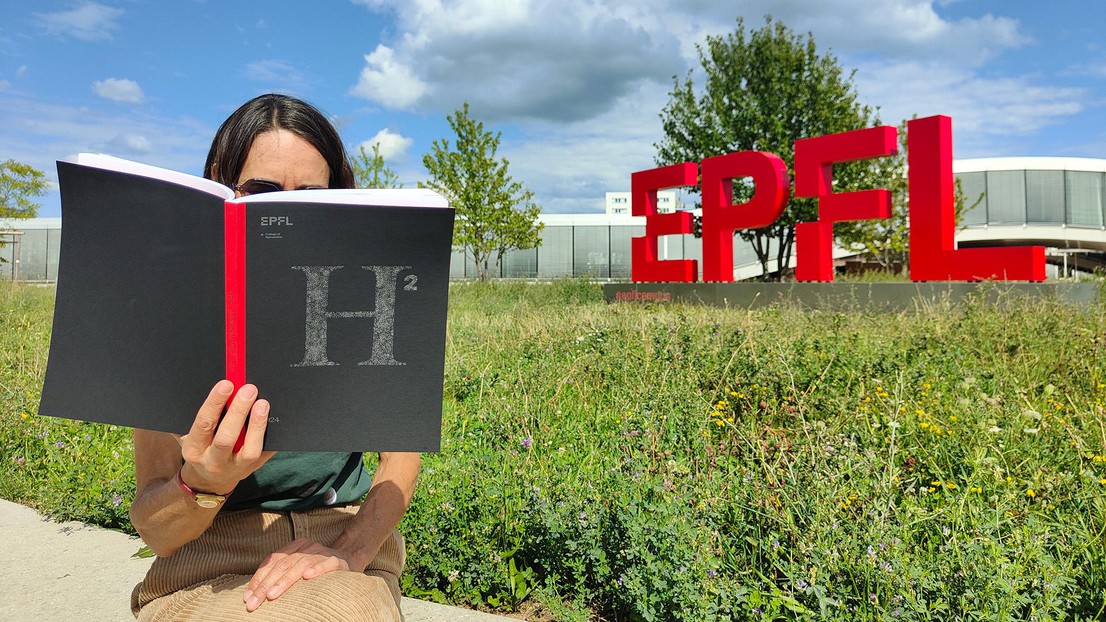
© Stephanie Parker, 2025 EPFL
The second edition of H, the unique publication from the College of Humanities that is part magazine, part annual report, has been released. Entitled simply H2, this new volume explores a decisive cultural and technological transformation: the emergence of the Age of Simulation.
At a time when our societies are undergoing unprecedented technological, cultural and ecological mutations, it is becoming essential to rethink the frameworks through which we understand, create and act. Artificial intelligence is profoundly transforming the way we write and create, just as digital technology is redefining artistic and performance practices. We are entering an age of simulation, where the boundary between the real and the virtual is becoming increasingly porous, calling for renewed critical vigilance.
It is in this space of convergence - between technology, humanities, art and society - that the reflections of H2 magazine are situated.
H2 is organized around seven themes:
- How will AI change the writing process?
- Performing in the digital era
- The age of simulation
- Acting locally and globally
- The learning process
- Where things converge
- Who we are
To launch this second edition, CDH Director Frédéric Kaplan spoke to us about H’s contribution to the conversation around “the age of simulation” and how he sees the future of H .
What do you mean by the term “Age of Simulation”?
We decided to dedicate an entire dossier to the “Age of Simulation” in H2 because we believe it is an essential evolution of the cultural and technological landscape. The latest AI systems, especially large language models, are best understood as simulators, designed to complete trajectories: sequences of words, images, videos, flows, or interactions. Their power lies in their ability to embody multiple roles, imitate styles, adopt voices, and generate coherent worlds. Once produced, the results of simulation re-enter cultural circulation, influence decision-making, inspire new creations, and participate in the evolution of shared meaning. This continuous feedback loop gives rise to a hyperreal culture, in which the boundary between representation and experience becomes increasingly porous.
Understanding the implications of this shift is essential. Students and researchers must learn to operate within this new epistemic regime. Mastery lies in the capacity to generate, interpret, and intervene within simulated realities. The various pieces of H2 state that to continue the scientific construction of reality, we must also engage with fictions.
What will we find in H2?
This publication includes insights into the evolving nature of musical and literary creation, explorations of digital archives, and new forms of visualization. Across all contributions, a shared concern emerges: how to think and create in an age where simulation has begun to define the conditions of knowledge itself. Like for our first edition, H, the content comes from investigations conducted by the large family of researchers and teachers of the College of Humanities but also involves many other stakeholders that are exploring new frontiers of knowledge.
What is the future of H magazine?
This second edition is published at a moment when EPFL is actively reimagining the future of interdisciplinary research within the institution. H magazine, conceived and curated within the College of Humanities, was created to offer a space where critical reflection, technological innovation, and artistic experimentation could intersect. Reinforced by a new series of public events and podcasts under the name L’heure H, the ambition of H has been to serve both as a lens on the transformations underway and as a platform for engaging on these topics publicly. As part of its evolution, H may continue in its current form or be transformed into new formats to increase its impact. My dream would be to transform H into a global voice, a continuously updated field guide and critical map for troubled and uncertain times. Some magazines born in academia or deeply connected to academic networks have managed to play a world wide role. We are now working to connect with a growing constellation of like-minded voices to help push this vision forward. Stay tuned.