Global Young Scientists Summit (GYSS) 2026
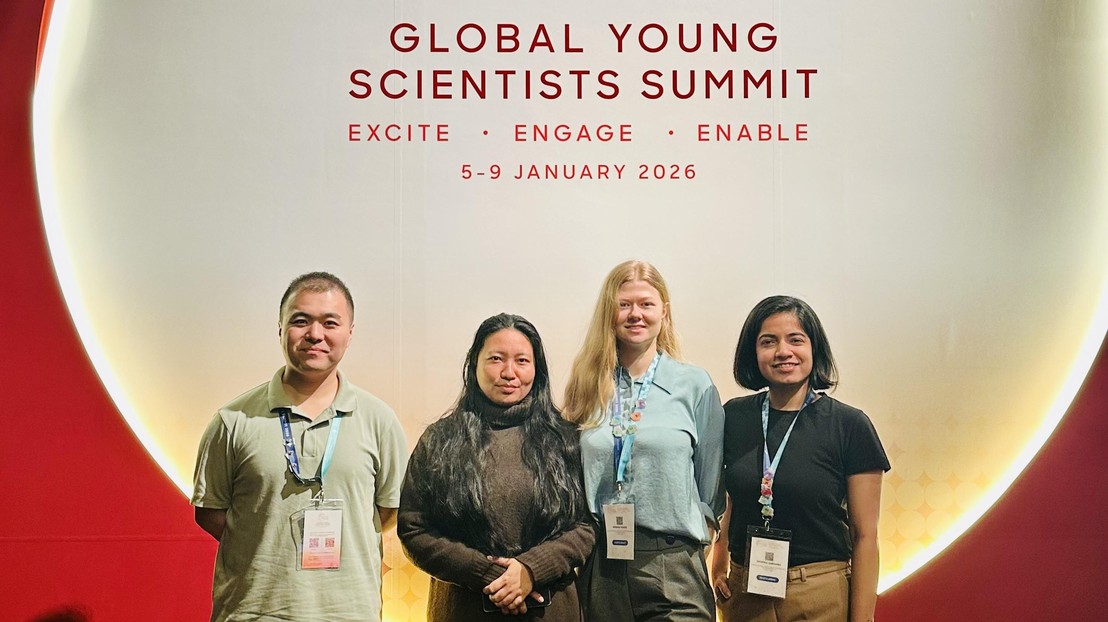
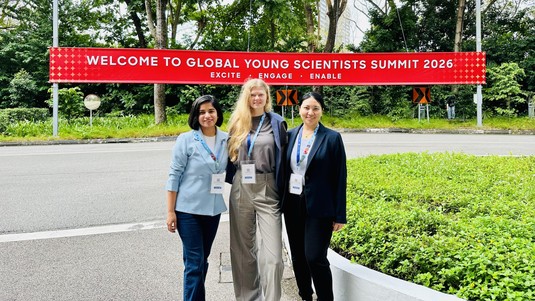
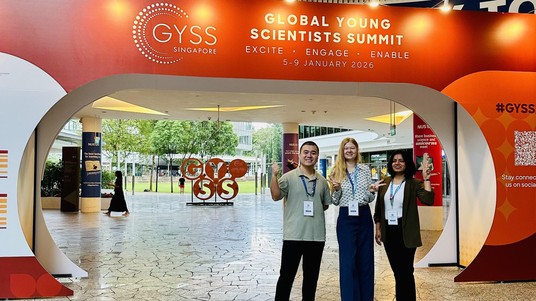
Shuqing Song, Monika Chanu Chongtham, Verena Rukes and Deepika Sardana at GYSS 2026
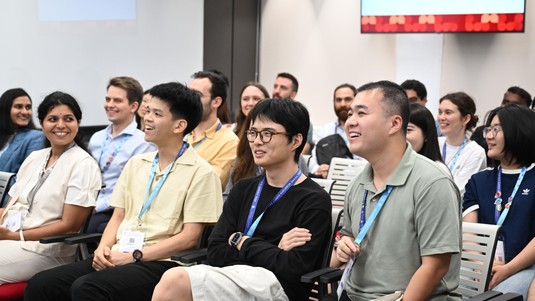
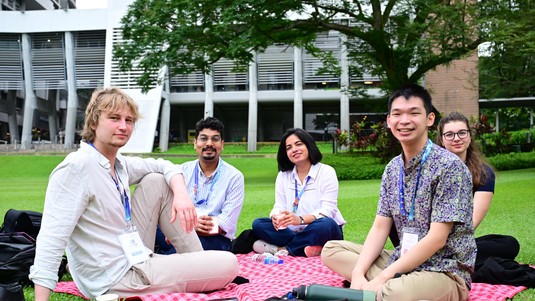
PhD candidates Shuqing Song (EDCH) and Verena Rukes (EDBB), along with postdoctoral researchers Deepika Sardana (Supramolecular Nanomaterials and Interfaces Laboratory – SUNMIL) and Monika Chanu Chongtham (Laboratory of Neuroepigenetics, Prof. Gräff), are the four EPFL representatives who participated in the Global Young Scientists Summit (GYSS) 2026, held in Singapore from 5–9 January. The Doctoral School is pleased to share highlights of their experience and give you a glimpse of this year's program.
Organised by the National Research Foundation, Singapore (NRF), GYSS’s mission is to inspire the next generation of scientific leaders by providing unique opportunities for promising young scientists to engage directly with eminent researchers, including Nobel Laureates. More than 400 young researchers from 57 countries took part in this year’s Summit, marking the largest edition since its launch in 2013.
Immersive programme designed to inspire and engage young researchers
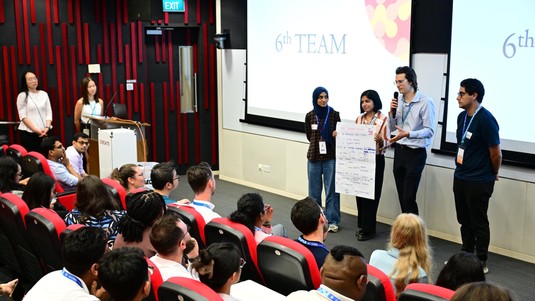
Over five days, participants attended 20 plenary lectures, four interactive panel discussions and more than ten small-group fireside chats spanning fields such as quantum technologies, artificial intelligence, neuroscience and chemistry. The programme also included visits to leading research institutions across Singapore, including Agency for Science, Technology and Research (A*STAR), the Campus for Research Excellence and Technological Enterprise (CREATE), the National University of Singapore (NUS), Nanyang Technological University, Singapore (NTU), Singapore Management University (SMU), and Singapore University of Technology and Design (SUTD).
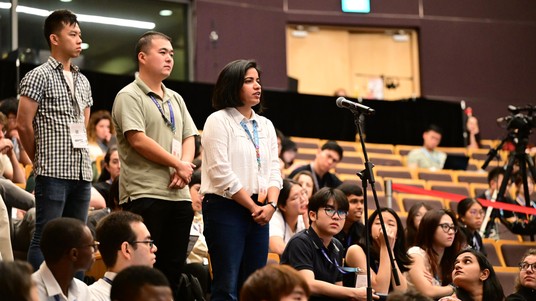
Designed as a highly interactive event, GYSS fosters dialogue between early-career researchers and established scientific leaders. Participants presented their work during poster sessions and quickfire pitch segments, engaged in thematic panel huddles exploring emerging scientific trends, and took part in small-group discussions with laureates focused on mentorship and career development. Dedicated networking events further encouraged cross-disciplinary and international connections.
Cutting-edge science on the global stage
Among the scientific highlights was a plenary lecture by Professor Sir Venki Ramakrishnan (2009 Nobel Prize in Chemistry), titled “Why We Die,” which explored the biological mechanisms of ageing and the scientific advances reshaping research on longevity and healthy lifespans.
Professor Joan Rose (2016 Stockholm Water Prize) addressed the global water pollution crisis in her lecture “Advancing Genetic Pollution Diagnostics for Healthy Waters,” examining the impact of climate change, population growth and industrialisation on water sustainability.
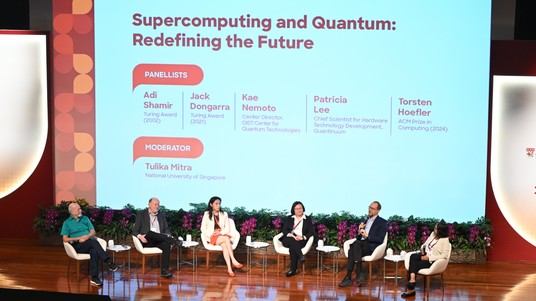
Panel discussions tackled some of today’s most pressing scientific challenges, including the transformative role of artificial intelligence in research and the future of computational power, with comparisons between supercomputing and quantum computing technologies and their potential to revolutionise industries.
EPFL participation and recognition
Each year, EPFL is invited to nominate participants, selected based on their research excellence, motivation, potential for global collaboration and representation of the diverse research landscape at EPFL. Final selection is made by the GYSS Organizing Committee.
In 2026, Shuqing Song, Verena Rukes, Deepika Sardana and Monika Chanu Chongtham were selected to represent EPFL. Their participation was co-financed by the Doctoral School for PhD candidates, respectively AVP-R for Postdoctoral Researchers, and the GYSS Organizing Committee.
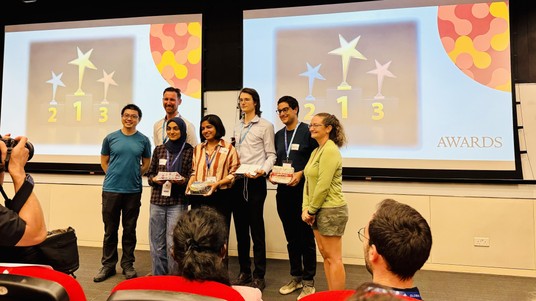
Reflecting on the experience, Deepika Sardana described GYSS as “transformative,” emphasising how discussions with laureates and peers reinforced the purpose and societal impact of scientific research. She was also awarded third prize at the MedTech Hackathon, organised in collaboration with the Singapore-MIT Alliance for Research & Technology and TUMCREATE.
Attending GYSS 2026 was a transformative experience. Interacting with Nobel laureates, such as Prof. Donna Strickland, broadened my perspectives and reinforced the fundamental principles of why and how we do science.

Shuqing Song highlighted the value of informal exchanges with laureates, noting that discussions on career development, research independence and long-term vision provided practical guidance and personal encouragement.
A very memorable takeaway came from a dinner conversation with Prof. Randy Schekman. Hearing his perspective on career development was genuinely valuable and personally encouraging. It helped me reflect on how I want to shape my own trajectory in the coming years.

Verena also valued the opportunity to seek advice regarding her next career steps and described the guidance she received as both thoughtful and highly beneficial.
Ultimately, perhaps my favourite part of the conference was the energy of the attendees - connecting with so many peers who are deeply passionate about driving scientific progress.
The personal stories shared by Nobel Laureates left a lasting impression on Monika. Hearing how groundbreaking ideas were often initially rejected — and how perseverance, supportive environments and sometimes even luck played a role in success — offered lessons that extended beyond science itself.
Science, we can learn from any conference, but life lessons that can change your entire trajectory, you will only hear here.

Feeling inspired to join next year’s summit?
EPFL continues to support and encourage early-career researchers to participate in such global platforms, which not only enhance their academic profile, but also contribute to the school’s overall reputation on the world stage.
Stay tuned for the 2027 call for applications, in the meantime explore highlights from the GYSS 2026 event here or visit the official GYSS website.