
Gabriele Stentella - CYD Master Thesis Fellow
© 2026 EPFL
To promote research and education in cyber defence, EPFL and the Cyber-Defence (CYD) Campus launched a rolling call for Master Thesis Fellowships – A Talent Program for Cyber Defence Research.
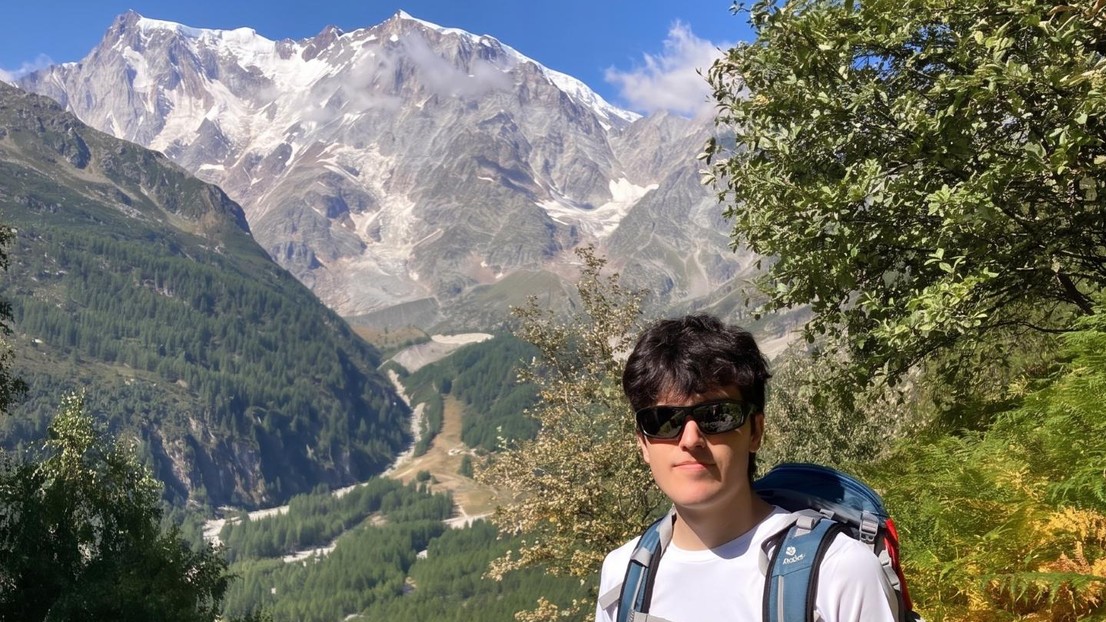
This month we introduce you to Gabriele Stentella, a CYD Master Thesis Fellowship recipient, who is finishing up his Master Thesis in the System Security Group at ETH Zurich.
- How did you find out about the CYD Fellowships and what motivated you to apply?
I first learned about the fellowship while searching for a suitable semester project prior to my master's thesis. During a discussion with my supervisor, he mentioned the CYD Fellowship program, saying that it was the perfect chance for me to get practical experience in line with my research.
My project focused on the fingerprinting of drone radio control links. Specifically, I developed and trained a machine learning model designed to extract features from these radio signals. This model was then used to classify the control signals of various drones based purely on their distinct physical-level signal characteristics, contributing to more robust detection methods.
- What were the advantages of conducting your master thesis project at the CYD Campus?
- Did you as a child dream of working in cyber defence?
- What is driving you to pursue research in cyber defence?
I am driven by the opportunity to secure critical infrastructure as well as the everyday systems we all rely on. I enjoy the challenge of designing real-world solutions that act as safeguards for vital systems and networks.
- What is the most important lesson you have learned in your scientific career so far?
The biggest takeaway I’ve had is the great value of collaboration and informal discussion. The key to generating new ideas and driving real progress in research is having highly knowledgeable and insightful peers to discuss your project with. I think some of the best breakthroughs have come from just being able to talk to other fellows and my CYD mentor, also outside of structured meetings.
- What are you most proud of in your career to date?
I am most proud of my own thesis project itself. Taking an initial idea, developing it into a concrete research proposal, and then exploring all of its technical aspects from start to finish has been a deeply satisfying and rewarding achievement. - Outside the lab, what do you enjoy doing most?
- What were your expectations about the CYD Fellowships?
I thought I was going to be in a very inspirational and innovative environment, where I could pursue my project. I was particularly looking forward to exchanging ideas and receiving input from incredibly knowledgeable experts, and the fellowship has certainly provided that collaborative atmosphere.
- Could you share some tips with future applicants who are considering applying for the CYD Fellowships?
My main advice is to find a topic that genuinely interests you and proactively reach out to researchers working in that specific area to discuss potential projects. It is always great to come up with your own ideas , both to tailor your thesis to your interests , and to show real interest in the research topic.