
From Svalbard to Antarctica: Preserving the World's Climate Memory
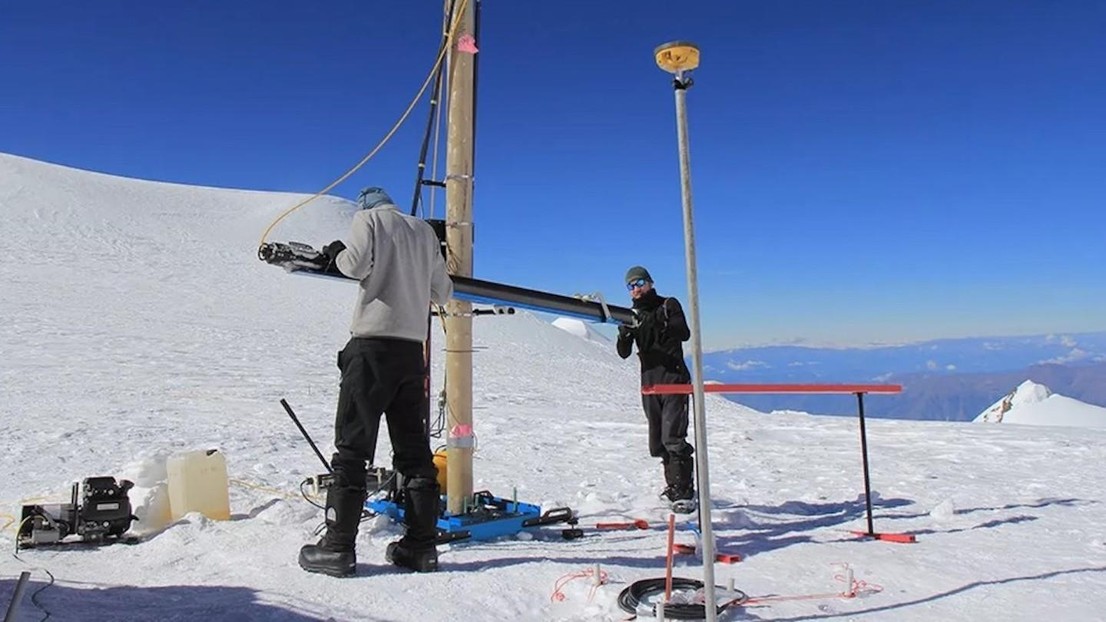
© Bruno Jourdain/Ige/CNRS
Professor Jérôme Chappellaz, glaciologist and climatologist at EPFL’s School of Architecture, Civil and Environmental Engineering (ENAC), is at the forefront of efforts to safeguard the planet’s climate memory through the Ice Memory initiative. His work has recently been featured in several major French media outlets, including Les Echos, La Croix, and Le Temps, underlining both the scientific and societal importance of preserving glaciers worldwide.
Extreme expeditions to capture climate history
Ice Memory aims to extract and preserve ice cores from glaciers that are melting under the effects of climate change. In May 2017, a team of fifteen scientists, including members from the University of Grenoble Alpes and the CNRS, spent nearly two weeks atop the Illimani glacier in Bolivia at 6,300 meters, drilling ice cores under extreme conditions. These cores contain centuries of atmospheric and environmental data, crucial for understanding past climate cycles.
Prof. Chappellaz co-founded the initiative in 2015 alongside international colleagues, recognizing the urgent need to preserve these frozen archives before they are lost forever. Since then, Ice Memory has expanded to glaciers across the Alps, the Andes, the Caucasus, and the Altai, and continues to select high-risk sites worldwide.
Preserving Svalbard’s climate record
In 2023, an expedition was conducted in the Svalbard archipelago, where the team extracted two ice cores of approximately 125 meters each from the Holtedahlfonna glacier. One will be analyzed immediately, while the other will be stored in a purpose-built ice cave at Concordia Station in Antarctica, ensuring preservation at around -50°C for centuries.
The team faced extreme conditions, working at altitudes of over 1,100 meters with temperatures ranging from -25°C to -5°C and navigating treacherous crevasses.
A global scientific effort
The Ice Memory Foundation brings together seven major international institutions, including the CNRS, IRD, Université Grenoble Alpes, the Institut polaire français Paul-Émile Victor (IPEV), the Italian CNR, Ca’ Foscari University, and the Paul Scherrer Institute (PSI) in Switzerland. Its missions rely on public funding, scientific expertise, and private sponsorship to tackle the logistical and technical challenges of polar and high-altitude drilling.
Chappellaz’s work underscores the vital importance of international cooperation in climate science. By preserving ice cores from endangered glaciers, Ice Memory provides a long-term archive of the planet’s climate history, offering future scientists the tools to understand environmental change and anticipate future challenges.