
Forum des transitions urbaines 2027
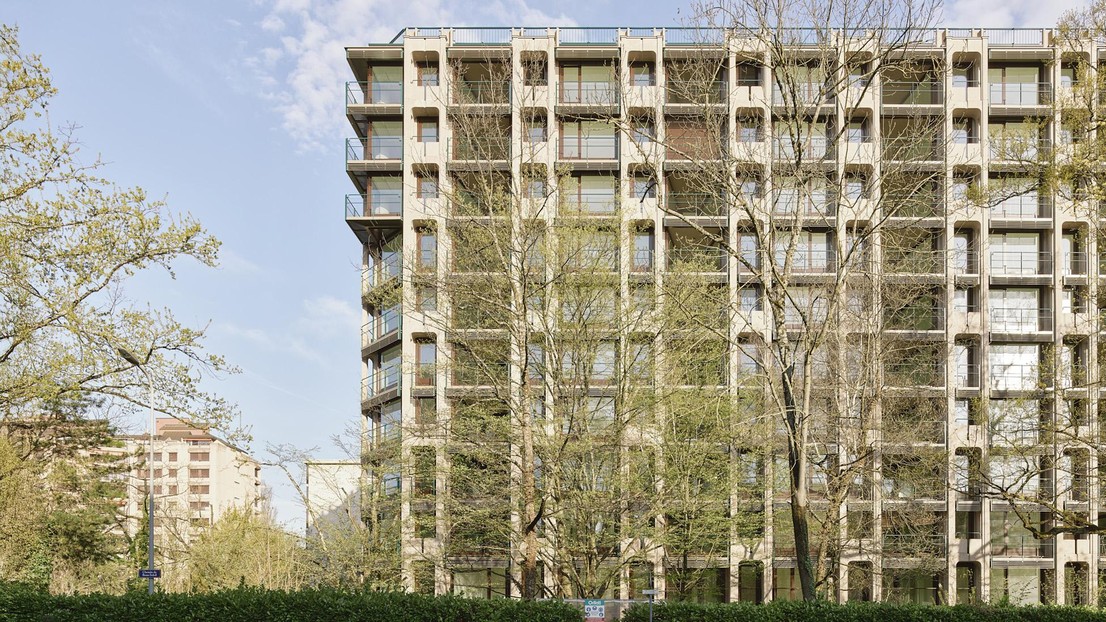
Immeuble Normandie, Genève © Ariel Huber
Entitled "From abundance to resilience?", the Forum des transitions urbaines will be held on September 3, 2027 in the Auditorium of Microcity, an EPFL branch in Neuchâtel (Switzerland). Organized jointly by the Ecoparc Association and the Laboratory of Architecture and Sustainable Technologies (LAST) of the Ecole polytechnique fédérale de Lausanne (EPFL), in partnership with the journal Tracés, the biennial event will approach this crucial theme for our built environment from different angles.
The Forum des transitions urbaines addresses various urban planning, landscape, architectural, and systemic issues with the aim of offering participants an overview of key parameters, innovative approaches and pioneering experiences. Thanks to the diversity of the examples presented, this meeting is aimed at researchers, practitioners, political decision-makers and public service managers interested in the transition and, more broadly, in the qualitative evolution of urban territories.
Since the Industrial Revolution, our society has followed a sustained trajectory of development. Fueled by inexpensive fossil resources, this dynamic has shaped territories around the proliferation of flows. The result is an undeniable abundance of goods and services, but also a growing number of questions about what lies ahead in the decades to come.
Climate disruption, the collapse of biodiversity, and geopolitical tensions remind us of the constraints imposed by physical constraints. Material abundance—often associated with overconsumption and just-in-time flows—also creates a degree of systemic vulnerability. In the face of uncertainty, it therefore seems essential to strengthen our society’s capacity to absorb future shocks, adapt to changing circumstances, and maintain its vital functions without risking collapse.
Such a transition requires a certain degree of restraint: replacing wastefulness with frugality, a tabula rasa approach with transformation, and the multiplication of individual uses with greater sharing and pooling of resources. It also means bringing essential needs closer to where they are consumed. To secure their supply, local areas must, in particular, strengthen their food self-sufficiency, promote short supply chains, and make greater use of decentralized renewable energy production. Ultimately, this transition also depends on people: on overcoming certain forms of inertia and on fostering a stronger culture of cooperation.