
David Atienza elected to Academia Europaea
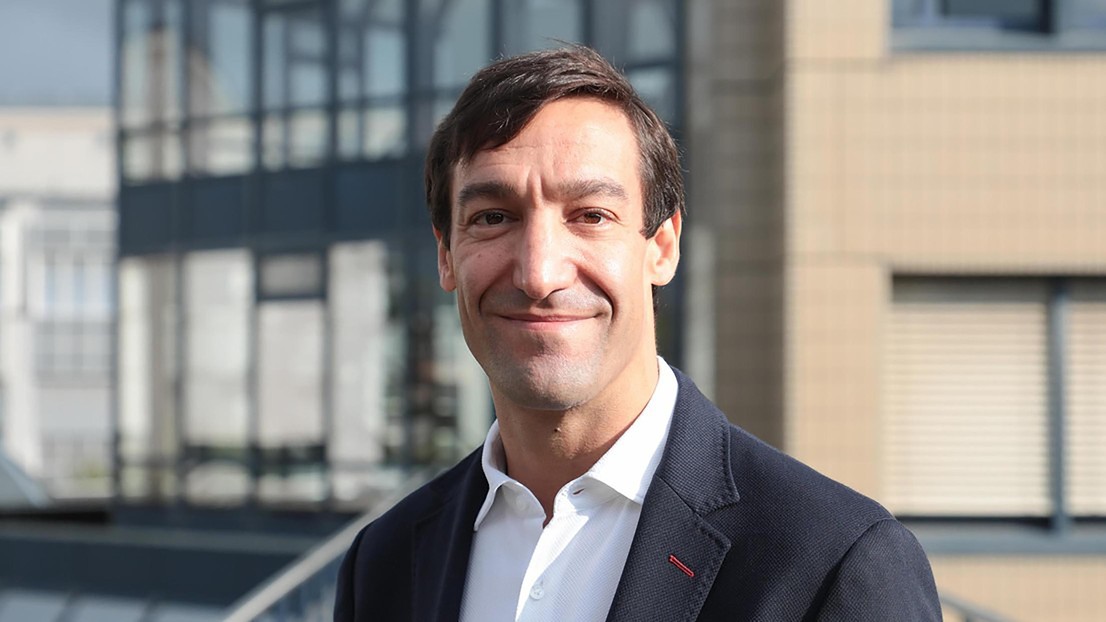
David Atienza. 2026 EPFL CC BY SA
Following a competitive recommendation and peer-review process, EPFL professor of Electrical and Computer Engineering David Atienza has been elected to the prestigious Pan-European Academy of Humanities Letters and Sciences.
The not-for-profit Academia Europaea, founded in 1988, aims to advance excellence in scholarship in the humanities; law; the economic, social, and political sciences; mathematics; medicine; and all branches of natural and technological sciences. Its 6,000 members, including over 85 Nobel laureates, are scientists and scholars who collectively aim to promote learning, education, and research.
On March 26th, the board of trustees invited 275 scholars to accept membership in the Academy, including David Atienza, head of the Embedded Systems Laboratory (ESL) in the School of Engineering (STI). To mark his election as a new Academy member in the Engineering Section, Atienza will present his research at the 2026 annual conference in Budapest, Hungary, in October.
“I am grateful to Academia Europaea for this recognition," Atienza said. "It reflects not only a personal contribution, but also the result of the work of my team at ESL. It also reflects the exceptional ecosystem created by EPFL, STI, and the Institute of Electrical and Microengineering to provide the support and resources needed to allow us to push the limits of computer systems engineering and Electronic Design Automation (EDA) to reach global impact."
In addition to leading the ESL, David Atienza serves as EPFL's Associate Vice President for Centers and Platforms. His research interests include system-level design methodologies for high-performance multi-processor system-on-chip (MPSoC) and low-power Internet-of-Things (IoT) systems. These include new 2-D/3-D thermal-aware design for MPSoCs and many-core servers, ultra-low power edge AI architectures for wireless body sensor nodes and smart embedded systems, HW/SW reconfigurable systems, dynamic memory optimizations, and network-on-chip design.
Previously, he was the Scientific and Executive Director of EPFL's EcoCloud Sustainable Computing Center (2021 to 2024). He has co-authored more than 450 papers, three books, and 14 licensed patents, and is a Fellow of the Institute of Electrical and Electronics Engineers (IEEE) and the Association for Computing Machinery (ACM).