
CYBER-DEFENCE FELLOWSHIPS: Shailesh Mishra
© 2026 EPFL
To promote research and education in cyber-defence, EPFL and the Cyber-Defence (CYD) Campus will soon launch a new call for Doctoral and Distinguished Postdoctoral Fellowships – A Talent Program for Cyber-Defence Research.
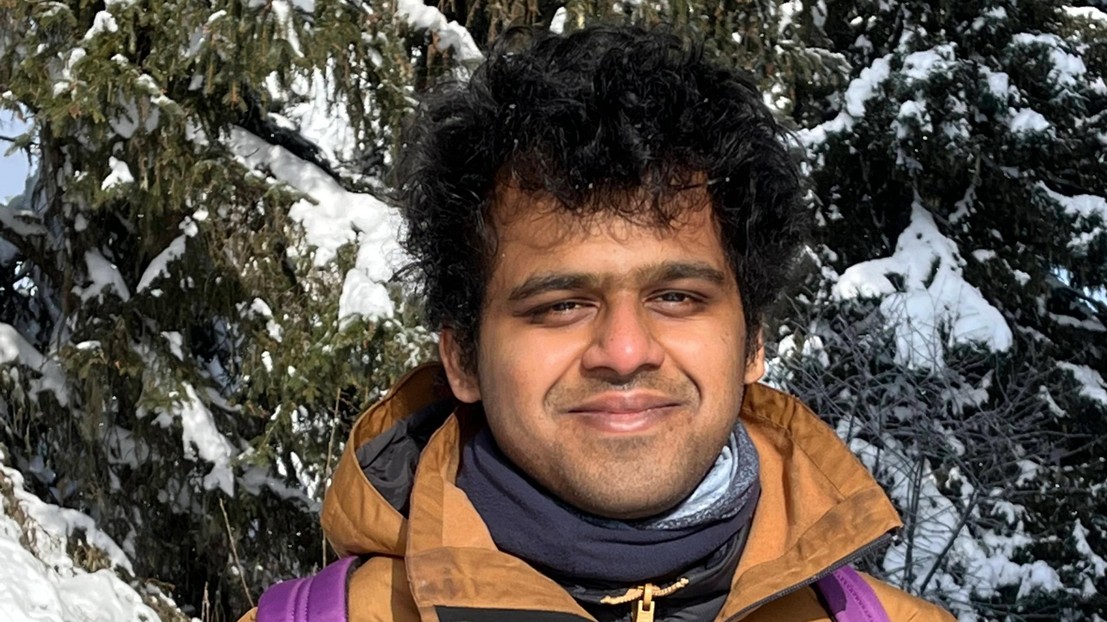
This month we introduce you to Shailesh Mishra, a CYD Doctoral Fellowship recipient in the Decentralized Distributed Systems Laboratory (DEDIS) at EPFL.
- How did you find out about the CYD Fellowships and what motivated you to apply?
Louis-Henri, one of my past lab mates, was a recipient of CYD Doctoral Fellowship. He only had good things to say about the CYD Fellowship and he always emphasized how the CYD Campus supported research that is pertinent to security and privacy issues in our day-to-day lives. This encouraged me to apply the doctoral fellowship program.
- What was your CYD Fellowship project about?
My CYD Fellowship focuses on building tools for a privacy-preserving, self-sovereign digital identities system. To put it simply, my goal is to build tools so that people can use electronic identity systems
- What are the advantages of conducting your Doctoral project at the CYD Campus?
Firstly, I get to work with Martin, my CYD mentor. It has been enjoyable to collaborate and work on compelling issues in security and privacy. Secondly, by presentingmy work at the CYD retreats and the conferences, I received feedback on my work from people working in various domains. Thirdly, I have been able to meet very smart people from both academia and industry, which in turn has helped me to learn a lot about different fields.
- Did you as a child dream of working in cyber-defence?
Not really - not sure if admitting this in the interview is a good sign. However, I have always enjoyed doing math and problem solving. As I grew older, I started enjoying computer science and was fascinated by building systems. Since I have been always fascinated by building solutions that could positively impact society, privacy + security was an obvious direction for me to end up choosing.
- What is driving you to pursue research in cyber-defence?
To put it briefly, I hope to make people’s lives better with my research. Given the myriads of applications around us and associated data being generated each day, people’s privacy is under threat. My goal is to build systems that make people feel safe while using these online applications.
- What is the most important lesson you have learned in your scientific career so far?
The most important lesson that I have learned in my (rather short) scientific career would be discipline and trusting in the disciplined life. Working hard without discipline leads to quick burn out, which is unproductive and unhealthy. Hence, I believe in building a routine and following a routine to do research. However, solely establishing a routine for doing research does not suffice. Typically, as researchers, we do not see the results of our work immediately and this leads to frustration. With time, I have learnt that staying in this frustrated state is nothing but harmful – staying calm and being patient is as important as following a routine to do research.
- What are you most proud of in your career to date?
All the work that I have done in this research domain as well as the ongoing work that I am doing in my PhD. I consider myself lucky to have been given this opportunity to work on such exciting projects. I believe the contributions of my work in my PhD will improve the privacy and security of the digital-identity ecosystem and hope to see my research getting adopted eventually.
- Outside the lab, what do you enjoy doing most?
Outside the lab, I like playing tennis, running, cooking, and photography. These activities remind me to stay in the moment and help me stay focused inside the lab as well.
- What were your expectations about the CYD Fellowships?
I was looking forward to working on problems relevant to society and getting inputs on my research from a broader audience. Working with my CYD mentor, Martin, has helped me identify and work on problems that are directly relevant to the Swiss e-ID, while the events hosted by the CYD Campus have helped me present my work and get inputs from both research and industry partners.
- Could you share some tips with future applicants who are considering applying for the CYD Fellowships?
I would advise spending some time making the research proposal relevant to the CYD Campus. This requires diving deep into prior works in the relevant field and editing the proposal in multiple iterations. You should also seek input from peers and past CYD fellows to make your application solid.