
CYBER-DEFENCE FELLOWSHIPS: Robin Hänni
© 2026 EPFL
To promote research and education in cyber-defence, EPFL and the Cyber-Defence (CYD) Campus launched a rolling call for Master Thesis Fellowships – A Talent Program for Cyber-Defence Research.
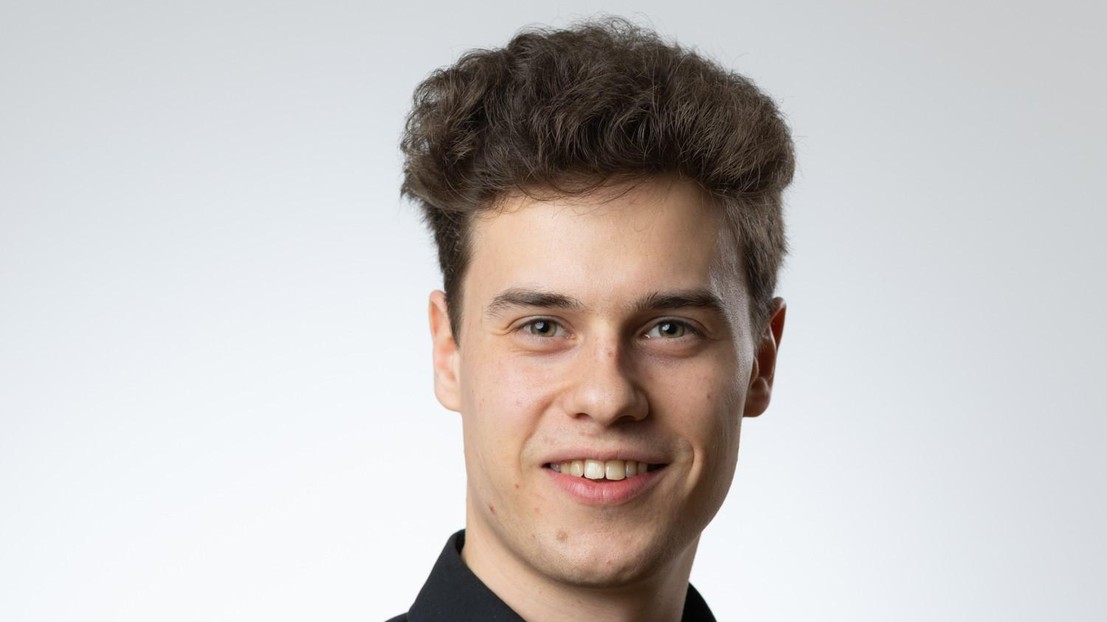
This month we introduce you to Robin Hänni, a CYD Master Thesis Fellowship recipient, who is finishing up his Master Thesis in the Secure & Trustworthy Systems Group at ETH Zurich.
- How did you find out about the CYD Fellowships and what motivated you to apply?
I knew other students who did their theses at the CYD Campus, which was the first flag to me that this option existed. Later on, the regular e-mails about the calls for proposals that are sent by ETH got my attention. Once the time came to choose a topic for my master’s thesis, by coincidence, I also noticed that specific topic on the project list on the CYD website, which got me excited to apply for the fellowship.
- What was your CYD Fellowship project about?
I extended a firmware fuzzing framework to support the TriCore ISA and then used this framework to analyze a Real-Time Operating System - RTOS - for security vulnerabilities. The goal was to check a firmware meant for trains for vulnerabilities, to assess the security of the Swiss railway infrastructure.
- What were the advantages of conducting your master thesis project at the CYD Campus?
It provided me with contacts that turned out to be crucial to even carry out such a project, as well as the technical infrastructure used to accelerate the fuzzing process.
- Did you as a child dream of working in cyber-defence?
Not at all, though I was fascinated by everything technical; My interest in security only developed much later when I already had a good understanding about how computers and software work.
- What is driving you to pursue research in cyber-defence?
I am delighted by solving challenging problems and investing time in understanding a system in as detailed a way as possible. Doing research in this field requires both, since security vulnerabilities often arise from very subtle interactions of a system.
- What is the most important lesson you have learned in your scientific career so far?
Even though cybersecurity is already a subfield of computer science, it is still far too broad for one to grasp all of it. This means I have to pick specific topics into which I will invest my time, which is a hard thing to do, but it also means that the joy of learning new things will never end - one of the reasons I chose to study cybersecurity in the first place.
- What are you most proud of in your career to date?
There are two projects that I did during my masters that I’m particularly proud of because I learned a lot in doing them. One was developing key parts of an operating system from scratch in the Advanced Operating Systems course. The other was developing a Linux root exploit based on the rowhammer attack in the Hardware Security course.
- Outside the lab, what do you enjoy doing most?
I love programming, so I spend a significant portion of my free time doing it. Apart from that, I like to sing in a choir and sometimes practice playing the piano and the flute.
- What were your expectations about the CYD Fellowships?
Mainly to have the possibility to do a project that is of interest to national security.
- Could you share some tips with future applicants who are considering applying for the CYD Fellowships?
Apply as early as you can. The application process can be quite exhausting and takes a significant amount of time. Be prepared to show flexibility in when you start your thesis.