Confluence at EPFL: exploring the future of computing
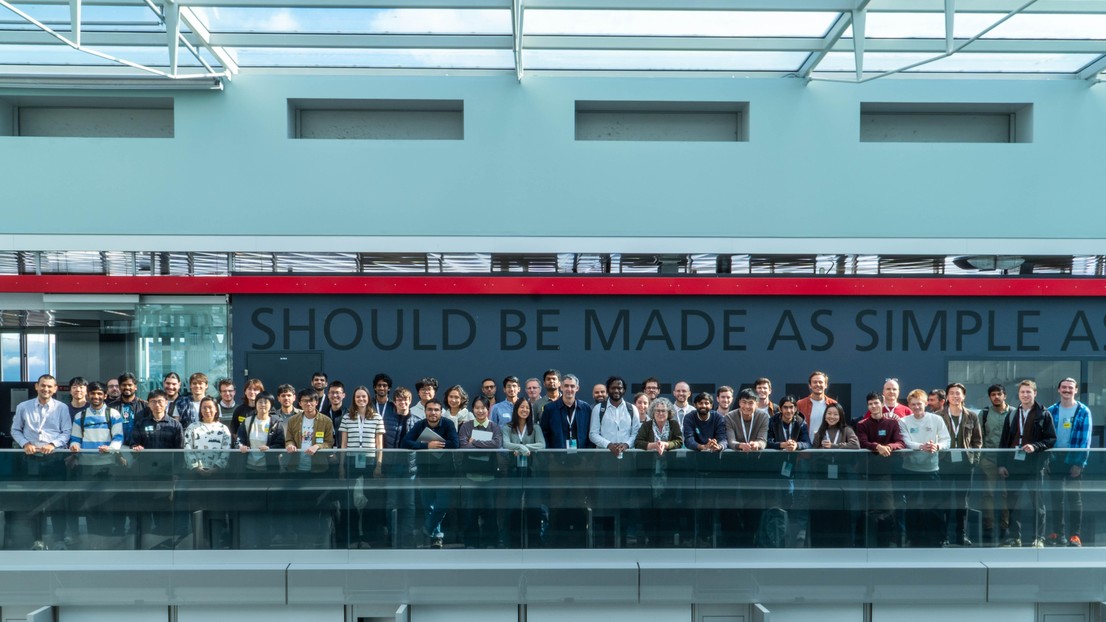
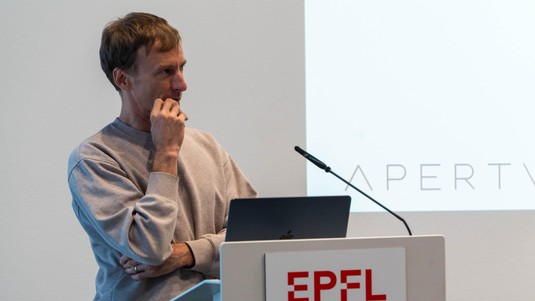
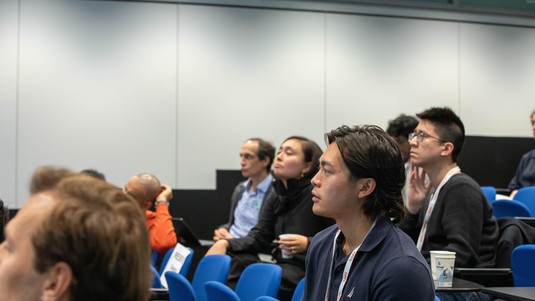
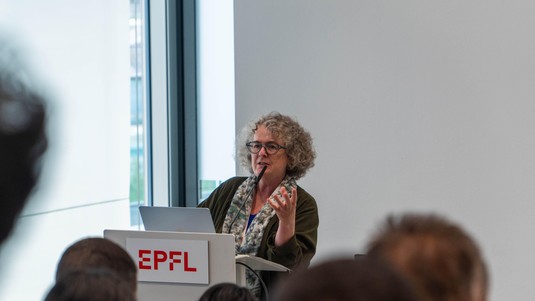
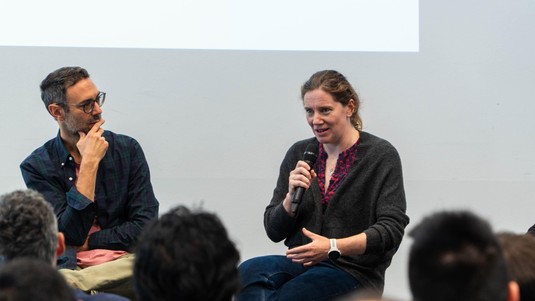
Confluence26 Workshop participants © 2026 EPFL/Mauro Kunz
What happens when researchers step outside their own disciplines and start asking questions they might never otherwise consider? At IC’s 2026 Confluence workshop, some of the brightest minds came together to explore how unexpected connections may shape the future of computing.
As artificial intelligence and machine learning transform fields from neuroscience to physics, the boundaries between traditional areas of research are becoming increasingly blurred. At the same time, some of the most exciting scientific discoveries happen not within a single discipline, but at the intersection of many.
This was the motivation behind this year’s Confluence @ EPFL, which brought together researchers from EPFL, Berkeley, CMU, Columbia, Cornell, IST Austria, LMU Munich, the Max Planck Institutes, The Massachusetts Institute of Technology (MIT), Pompeu Fabra University, and Stanford. Confluence was specifically designed to encourage conversations across disciplines, challenge established thinking and create opportunities for new collaborations.
“A confluence is where rivers meet and become something larger than either. Today, the most exciting ideas in computing come from where it meets language, markets, physics, the mind and the body, so we brought to EPFL some of the most creative young researchers working at those meeting points, to discuss how they're inventing the next era of computing,” explained EPFL Professor George Candea, one of the event’s organizers.
The unexpected uses of quantum computers
John Bostanci is a postdoctoral fellow at UC Berkeley who works on finding interesting future uses for quantum computing – a technology he describes as giving us a computational way to understand the Universe, how all the physical things around us evolve in time, and the process that governs them all.
In his heart, Bostanci says he always wanted to be a physicist, but ended up doing computer science, so he thought quantum computing would be a good way to blend the two.
“In terms of applications we have barely scratched the surface of quantum algorithms, and in quantum cryptography. The algorithmic way of thinking is very powerful, and it has shown up in a lot of other subareas of computer science, where people end up having connections to quantum that you wouldn't have expected. I don't know what we're going to find, but I expect we will find really cool algorithms that can do incredible things that are unimaginable today.”
Bostanci received an invitation to attend Confluence after regular contact with EPFL’s Professor Thomas Vidick and found the workshop a lot of fun.
“People are all sharp. When you talk to them about something new, they're very interdisciplinary. I don't really know much about neural networks or AI, but it's great to talk about things, like language, or how these things work,” he said.
Making artificial intelligence safer
For Natalie Collina, a researcher at the MIT, the growing capabilities of artificial intelligence have raised urgent questions about whether humans can maintain control over increasingly autonomous systems.
With a background in game theory, which studies how different actors make decisions and interact, Collina is exploring an unconventional approach to AI safety: what if making AI agents less willing to cooperate with each other could actually make them safer?
"My angle is that alignment is a big word," she explained, referring to the challenge of ensuring AI systems act in accordance with human interests. "If you have an aligned system, it means that basically it can act on behalf of you, but how do we know if AI agents are actually acting in our best interests?"
Her research examines whether groups of AI agents, each with different incentives, could collectively prevent harmful actions, even when no individual agent can be fully trusted, and admits that her concern about AI safety has grown considerably as systems have become more capable, particularly when multiple agents work together in unexpected ways.
The interdisciplinary format of Confluence was a major attraction. "In my experience, the best research ideas are the ones that one person can't even necessarily hold in their head at once. You have to throw them between multiple people like a hot potato," she said. “The idea that this was purposefully interdisciplinary, where people are bridging different connections with an emphasis on creativity, is awesome!”
What brains and machines can teach each other
For fellow MIT researcher Hope Keen, the intersection of computing and neuroscience offers another fascinating opportunity: understanding how humans reason and whether artificial intelligence systems solve similar problems in fundamentally different ways.
"My dissertation work and research program now is about reasoning, specifically logical reasoning," Keen explained. "I study how our brain supports abstract reasoning in different domains."
Her research ranges from understanding how people draw logical conclusions to investigating whether non-invasive brain stimulation could one day improve reasoning abilities. She also compares the structures underlying human reasoning with those found in large language models, while cautioning against assuming that artificial neural networks operate like biological brains.
Keen was particularly attracted to Confluence because of its deliberate emphasis on bringing together different scientific perspectives.
"EPFL and MIT share a lot of interesting things that I really like," she said, pointing to their combination of rigorous technical approaches and a strong commitment to fundamental science. “I enjoyed hearing about the work being done in other fields. I think it’s so useful to bring together different perspectives in a fruitful way and everything has been relevant to work that I’m doing. It’s very stimulating.”
Beyond traditional boundaries
The workshop reflected this diversity, with presentations spanning programming languages, quantum computing, market design, AI safety and human cognition.
Keynote presentations by EPFL's Martin Odersky, Martin Jaggi and Amir Zamir were complemented by brainstorming sessions and a discussion exploring the future of embodied intelligence.
For EPFL Professor Nate Foster, also one of the organizers, the challenge facing researchers is not simply keeping pace with rapid technological change but finding opportunities to rethink familiar problems through entirely different lenses.
"We wanted to use Confluence to explore the boundaries of computing and look at where the field might go. During the workshop, we went beyond our traditional boundaries and took scientific risks. Sometimes the next big idea starts with a conversation and we certainly had many of those!”
The full program and list of speakers can be found here: https://confluence2026.epfl.ch/