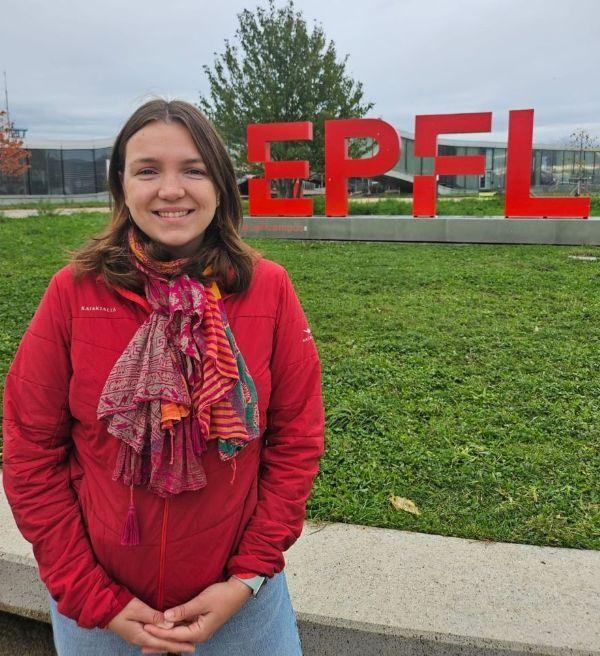
Andréanne's Journey into Climate Resilience
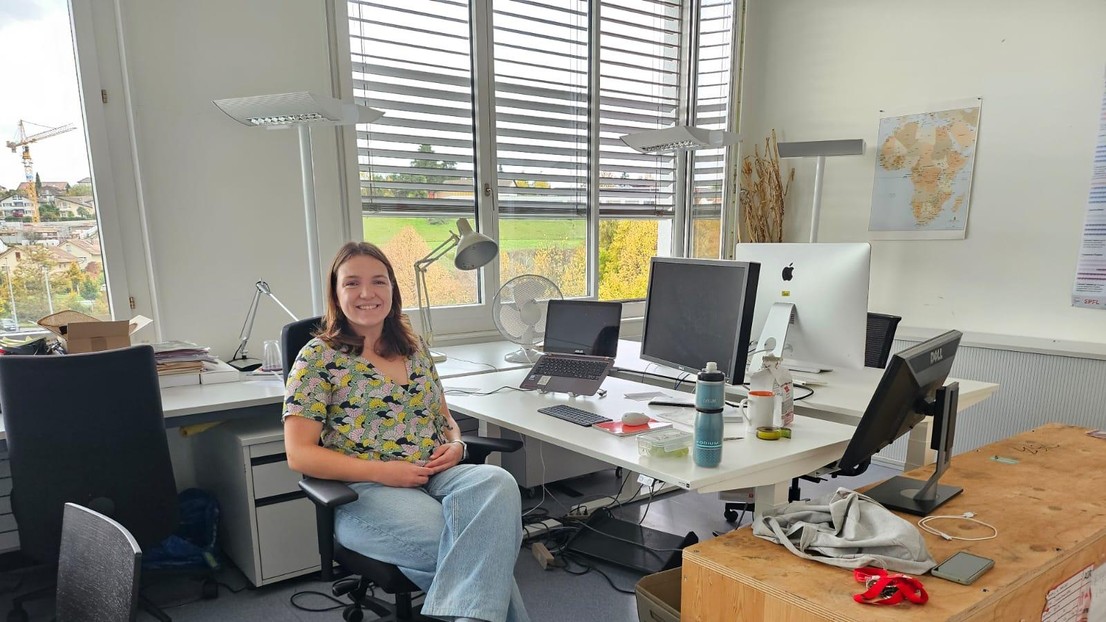
© 2025 EPFL
For three months, Andréanne Laurin Fortier, a master’s student from the University of Trento (Italy), has been conducting research at EPFL’s Laboratory of Urban and Regional Planning (CEAT). Her work contributes to an ongoing project on Resilience and Adaptation in West Pokot, Kenya, exploring how local communities manage land, water, and livelihoods in the face of climate change.
From Montréal to Trento – and Beyond
Originally from Montréal, Canada, Andréanne’s academic path has taken her across continents. With a background in agronomics and environmental engineering from Université Laval and the University of Trento, she has always been motivated by curiosity and global collaboration.
“I became acutely aware of how essential food production is, and how vulnerable it is to environmental challenges,” she explains. “That awareness led me to resilience and adaptation as key themes where I could make a meaningful contribution.”
Exploring Land Use and Community Resilience in Kenya
During her stay at EPFL, Andréanne focused on understanding how community resilience strategies influence land use and land cover (LULC) dynamics in West Pokot.
“My goal is to quantify how local adaptation practices shape land and resource use over time,” she says. “I use open global spatial data and integrate it with field insights from our Kenyan collaborators to build a localized picture of adaptation in action.”
Her research blends spatial modelling, community knowledge, and environmental data to highlight how resilience-building measures can promote sustainable land management — an issue central to both local food systems and global sustainability efforts.
Learning at CEAT
For Andréanne, the CEAT experience offered a unique opportunity to work within a truly interdisciplinary and international research environment.
“EPFL’s collaborative spirit and CEAT’s commitment to real-world impact have been incredibly inspiring,” she says. “I’ve learned to combine data-driven analysis with local context, which is essential for effective climate adaptation research.”
Looking Ahead
As she prepares to return to Italy to finalize her Master’s thesis, Andréanne hopes to build on her EPFL research for a future Phase 2 of her work, validating her spatial analysis with on-the-ground bio-physical data in West Pokot.
“Long-term, I want to continue in agro-environmental science and work on climate adaptation projects that connect science, policy, and communities,” she reflects. “This experience at EPFL is an important step toward that goal.”
About the Project
The Resilience and Adaptation in West Pokot, Kenya project, led by Dr. Jean-Claude Baraka Munyaka (CEAT), investigates how communities in semi-arid regions respond to climate variability through local innovations and institutional frameworks. The project integrates spatial analysis, community-based data, and resilience theory to inform sustainable land management and policy design.
Contact:
Dr. Jean-Claude Baraka Munyaka – Scientific Collaborator, CEAT, EPFL
Laboratory of Urban and Regional Planning (CEAT) – https://ceat.epfl.ch