
Advancing International Collaboration for Polar Science
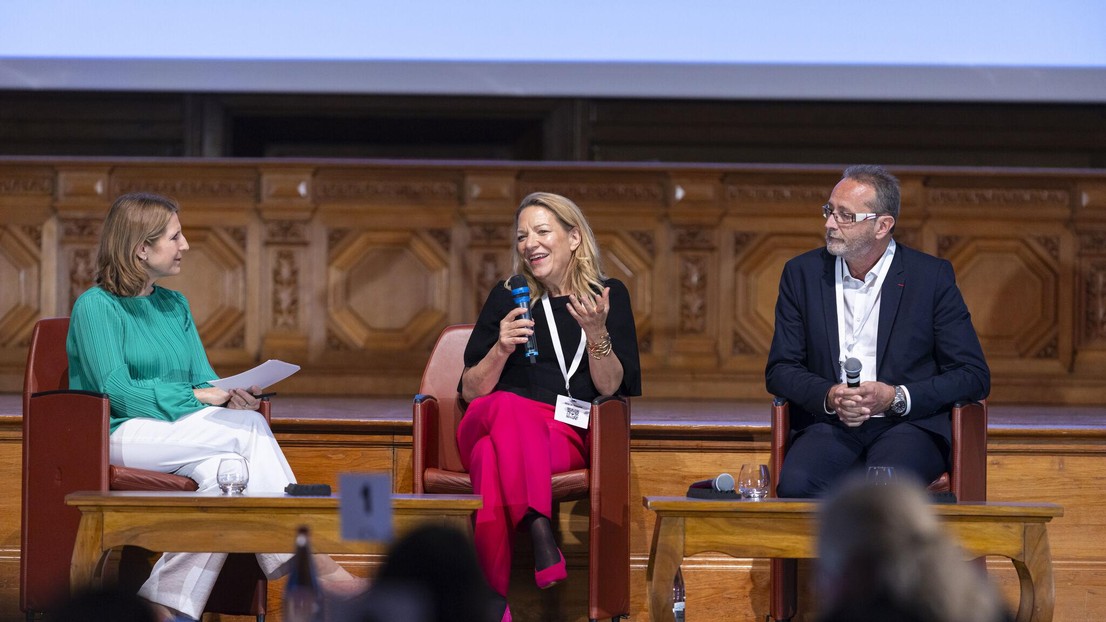
© The Polar Initiative - Foundation Prince Albert II de Monaco, 2024
The second edition of the Polar Symposium (Monaco, February 22-23, 2024), titled “The Cold is Getting Hot! From Arctic to Antarctic,” brought together over 120 scientists, policymakers, and representatives from major polar institutions to discuss the urgent challenges facing the Earth’s polar regions. Among the speakers was Professor Jérôme Chappellaz from EPFL, representing the Swiss Polar Institute (SPI).
Co-organized by the Foundation Prince Albert II of Monaco, the Scientific Committee on Antarctic Research (SCAR) and the International Arctic Science Committee (IASC), the symposium served as a major platform to strengthen cooperation between Arctic and Antarctic research communities. Participants discussed sea-level rise, permafrost thaw, and the need for holistic, interdisciplinary approaches to polar research.
A Strategic Conversation on Polar Cooperation and Legacy
During a plenary session, Professor Chappellaz joined Antje Boetius (Director, Alfred Wegener Institute), for a conversation on the future of long-term collaborations in the polar regions. Together, they explored the outcomes of the One Planet Polar Summit and the pathways toward the 5th International Polar Year.
The conversation highlighted their insights on the future of the cryosphere, the fact that it is currently losing mass at an unpredictable rate, with significant implications for sea-level rise and potential changes to large-scale ocean currents and precipitation patterns.
Additionally, it was emphasized that approximately two billion people depend on water from high-altitude cryospheric regions, underscoring the global importance of maintaining a balanced cryosphere. Key challenges identified included the ongoing dependence on fossil fuels and the need for nations and governments to address this more urgently.
They highlighted the importance of including indigenous populations’ knowledge on the cryosphere on which they depend.
A major conclusion from their discussion was the lack of a robust and comprehensive reporting system for the global cryosphere accessible to both the scientific community and policymakers. They advocated for developing a framework similar to those established by the United Nations for climate and biodiversity.
Engaging the Next Generation
In addition to his on-stage intervention, Chappellaz participated alongside Anne-Catherine Ohlmann in an outreach session for over 200 high school students from Monaco, organized as part of the Students on Ice Alumni event supported by the Prince Albert II Foundation. The session highlighted the Ice Memory Foundation’s work to preserve ice cores from endangered glaciers for future generations of scientists.
A Global Momentum for Polar Science
The symposium concluded with renewed commitments from institutions such as SCAR, IASC, the European Polar Board, and philanthropic partners including the Fondation Albédo pour la Cryosphère and the Tara Ocean Foundation. It also showcased the upcoming InSync (International Science and Infrastructure for Synchronous Observation) campaign in Antarctica (2027–2030), in which the Swiss Polar Institute will play a major role, fostering synchronous observations of the ice, ocean, and atmosphere.