A solar-powered adventure: EPFL PV-Lab student shines at the 4L Troph
© 2026 EPFL
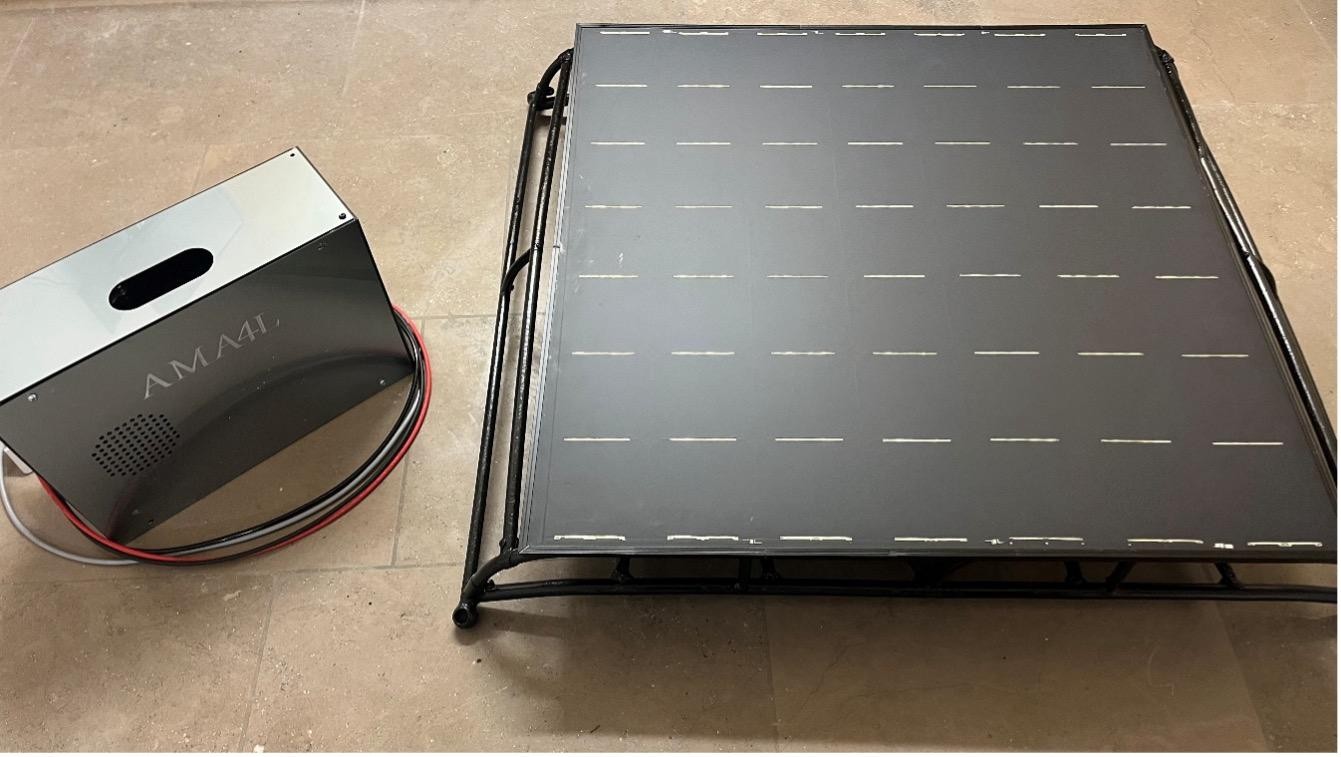
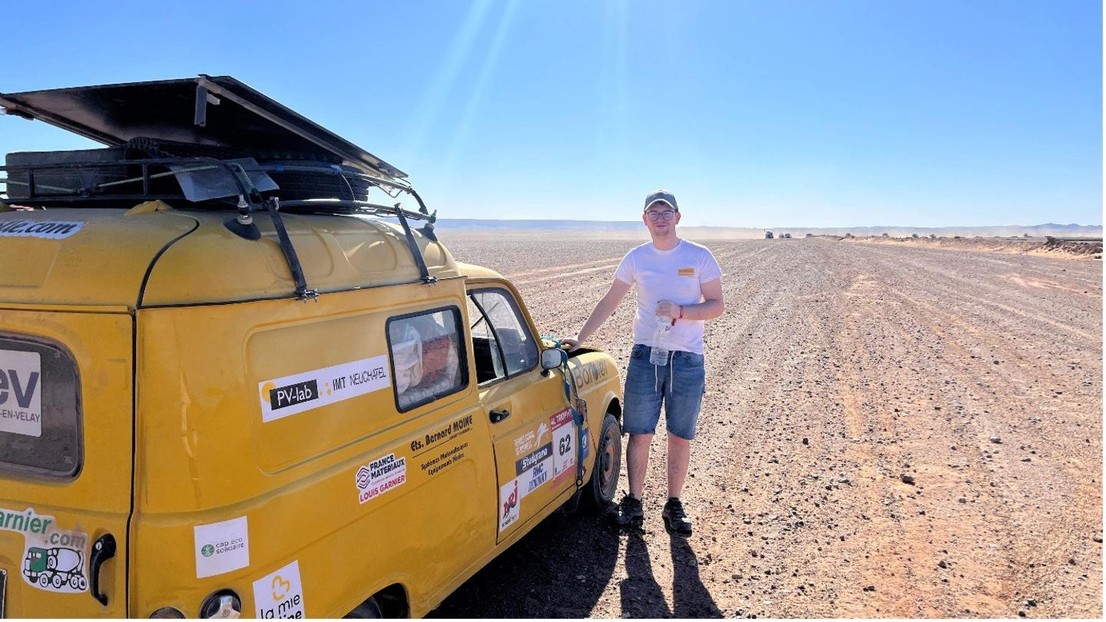
This winter, Florentin Julien, a semester student from EPFL PV-Lab, took part in the iconic 4L Trophy, a unique challenge combining engineering, endurance and solidarity. He travelled across France, Spain, and Morocco in a customized classic Renault 4 for 12 days. The student designed and constructed lightweight glass-free photovoltaic modules (Figure 2) as well as a dedicated battery and optimized and state-of-charge (SoC) model.
From lab innovation to desert reality
The project aimed to test EPFL’s cutting-edge lightweight PV technology in real-world conditions. Mounted directly onto the vehicle, the PV system powered onboard electronics and demonstrated how flexible solar solutions can operate reliably even in demanding environments such as long-distance rallies and desert climates.
Figure 2: Left: box including battery and optimizer, right: Lightweight glass-free PV modules developed at PV-Lab mounted on the roof-structure.
Strong performance under real conditions
Between February 17 and March 1, 2026, the system delivered impressive results:
- Total PV energy produced: 4’460 Wh
- Expected production: ~4’550 Wh
Despite challenging conditions, including dust, variable irradiance, and continuous motion, the system performed without any major failure throughout the entire raid.
Interestingly, the battery system proved to be highly effective:
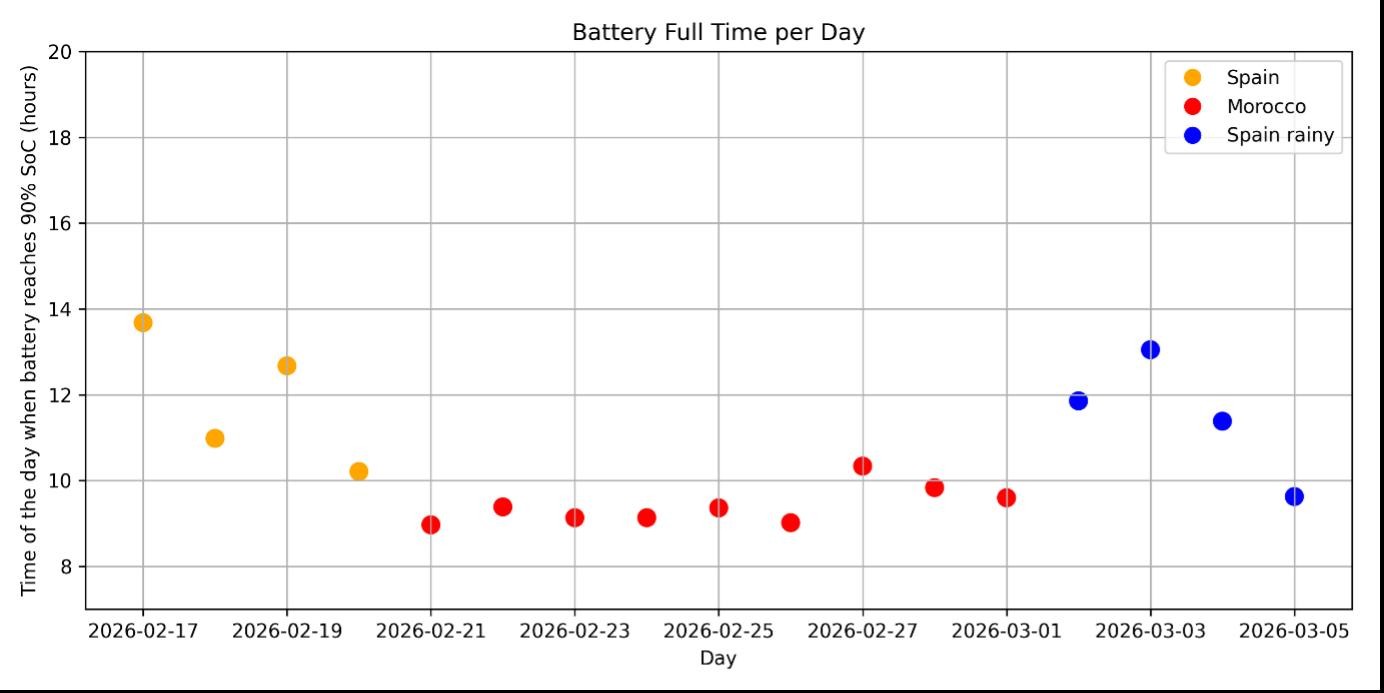
- It reached 90% charge as early as 9:00 AM in Morocco
- It never dropped below 20% state of charge, confirming optimal sizing for such an application (Figure 3)
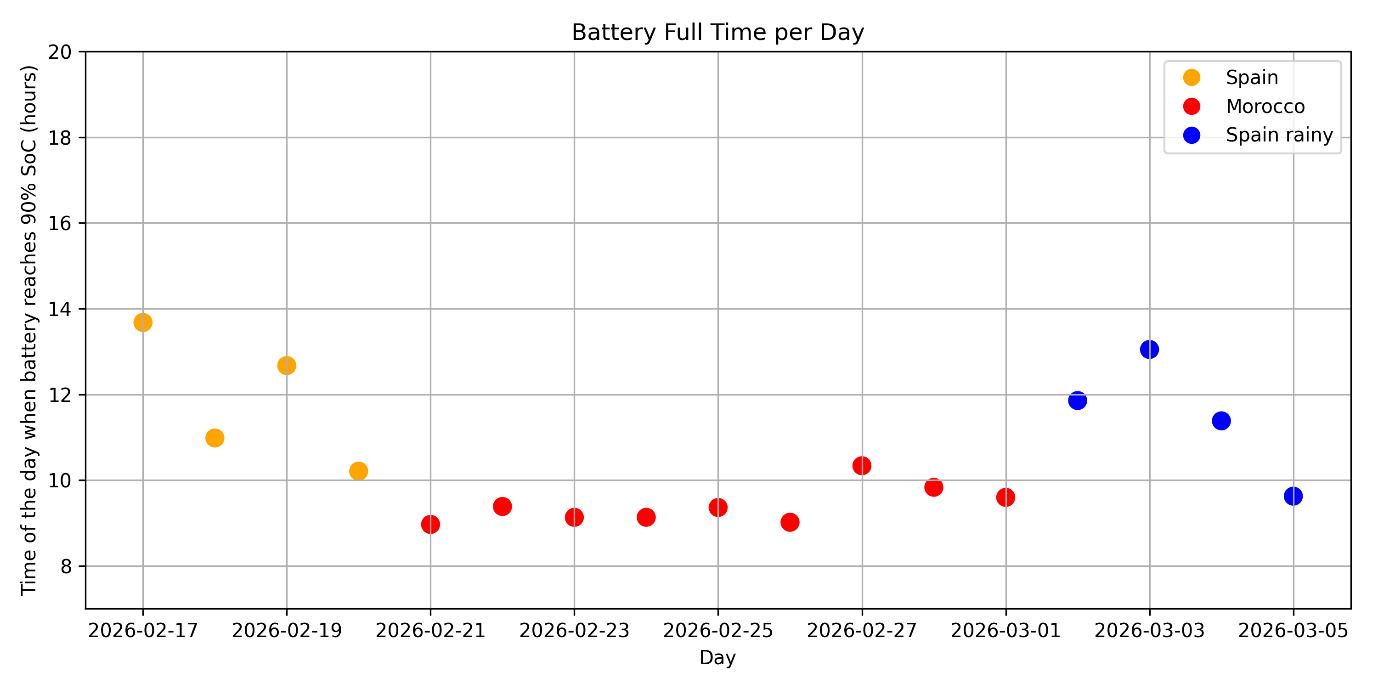
Figure 3: Time of the day when the battery reaches 90% State of Charge.
Lessons learnt from the field
The expedition also highlighted important insights for future tests and deployments:
- Efficiency measurements were likely underestimated due to sensor placement and shading effects
- No significant performance difference was observed between clean and unclean panels, suggesting robustness to dust under these conditions
- Once the battery was full, unused solar power led to apparent efficiency drops, pointing to opportunities for improved energy management strategies
A successful demonstration of lightweight PV potential
This project illustrates how research from EPFL PV-Lab can move beyond controlled lab environments into real-world applications. Lightweight PV modules have demonstrated to be not only reliable but also practical for mobile and off-grid energy systems.
Beyond the technical achievements, the adventure embodied the spirit of the 4L Trophy: innovation, resilience, and meaningful impact.
Looking ahead
With a full dataset collected, including power profiles, irradiance comparisons, and battery behavior, the project opens the door to deeper analysis and optimization. Future iterations could refine efficiency measurements and explore smarter energy utilization when storage is full.
This solar-powered journey stands as a compelling example of how student-driven initiatives can bring advanced energy technologies to life, on the road, in the desert, and beyond.