
A high-throughput way to read DNA methylation across the genome
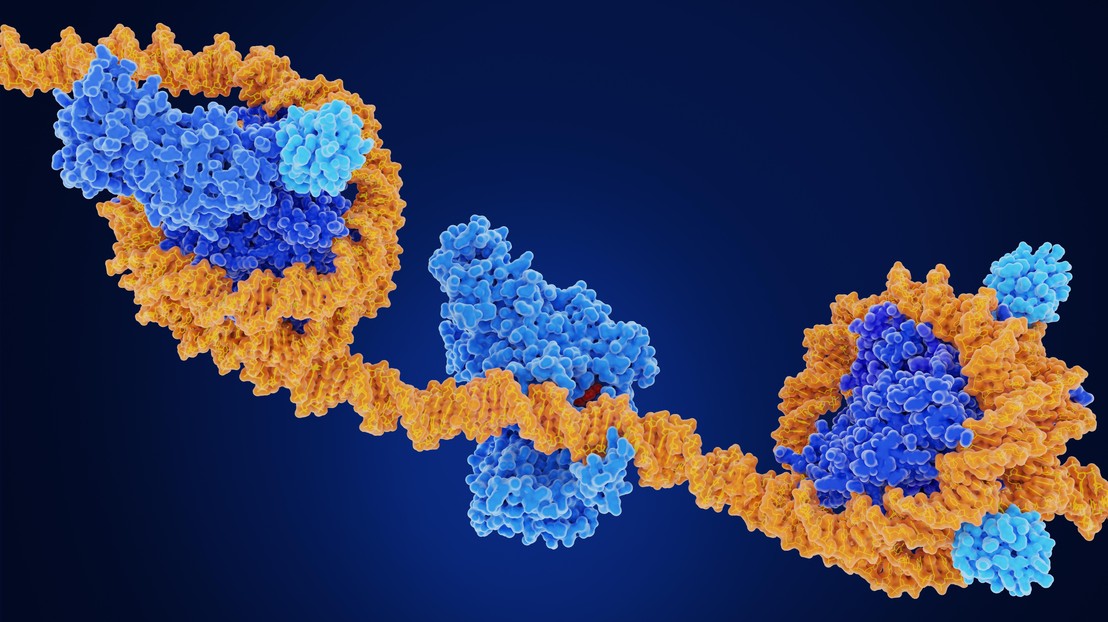
© EPFL 2026/iStock (selvanegra)
EPFL researchers develop a high-throughput, low-cost method to map DNA methylation in cells, organoids, and brain tumors with far less sequencing than current gold-standard techniques.
DNA carries more than genes. Chemical tags attached to DNA also help control when genes switch on or off. One of the most important of these tags is DNA methylation, a molecular mark linked to development, aging, and diseases including cancer.
Scientists already have ways to measure DNA methylation across the genome, but the problem is cost: The current gold standard, whole-genome bisulfite sequencing, needs enormous amounts of sequencing data to achieve precise results, which makes large studies expensive and difficult.
Researchers have spent years trying to find cost-effective alternatives. Some methods look only at selected parts of the genome. Others enrich methylated DNA using antibodies or binding proteins.
These approaches reduce costs, but often sacrifice resolution, sensitivity, or flexibility. Many also require large amounts of biological material, making them difficult to use on rare samples or in emerging single-cell methods.
Turning Tn5 into a methylation detector
A team led by Fides Zenk at EPFL has now developed a new method called CmeCUT&Tag that profiles DNA methylation across the genome using far less sequencing than standard approaches.
The work shows that the method can detect methylation patterns in stem cells, brain organoids, zebrafish embryos, and human brain tumors while reducing sequencing needs by 10 to 40 times.
The researchers built the method by combining Tn5, an enzyme widely used in genome sequencing, with protein domains that bind methylated DNA. This directs the enzyme to methylated regions, so researchers sequence mainly those parts of the genome instead of sequencing everything.
The best-performing version closely matched highly methylated regions detected by standard whole-genome bisulfite sequencing results while using far less sequencing data. The method also worked in intact cell nuclei and isolated DNA, including small amounts of sample material.
Proving the method
To confirm that the method truly detects DNA methylation, the researchers chemically lowered DNA methylation levels in stem cells using a drug that blocks the enzyme responsible for maintaining those methylation marks. Signals from CmeCUT&Tag dropped sharply after treatment, showing that the method specifically tracks methylated DNA.
The team also adapted the approach to achieve base-pair resolution when needed. By combining CmeCUT&Tag with bisulfite or enzymatic conversion methods, they could identify methylated cytosines at single-nucleotide precision while still sequencing only targeted regions.
The researchers estimate that traditional whole-genome bisulfite sequencing requires roughly 800 million to 1 billion read pairs to cover the human genome at standard depth. In contrast, CmeCUT&Tag combined with conversion methods reduced this to around 20 to 100 million reads.
From brain development to cancer
The study also explored biological and clinical applications. In human brain organoids grown from induced pluripotent stem cells, the researchers tracked changing methylation patterns during neural development. They observed methylation gains and losses in genes linked to neuron development, cell proliferation, and embryonic processes.
The team also tested whether the method could classify brain tumors using DNA methylation patterns, an increasingly important tool in cancer diagnosis. They analyzed 24 adult brain tumor biopsies and correctly assigned the methylation class family for 17 of 19 tumors that passed filtering criteria.
Finally, the researchers showed that the method works in zebrafish embryos, suggesting it can be applied across species.
The method still has limitations. In its current form, it cannot distinguish between two closely related chemical versions of methylated DNA, and it performs best in regions with relatively high methylation levels. The adaptation of single-cell DNA methylation mapping using this workflow is already possible with droplet-based platforms, but will require further characterization to resolve closely related epigenetic states.
Nonetheless the researchers believe the lower cost and flexibility of CmeCUT&Tag could make genome-wide DNA methylation analysis more accessible for larger research studies and future clinical applications.
Other contributors
University Hospital of Zürich
Swiss National Science Foundation (SNSF)
EPFL Innovate for Life funding scheme
NeuroNA Foundation
Hanrong Hu, Nahuel Simonet, Ece Naz Bilgiç, Heather Murray, Regina Reimann, Markus Rechsteiner, Fides Zenk. A scalable Tn5-based method for genome-wide DNA methylation profiling in development and disease. Nature Communications 22 May 2026. DOI: 10.1038/s41467-026-73325-4